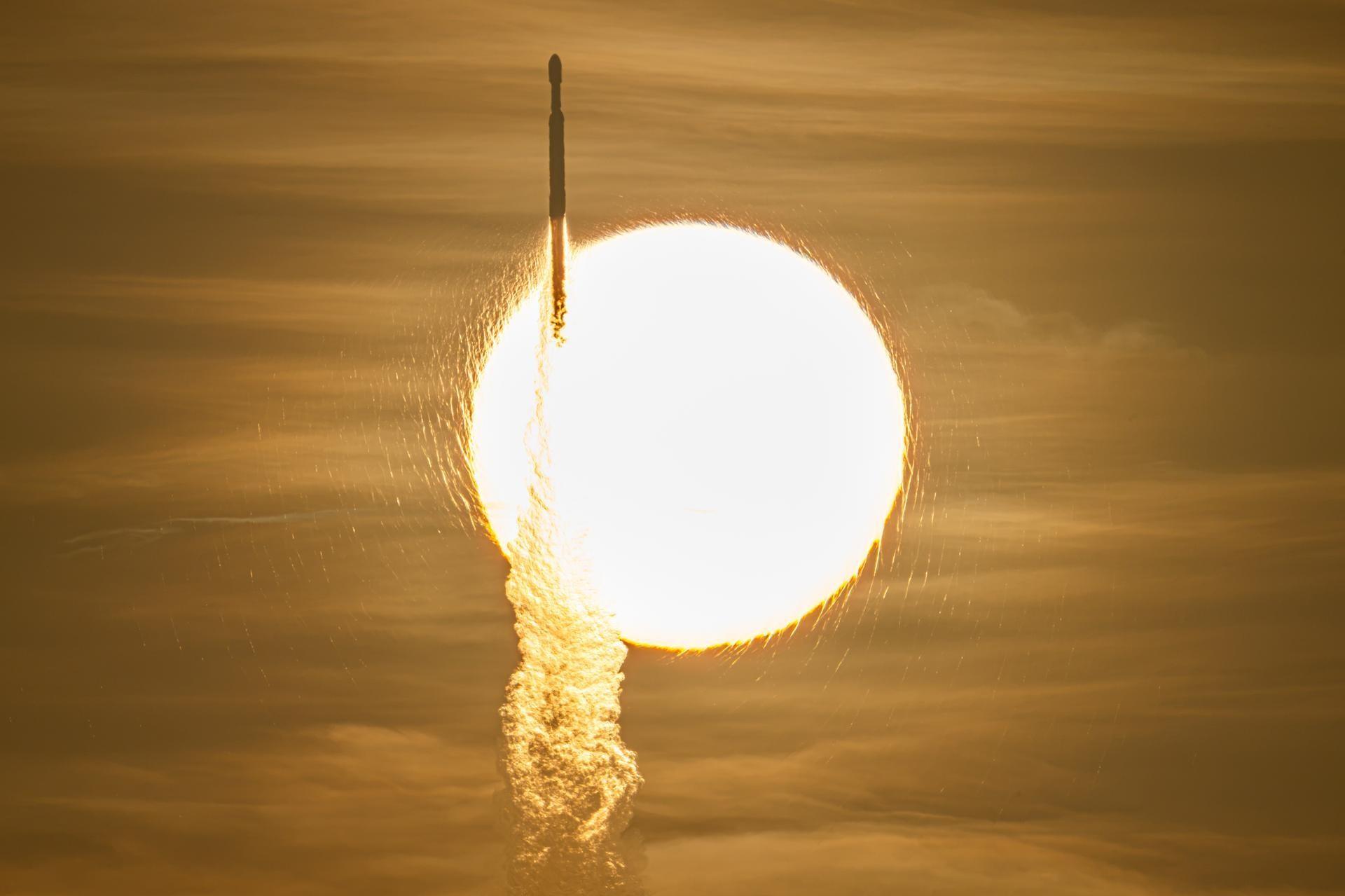
NASA launches first telescope named after female scientist
The Nancy Grace Roman Space Telescope, named after NASA's first Chief of Astronomy, will observe black holes, exoplanets and exploding stars.
NASA has successfully launched the Nancy Grace Roman Space Telescope, a groundbreaking observatory designed to study distant celestial bodies and phenomena. Named in honor of the first female senior leader at NASA, the telescope was transported into orbit by a SpaceX Falcon Heavy rocket from Florida's Cape Canaveral.
The Roman Space Telescope is on track to reach its designated position around the Sun-Earth L2 point in approximately one month. With a budget exceeding $4 billion, the mission aims to capture unprecedented images of black holes, exoplanets, and supernovae.
In comparison to its predecessor, the Hubble Space Telescope, Roman boasts a much larger field of view and will generate immense amounts of data. Astronomers anticipate Roman to produce over 500 terabytes of data annually, a stark contrast to Hubble's 400 terabytes over three decades.
By surveying the sky with extraordinary speed and efficiency, Roman will uncover the unusual and rare in ways never before possible. Former NASA administrator James Webb's namesake telescope, which launched in 2021, will work in tandem with Roman to provide a comprehensive understanding of the cosmos.
Written by urgent.news from DW English (Top Stories)'s reporting — not their text. Machine-written — may contain errors; check the original before relying on it.
This story
This is one outlet's version. Read the fullest account.
- From strange worlds to rare planets: Nasa’s Roman Telescope begins its cosmic hunt timesofindia.indiatimes.com
- NASA launches Roman Space Telescope to explore hidden universe koreatimes.co.kr
- NASA launches powerful new Roman Space Telescope from Florida brecorder.com
- NASA launches Ksh558B telescope to space peopledaily.digital
- NASA’s Roman space telescope blasts off on SpaceX Falcon Heavy to unlock dark energy secrets livemint.com
- NASA launches first telescope named after female scientist dw.com
- NASA launches powerful new Roman Space Telescope from Florida investing.com
- NASA launches powerful new Roman Space Telescope from Florida channelnewsasia.com