NASA’s Roman space telescope blasts off on SpaceX Falcon Heavy to unlock dark energy secrets
By mapping billions of galaxies and studying how they are distributed and how their distances change over time, scientists hope Roman will provide new clues about the expansion of the universe and the forces driving it.
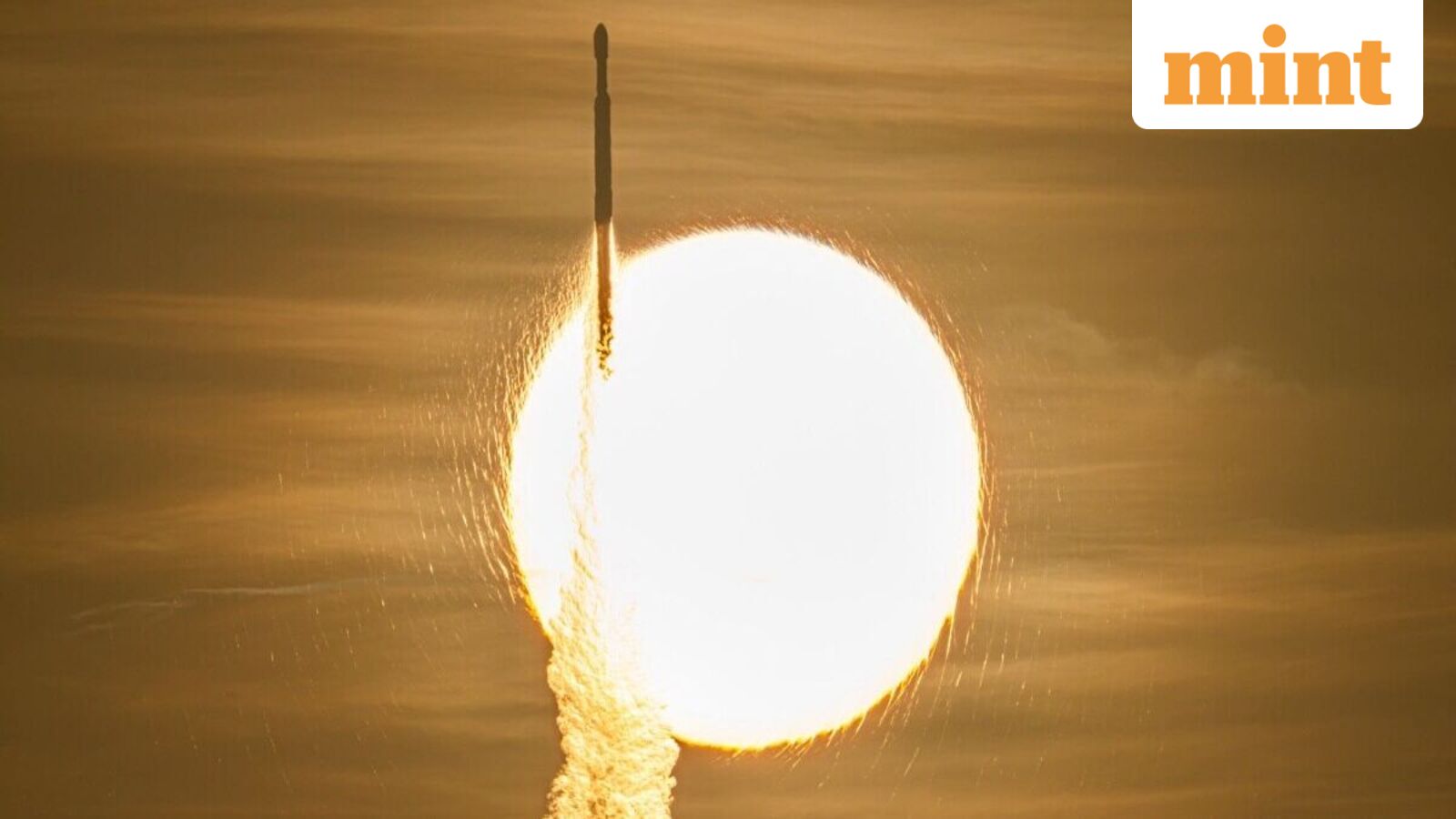
NASA’s Nancy Grace Roman Space Telescope, valued at $4.3 billion, embarked on a journey via SpaceX’s Falcon Heavy rocket on Sunday, August 30, from Kennedy Space Center in Florida. The bus-sized telescope aims to revolutionize our comprehension of celestial bodies, galaxies, and the enigmatic forces governing the cosmos. Positioned an estimated 1 million miles from Earth, Roman is scheduled to traverse the vast expanse over the next three months before commencing its mission.
Roman’s standout feature is its expansive field of view, more than 100 times larger than Hubble’s, yet retaining comparable sensitivity. This capability enables astronomers to swiftly scan extensive regions of space and identify rare, distant objects for further detailed examination by other observatories. The telescope’s infrared camera is optimized for rapid observations, surpassing Hubble’s efficiency. Roman will also explore the Milky Way’s central region, offering an unparalleled perspective of our galaxy’s heart.
A significant objective for Roman is the search for planets orbiting sun-like stars, facilitated by its broad field of view that can identify a multitude of distant worlds. Additionally, an experimental coronagraph on board will attempt to block starlight, potentially allowing Roman to directly image faint planets orbiting these stars. These discoveries could serve as targets for in-depth studies by Webb and other telescopes.
Roman will also address critical questions in modern cosmology, particularly the nature of dark matter and dark energy – components hypothesized to constitute most of the universe but undetectable in the same manner as regular matter. By mapping billions of galaxies and analyzing their distribution and distance changes over time, scientists anticipate Roman will yield new insights into the universe’s expansion and the forces driving it.
Roman complements the work of Hubble, Webb, the European Space Agency’s Euclid spacecraft, and the Vera C. Rubin Observatory in Chile. The launch also showcased a thrilling spectacle, with the Falcon Heavy’s reusable side boosters returning to Earth and landing safely. Named after Nancy Grace Roman, NASA’s inaugural chief astronomer and a pivotal figure in space astronomy, the telescope honors her legacy.
As the "Mother of Hubble," Roman’s visionary efforts laid the groundwork for groundbreaking space missions. Originally manufactured from surplus spy-satellite mirrors, the telescope’s primary mirror is nearly 8 feet in diameter and was repurposed from retired spy satellites. Designed with potential future servicing in mind, Roman’s operational lifespan could be extended should robotic spacecraft capable of maintenance become available within the next decade.
Written by urgent.news from Live Mint's reporting — not their text. Machine-written — may contain errors; check the original before relying on it.
This story
This is one outlet's version. Read the fullest account.
- From strange worlds to rare planets: Nasa’s Roman Telescope begins its cosmic hunt timesofindia.indiatimes.com
- NASA launches Roman Space Telescope to explore hidden universe koreatimes.co.kr
- NASA launches powerful new Roman Space Telescope from Florida brecorder.com
- NASA launches Ksh558B telescope to space peopledaily.digital
- NASA launches first telescope named after female scientist dw.com
- NASA launches powerful new Roman Space Telescope from Florida investing.com
- NASA launches powerful new Roman Space Telescope from Florida channelnewsasia.com