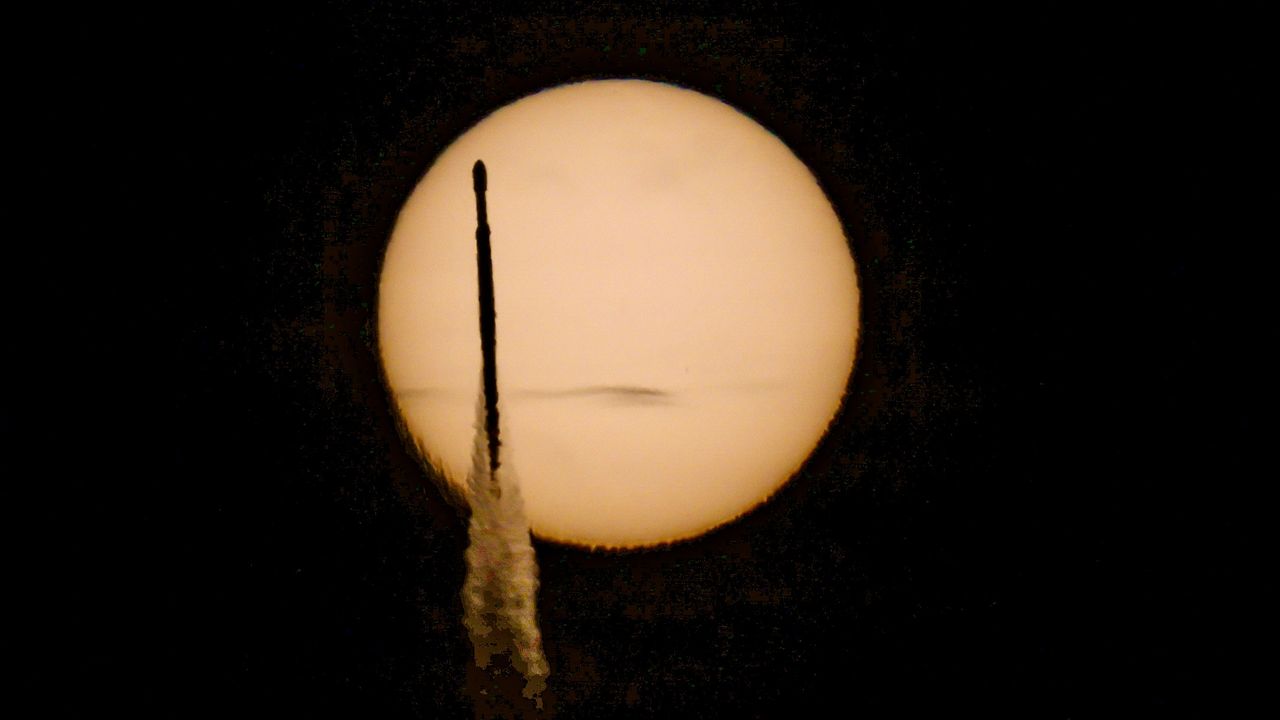
From strange worlds to rare planets: Nasa’s Roman Telescope begins its cosmic hunt
Nasa's new Roman Space Telescope has launched on a mission to explore distant planets. This observatory will search for dark matter and dark energy across the universe. It is expected to discover thousands of new planets and billions of galaxies. The telescope's wide field of view surpasses Hubble's capabilities significantly. Roman will build upon the discoveries of Webb and Hubble observatories.
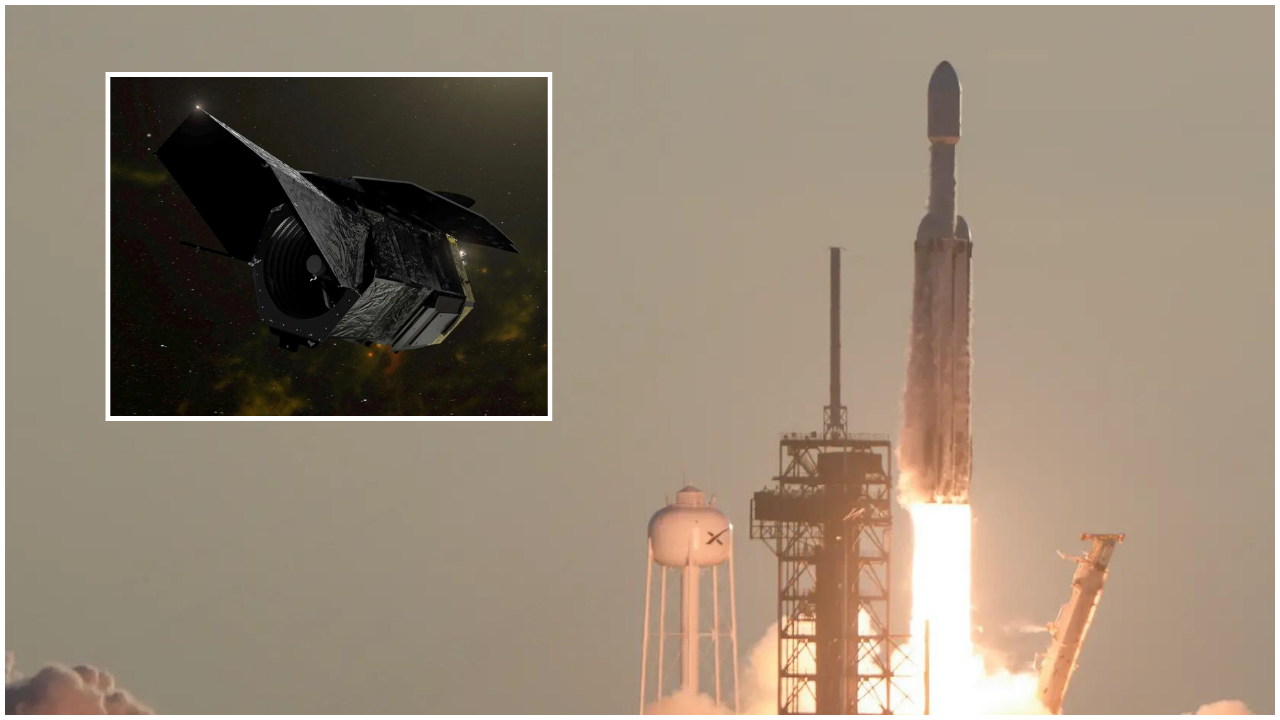
NASA's latest flagship space observatory, the Nancy Grace Roman Space Telescope, embarked on its mission to explore the cosmos on Sunday. The $4.3 billion telescope launched atop a SpaceX Falcon Heavy rocket from NASA's Kennedy Space Center, en route to Lagrange Point 2, a location approximately 1 million miles away from Earth. The Roman Space Telescope, named after the late Nancy Grace Roman, the first chief astronomer at NASA, has a field of view more than 100 times wider than that of the Hubble Space Telescope.
With its broad view of the universe, Roman is expected to discover thousands of exoplanets, billions of stars, and tens of billions of galaxies. The telescope's main objective is to map the universe in unprecedented detail, uncovering dark matter and dark energy, which are believed to constitute most of the universe's contents. Roman's observations will ultimately help scientists better understand the gravitational effects of dark matter and the role of dark energy in the accelerating expansion of the universe.
One of the telescope's most intriguing features is an experimental coronagraph, designed to block starlight and enable direct imaging of faint planets orbiting their host stars. This capability, combined with Roman's vast observational scope, positions it as a powerful tool for probing the universe, complementing other major projects like the Hubble Space Telescope, the James Webb Space Telescope, the European Space Agency's Euclid spacecraft, and the National Science Foundation's Vera C. Rubin Observatory.
Written by urgent.news from Times of India's reporting — not their text. Machine-written — may contain errors; check the original before relying on it.
This story
This is one outlet's version. Read the fullest account.
- NASA launches Roman Space Telescope to explore hidden universe koreatimes.co.kr
- NASA launches powerful new Roman Space Telescope from Florida brecorder.com
- NASA launches Ksh558B telescope to space peopledaily.digital
- NASA’s Roman space telescope blasts off on SpaceX Falcon Heavy to unlock dark energy secrets livemint.com
- NASA launches first telescope named after female scientist dw.com
- NASA launches powerful new Roman Space Telescope from Florida investing.com
- NASA launches powerful new Roman Space Telescope from Florida channelnewsasia.com