Social Transformation in the Sands
[The content of this article has been produced by our advertising partner.] On the southeastern rim of the Tengger Desert, where dunes can rise 30 metres high and advance significant metres a year, a private afforestation effort is attempting something larger than tree planting. At Malan Lake in Alxa, Inner Mongolia, founder Mr YUEN Shu Wah is testing whether desert restoration can succeed by…
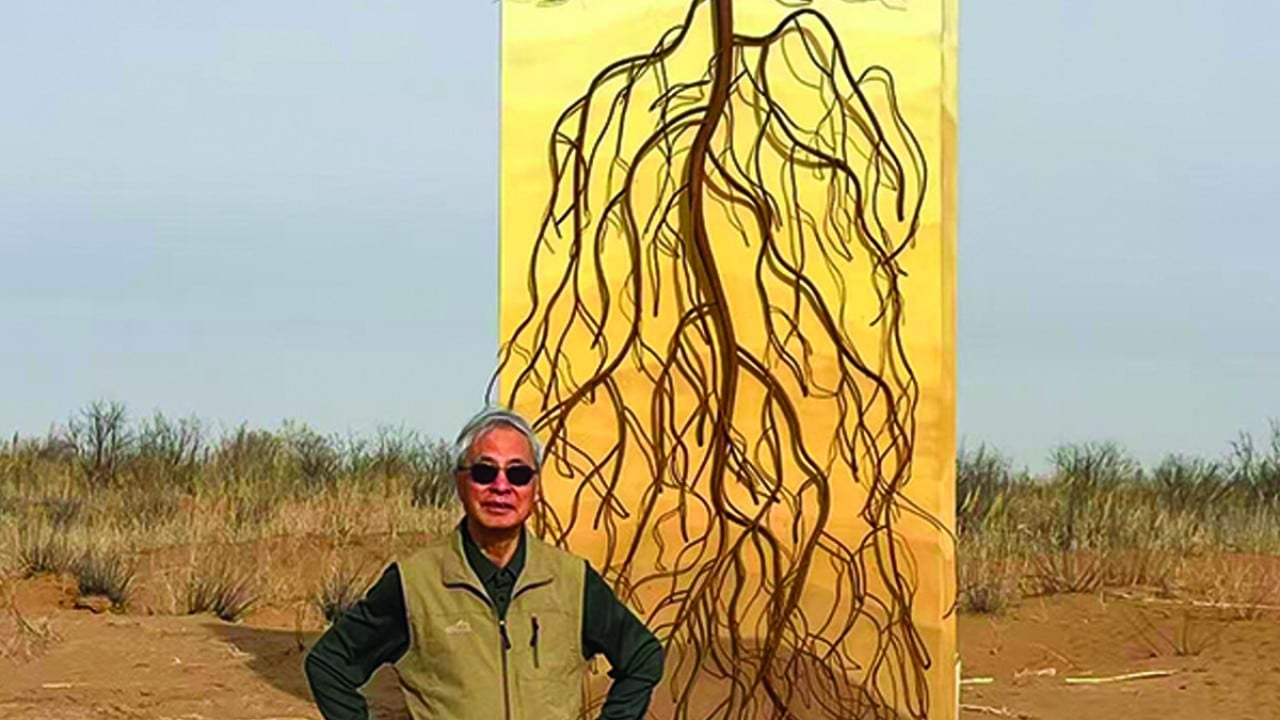
In the desolate expanse of Inner Mongolia's Tengger Desert, a private afforestation project near Malan Lake is pioneering a multi-faceted approach to combat desertification. Founder Mr Yuen Shu Wah is not only planting trees but also reshaping livelihoods and governance to create a self-sustaining system. Yuen emphasizes that desertification has historically uprooted countries, cities, and villages, and the threat it poses to communities is immense.
The Malan Lake area, along an ecological corridor, is crucial in preventing sandstorms and further degradation.
Yuen's afforestation efforts began in the late 2000s, with formal establishment in 2011 through Alxa League Springfield Forest Limited. Initially, he faced challenges such as windborne dunes up to 30 meters high advancing 12 meters annually. After extensive experimentation, Yuen invested heavily around 2013-2014, transitioning from small-scale trials to widespread afforestation.
The project has since planted up to 100 square kilometers annually, achieving a planting density of about 50 plants per mu (750 per hectare). Despite the scale of these achievements, Yuen remains modest, stating that the efforts are still a small fraction of the vast Tengger Desert.
The project stands out due to its unique blend of private funding, cost-effective practices, and social responsibility. It is primarily privately funded, operating like a business with the purpose of achieving public ecological goals. Yuen prioritizes indigenous, drought-resistant species that can thrive with minimal irrigation, ensuring low maintenance needs.
The team focuses on creating a "sand industry" with economic activities like cultivating Tremella mushrooms, using local shrubs, and promoting medicinal plant propagation. These initiatives aim to reduce dependence on overgrazing while providing alternative income streams for local residents.
Yuen recognizes the necessity of addressing livelihoods to sustain behavioral changes in overgrazing practices. He advocates for partnerships with enterprises and educational institutions to develop desert-based industries aligned with conservation goals. Universities and corporations contribute through land reservations, student involvement, procurement support, and product purchases.
Technology is also being integrated into the project's governance, with environmental sensors and satellite assessments being explored for improved monitoring and predictive capabilities.
While the project has made significant strides, Yuen remains realistic about its limitations. He acknowledges that even these gains represent just a "drop in the bucket" compared to the vastness of the desert. However, the Malan Lake model demonstrates that ecological restoration can be integrated into supply chains and ESG strategies, creating a sustainable and socially responsible approach to desert preservation.
Written by urgent.news from South China Morning Post's reporting — not their text. Machine-written — may contain errors; check the original before relying on it.
This story
This is one outlet's version. Read the fullest account.
- Social Transformation in the Sands scmp.com