NASA's Roman Telescope Could Unravel the Mysteries of Dark Energy and Dark Matter
Learn more about the Nancy Grace Roman Space Telescope and how it could uncover some of the mysteries surrounding dark matter and dark energy.
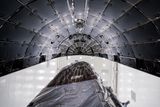
The Nancy Grace Roman Space Telescope, named after the pioneering astronomer, is set to launch and explore the mysteries of dark matter and dark energy. Although invisible, dark matter is believed to make up about 27 percent of the universe's mass and plays a crucial role in holding galaxies together through its gravitational pull. On the other hand, dark energy, which makes up about 68 percent of the universe, is thought to be the force that drives the expansion of the cosmos.
Roman's primary objective is to study these elusive components and their impact on the universe’s structure. The telescope will provide high-resolution images of the sky, enabling scientists to analyze gravitational lensing. This phenomenon occurs when massive objects, like black holes or galaxy clusters, bend the light from distant sources, effectively acting as natural telescopes. By studying this effect, researchers can better understand dark matter’s influence on cosmic objects.
Roman’s wide-field infrared survey instrument will capture images of vast sections of the sky, allowing astronomers to investigate the distribution of matter and the growth of structures over time. By tracking how these structures evolve, scientists can gain insights into the nature of dark energy. Moreover, the telescope’s ability to gather light and spectra from approximately 20 million galaxies will help determine the expansion rate of the universe at different cosmic epochs, providing crucial data for mapping the cosmos in unprecedented detail.
Written by urgent.news from Discover Magazine's reporting — not their text. Machine-written — may contain errors; check the original before relying on it.
This story
This is one outlet's version. Read the fullest account.
- NASA’s Roman Telescope Takes Aim at Cosmic Mysteries bloomberg.com
- NASA’s Roman Space Telescope Launches on Mission to Probe Hidden Universe sci.news
- NASA launches new space telescope france24.com
- NASA launches Roman telescope on cosmic mapping mission nst.com.my
- NASA's Nancy Grace Roman Space Telescope Launches to Find Exoplanets and Unravel Mysteries of Dark Matter and Dark Energy smithsonianmag.com
- Nasa launches new space telescope able to see 100 times more than Hubble bbc.co.uk
- Nasa launches Roman telescope on cosmic mapping mission freemalaysiatoday.com
- Roman Could Find Thousands of New Worlds — Here’s How the Telescope Hunts for Exoplanets discovermagazine.com