NASA launches Roman telescope on cosmic mapping mission
WASHINGTON: NASA launched its new flagship space telescope on Sunday, embarking on a multi-year mission to create an unprecedented map of the cosmos and shed light on some of the biggest mysteries in physics.
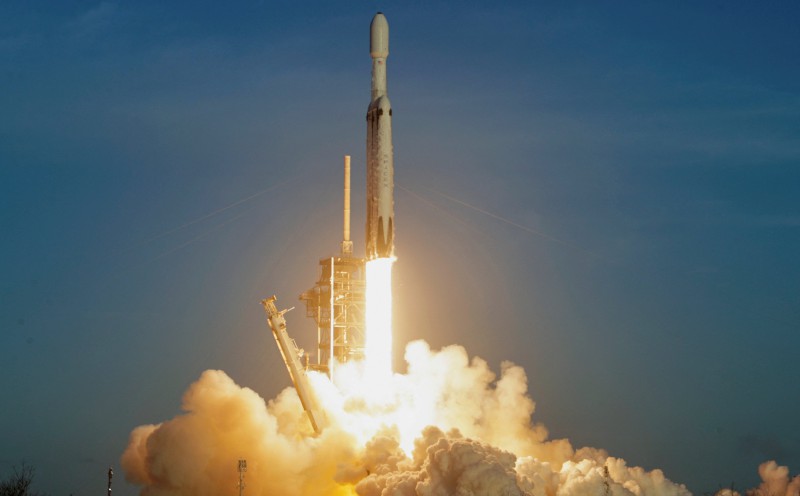
NASA launched the Roman Space Telescope on Sunday, a flagship mission to map the cosmos over several years and uncover some of physics' biggest mysteries. Standing 12 meters tall, the telescope was launched from Kennedy Space Center aboard a SpaceX Falcon Heavy rocket. Costing over $4 billion, it was named after pioneering astronomer Nancy Grace Roman, dubbed the Mother of Hubble.
Roman's panoramic view is over 100 times larger than Hubble's, and its 1.5 million km distance from Earth will take about 100 days to reach. Able to detect light from celestial objects billions of years old, it aims to provide a new atlas of the universe. Studying dark matter and dark energy, which together make up about 95% of the universe, Roman will also discover thousands of exoplanets and supernovae.
Complementing other observatories like the Rubin Observatory and ESA's Euclid, Roman could challenge scientists' understanding of the universe's structure. With daily data generation of 1.3 terabytes, scientists expect some surprising discoveries that could set the stage for future missions.
Written by urgent.news from New Straits Times's reporting — not their text. Machine-written — may contain errors; check the original before relying on it.
This story
This is one outlet's version. Read the fullest account.
- NASA’s Roman Telescope Takes Aim at Cosmic Mysteries bloomberg.com
- NASA’s Roman Space Telescope Launches on Mission to Probe Hidden Universe sci.news
- NASA launches new space telescope france24.com
- NASA's Nancy Grace Roman Space Telescope Launches to Find Exoplanets and Unravel Mysteries of Dark Matter and Dark Energy smithsonianmag.com
- Nasa launches new space telescope able to see 100 times more than Hubble bbc.co.uk
- NASA's Roman Telescope Could Unravel the Mysteries of Dark Energy and Dark Matter discovermagazine.com
- Nasa launches Roman telescope on cosmic mapping mission freemalaysiatoday.com