NASA’s Roman Space Telescope Launches on Mission to Probe Hidden Universe
NASA’s Nancy Grace Roman Space Telescope launched August 30, 2026 at 7:26 a.m. EDT (11:26 UTC) aboard a SpaceX Falcon Heavy from Launch Complex 39A at Kennedy Space Center, beginning a three-month, 1.5 million km (930,000 miles) journey to its operating post at the second Sun-Earth Lagrange point (L2). The post NASA’s Roman Space Telescope Launches on Mission to Probe Hidden Universe appeared…
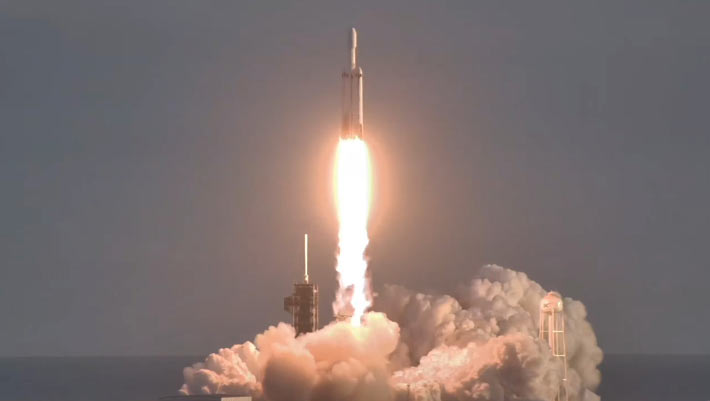
The Nancy Grace Roman Space Telescope was launched on August 30, 2026, at 7:26 a.m. EDT aboard a SpaceX Falcon Heavy rocket from Kennedy Space Center. The $4.3 billion telescope, according to Universe Today, began a three-month journey to its operating post at the second Sun-Earth Lagrange point (L2), about 1.5 million km from Earth.
The telescope is designed to study distant planets, exploding stars, and black holes while surveying the universe. According to Daily Maverick, its mission is planned for five years, though it may have enough fuel for five additional years. The observatory will investigate cosmic enigmas such as dark energy and dark matter, test gravity at vast scales, and search for exoplanets.
The telescope's two mirrors were originally meant for a National Reconnaissance Office spy satellite project, but were repurposed for NASA's use. The space agency had originally scheduled liftoff for 2027, but the mission came in ahead of schedule and under budget, Universe Today reported.
Brief written by urgent.news from Sci.News, Qatar Tribune, Universe Today, CBC News, Daily Maverick — 5 reports on this story. Machine-written — may contain errors; check the original before relying on it.
This story
This is one outlet's version. Read the fullest account.
- NASA’s Roman Telescope Takes Aim at Cosmic Mysteries bloomberg.com
- NASA launches new space telescope france24.com
- NASA launches Roman telescope on cosmic mapping mission nst.com.my
- NASA's Nancy Grace Roman Space Telescope Launches to Find Exoplanets and Unravel Mysteries of Dark Matter and Dark Energy smithsonianmag.com
- Nasa launches new space telescope able to see 100 times more than Hubble bbc.co.uk
- NASA's Roman Telescope Could Unravel the Mysteries of Dark Energy and Dark Matter discovermagazine.com
- Nasa launches Roman telescope on cosmic mapping mission freemalaysiatoday.com