Gardening the Moon's Cosmic Archives
When a meteoroid hits the Moon's surface, it does more than just dig up a little dirt. It actually excavates a little bit of cosmic history that recorded a long-ago supernova explosion. Scientists at the University of Hawaii Institute of Geophysics and Planetology have come up with a way to decode that history and learn something about such energetic events in the Universe.
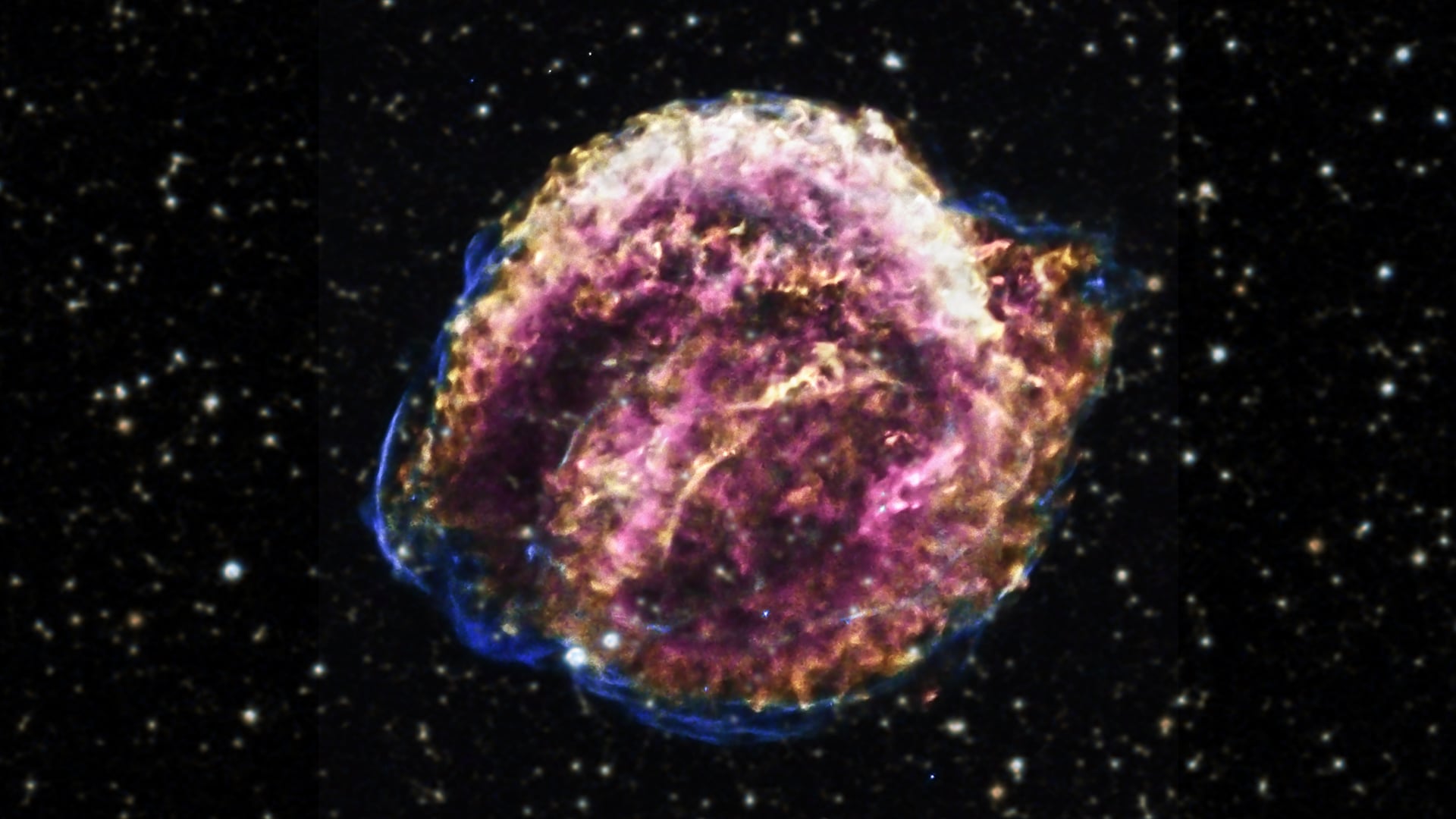
A meteoroid impact on the Moon's surface serves as an excavation of cosmic history, revealing details of ancient supernova explosions. Researchers at the University of Hawaii have devised a method to decode this history, which could guide future lunar explorations in selecting optimal locations for core samples. Emily Costello and her team have developed a stochastic model that deciphers the effects of impact gardening—an ongoing process on the Moon caused by numerous impacts.
This model takes into account the mixing, flipping, and redistribution of the Moon’s regolith over time. Meteoroids, ranging from tiny dust grains to large asteroids, collide with the lunar surface, contributing to the regolith's composition. When a massive star transforms into a supernova, it disperses stellar material throughout space, including radioactive isotopes of elements like iron, nickel, zinc, uranium, plutonium, iodine, hafnium, and curium.
This material, deposited on Earth and the Moon, acts as a permanent cosmic archive, preserving history ranging from 80 to 100 million years. The lunar regolith, by acting as a long-term record, allows scientists to reconstruct the history of our Solar System's journey through the galaxy. The complexity of modeling impact gardening involves balancing various physical mechanisms, including impact compaction, excavation, radioactive decay, and space weathering.
Costello's model treats lunar impact gardening as a competition between forces burying soil and digging it back up, accounting for radioactive decay and mapping the arrival of new stardust from supernovas. The model successfully predicted depth-concentration profiles of certain isotopes using Apollo samples, demonstrating its accuracy in reproducing observed patterns.
As planned lunar missions from NASA, the Chinese Space Agency, and others collect lunar dust samples, these samples will not only help scientists understand the Moon's surface history but also provide insights into the history of stardust raining down on the lunar surface. Understanding the physics of regolith mixing ensures that future core samples can provide valuable information about past supernovae, offering a unique cosmic time capsule for stardust exploration.
Written by urgent.news from Universe Today's reporting — not their text. Machine-written — may contain errors; check the original before relying on it.