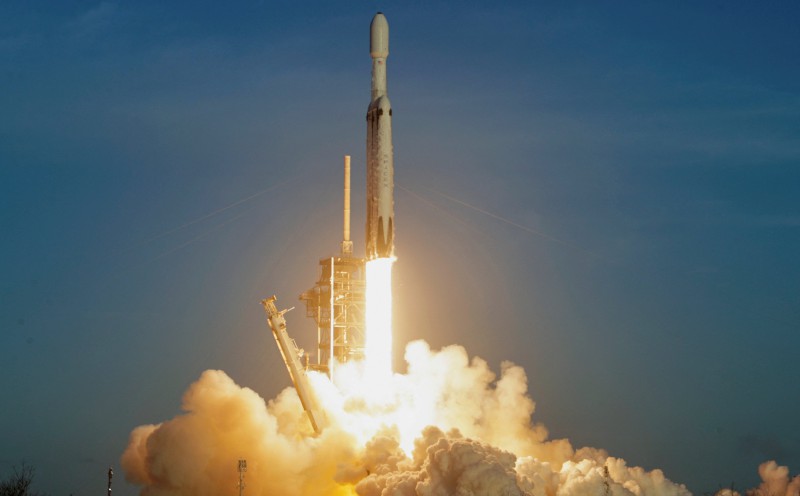
ABB and Nüvü exoplanet camera readout system for NASA flagship telescope launched into orbit
NASA’s Nancy Grace Roman Space Telescope is equipped with high-precision imaging camera electronics developed by ABB and Nüvü Camēras The ultra-sensitive camera readout system enables NASA to study planets beyond our solar system, helping advance the search for other worlds The Roman mission will pave the way for NASA’s Habitable World Observatory, a future mission […]
In the late 1990s, a space telescope named Hubble Space Telescope revolutionized our understanding of the universe. Observations from Hubble, alongside data from ground-based telescopes, revealed that the universe's expansion was not slowing down as previously believed, but rather accelerating. This acceleration was attributed to a mysterious force named dark energy, a concept that earned Australian astrophysicist Brian Schmidt a Nobel Prize in 2011.
However, recent galactic maps suggest that our knowledge about dark energy may be incomplete. Nearly three decades after the dark energy discovery, NASA's new telescope, the Nancy Grace Roman Space Telescope, could potentially clarify this cosmic mystery. Nicky Fox, the associate administrator for NASA's Science Mission Directorate, stated that the Roman Space Telescope could bring humanity closer to answering profound questions about our cosmic history.
The Roman Space Telescope, launched recently, is expected to serve as a discovery machine, providing unprecedented insights into the universe's composition and evolution. Dr. Ami Choi, an astrophysicist, emphasized the importance of diverse perspectives in understanding dark energy and dark matter, two enigmatic components that interact minimally with ordinary matter.
Dr. Choi highlighted that studying these phenomena from multiple angles is crucial, much like the paradigm shifts that occurred when our understanding of gravity evolved from Newton's laws to Einstein's theory of general relativity. The Roman Space Telescope, equipped with an infrared camera capable of capturing vast images, will help researchers study the cosmic web, a vast network of galaxies, filaments, and voids that shape the universe's structure.
By combining data from the Roman Space Telescope and other telescopes, astronomers aim to create a comprehensive map of the universe, shedding light on the nature of dark energy and dark matter.
Written by urgent.news from ABC News AU's reporting — not their text. Machine-written — may contain errors; check the original before relying on it.
Also reported by 4 other outlets
- A look at NASA's Roman Space Telescope, heading into deep space cbsnews.com
- NASA’s new telescope can see 100 times more sky than Hubble in a single shot digitaltrends.com
- NASA's new telescope to test whether scientists have dark energy wrong abc.net.au
- What’s next for NASA’s new Roman Space Telescope? scientificamerican.com