Disaster Experts Say Nepal Glacier Collapse Was Difficult to Predict
Given the challenges in forecasting and detecting such calamities, researchers advised banning construction on floodplains and marking out clear evacuation routes.
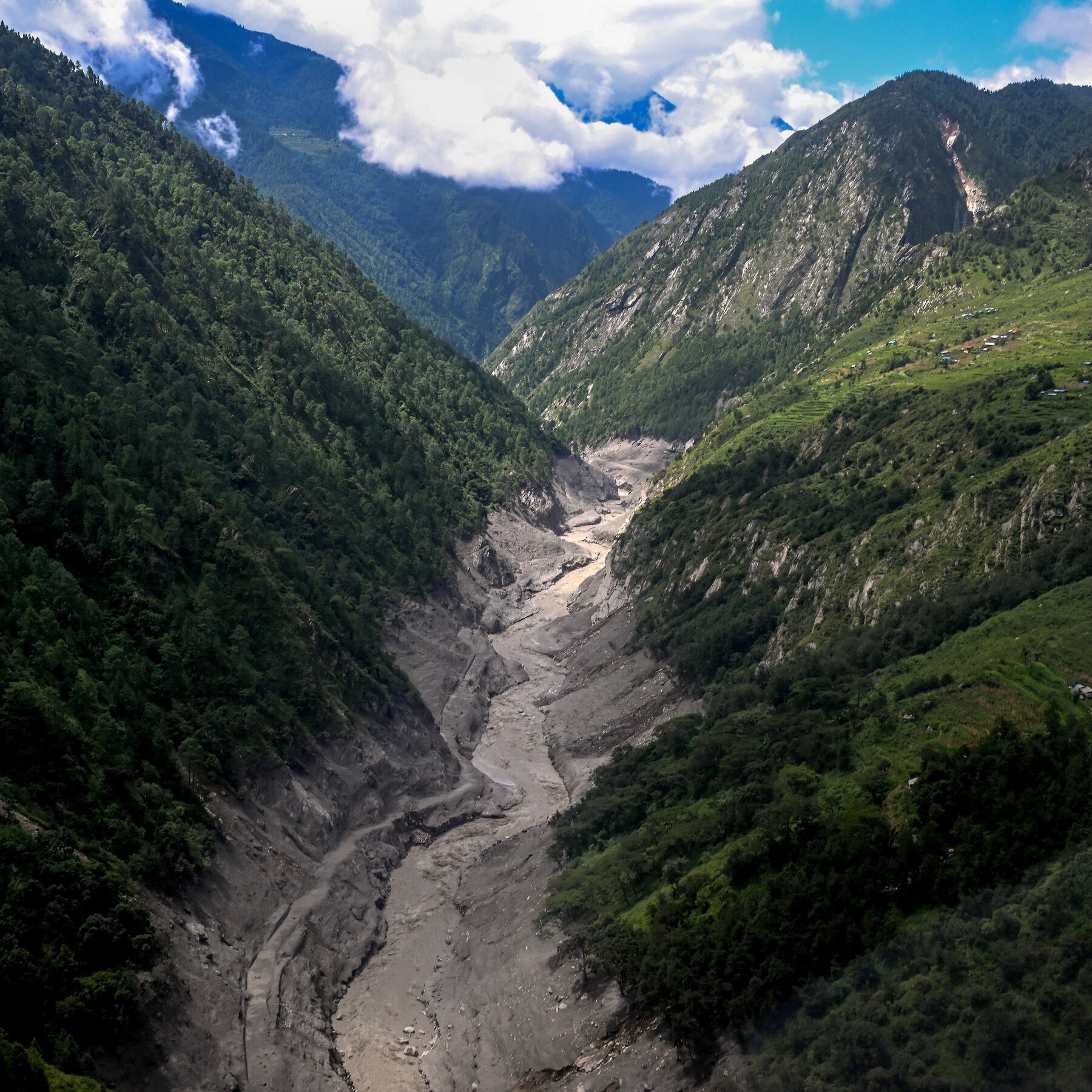
On the night of October 3, 2023, South Lhonak Lake in north Sikkim burst, sending a torrent of water and debris down the Teesta River. The cataclysmic event affected more than a thousand kilometers of river corridor, resulting in the destruction of homes, a hydroelectric dam, and the tragic loss of over 50 lives. Hospitals, medical records, and insulin supplies were irrevocably lost, leaving communities to grapple with the ripple effects of this disaster long after the water receded.
Glacial lake outburst floods (GLOF) in the Indian Himalaya have traditionally been viewed as hydrological hazards, but a closer look reveals their true impact is far more complex. The Hindu Kush Himalaya region is warming at a rate faster than the global average, leading to the thinning of glaciers and swelling of glacial lakes. As these bodies of water expand, they pose a recurring seasonal risk rather than a once-in-a-hundred-year event.
The aftermath of a GLOF can be broken down into four distinct waves of harm. The first wave is the immediate loss of life through drowning, trauma, and hypothermia. The second wave involves the contamination of water, sanitation, and health infrastructure, leading to outbreaks of acute diarrheal diseases, hepatitis, typhoid, skin infections, and leptospirosis.
The third wave focuses on the disruption of healthcare systems, such as interrupted insulin and dialysis treatments, and the psychological toll of solastalgia, a grief over the loss of a landscape that was once sacred. Finally, the fourth wave encompasses the long-term impacts on mental health and the destabilization of disease ecology, as mosquitoes appear in altitudes where they were previously absent.
To effectively address the health consequences of GLOF, a multi-pronged approach is necessary. First, map the downstream health footprint of high-risk glacial lakes and overlay this data with existing health and family welfare information. This should include primary health centres, sub-centres, cold-chain points, and antenatal caseloads.
Each high-risk lake should be tagged with details about the number of lives, chronic prescriptions, and delivery rooms at risk. Second, early warning systems must be transformed into clinical interventions, providing clear instructions for healthcare workers on how to evacuate oxygen plants, move vaccines, and secure critical medical supplies.
Third, make hill hospitals climate-proof by ensuring elevated drug storage, solar-backed cold chain systems, and seven-day emergency kits for common ailments. Lastly, implement syndromic surveillance for 90 days after a GLOF, monitoring for signs of diarrhoea, jaundice, wound infections, breathlessness, distress, and new-onset fevers, as these are critical indicators of morbidity rather than mortality.
In conclusion, the health security of Himalayan communities must be rebuilt alongside the physical reconstruction of their environment. The glacier may no longer serve as a fortress against the elements, but with a comprehensive health-focused strategy, the valley can emerge stronger and more resilient in the face of this emerging climate-health syndemic.
Written by urgent.news from The Indian Express's reporting — not their text. Machine-written — may contain errors; check the original before relying on it.
This story
This is one outlet's version. Read the fullest account.
- Nepal floods triggered by ice-rock avalanche: Nepalese scientists hindustantimes.com
- Nepal glacier collapse kills over 469, triggers 5.2-magnitude tremor english.nv.ua
- India steps up glacier monitoring after Nepal disaster freemalaysiatoday.com
- What Triggered the Devastating Floods in Nepal and Tibet, and Are We Due for More in the Future? Here's What Scientists Know So Far smithsonianmag.com
- Disaster Experts Say Nepal Glacier Collapse Was Difficult to Predict nytimes.com
- India steps up glacier monitoring after Nepal disaster channelnewsasia.com
- Devastating Nepal floods were triggered by glacier collapse, experts say — and there's a risk of more landslides to come livescience.com
- India steps up Himalayan glacier monitoring after deadly Nepal–Tibet floods malaymail.com