Moving sea turtle nests may lead to smaller hatchlings and fewer males
Relocating vulnerable sea turtle nests can lead to unexpected negative consequences. When nests are moved to warmer areas, the sex ratio of hatchlings skews heavily towards females. Additionally, even nests placed in shaded locations yield smaller hatchlings with reduced physical capabilities. Therefore, effective nest relocation must consider various environmental factors beyond just temperature…
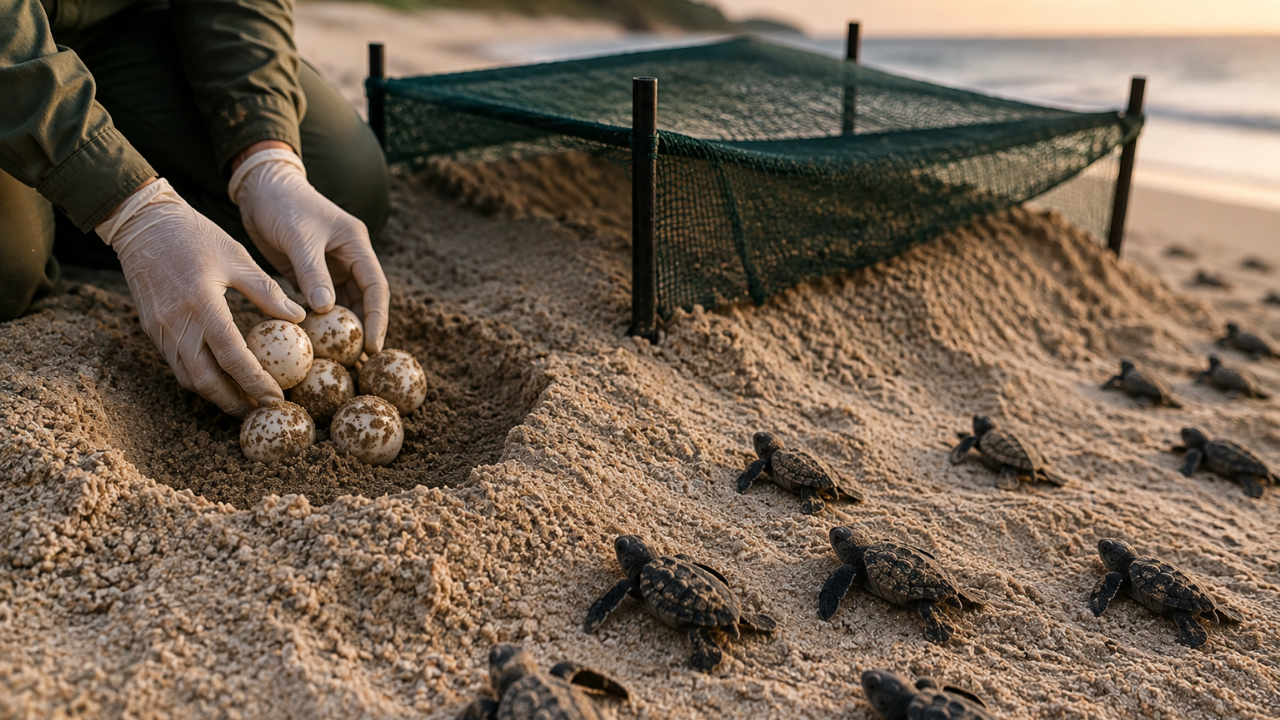
As rising temperatures, flooding and erosion threaten sea turtle nests, conservationists often relocate vulnerable eggs to safer locations. However, a new study suggests that this practice may lead to smaller hatchlings and a disproportionate number of females. Researchers studied green turtles on Heron Island, Queensland, finding that relocated nests produced fewer eggs, some of which were smaller and performed less well than those from natural nests.
The sex ratio was also heavily skewed towards females, with only about 8% of hatchlings being male during one nesting season. While shading helped reduce nest temperatures and produced a more balanced sex ratio, it did not guarantee better hatchling quality. Cooler nests, even when shaded, still faced problems such as lower hatching success and reduced physical performance.
The researchers suggest that factors like moisture levels, sand structure, and gas exchange may influence embryo development, making the environment inside a sea turtle nest complex. Despite these findings, relocation may still be necessary for nests at high risk of flooding or destruction, but conservationists should consider additional factors when deciding where to move the nests.
Written by urgent.news from Times of India's reporting — not their text. Machine-written — may contain errors; check the original before relying on it.