What Triggered the Devastating Floods in Nepal and Tibet, and Are We Due for More in the Future? Here's What Scientists Know So Far
Natural hazards researchers suspect that a landslide involving a glacier triggered the event, and they say more could happen because of human-caused climate change
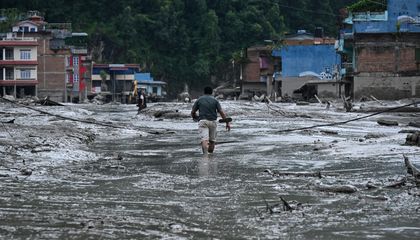
On August 26, a series of devastating flash floods swept through the Nepal-Tibet border area, claiming over 900 lives and leaving nearly 5,000 people missing as of August 31, according to official reports. Keshav Prasad Baral, a 68-year-old survivor, described the terrifying moment when a massive surge of mud and debris surged towards him, claiming his wife among the missing.
The US Geological Survey (USGS) traced the origins of the disaster to a landslide in Nepal's Lāṅṭāṇ National Park in the Himalayas. The agency suggests that a landslide carrying a glacier or a glacier collapse might have been responsible for the catastrophic event. Satellite images captured on August 26 show a barren mountain, suggesting a massive landslide had occurred.
However, the exact source of the water remains unclear, with scientists now leaning towards the landslide hypothesis rather than a glacial lake collapse, as satellite data did not indicate any significant glacial lake formations in the region. The USGS further explains that the glacial debris carried along with the rushing water picked up rocky material, resulting in a debris flow and flood that traveled approximately 62 miles.
Climate change is believed to have exacerbated the situation, destabilizing the Himalayan glaciers and increasing the likelihood of similar hazards in the future. Rising global temperatures have led to the swift melting of glaciers, which, combined with the thawing permafrost, has made the mountains and surrounding ice less stable.
This instability can trigger massive landslides, leading to cascading processes that culminate in devastating floods and destruction downstream. Nepal's government has called for a global effort to address climate change in light of the disaster, emphasizing the need to preserve the Himalayan ecosystem and enhance the resilience of communities living in such disaster-prone regions.
Rescue operations continue, and a prolonged cleanup effort is expected, with the cost of rebuilding possibly reaching $4 billion to $5 billion, accounting for about a tenth of Nepal's economy.
Written by urgent.news from Smithsonian's reporting — not their text. Machine-written — may contain errors; check the original before relying on it.
This story
This is one outlet's version. Read the fullest account.
- Nepal glacier collapse kills over 469, triggers 5.2-magnitude tremor english.nv.ua
- India steps up glacier monitoring after Nepal disaster freemalaysiatoday.com
- Disaster Experts Say Nepal Glacier Collapse Was Difficult to Predict nytimes.com
- India steps up glacier monitoring after Nepal disaster channelnewsasia.com
- Devastating Nepal floods were triggered by glacier collapse, experts say — and there's a risk of more landslides to come livescience.com
- India steps up Himalayan glacier monitoring after deadly Nepal–Tibet floods malaymail.com
- Nepal floods: Some bodies decompose beyond recognition, local govt to preserve DNA before remains are handled mothership.sg
- India, Nepal and beyond: When a glacier bursts, it harms and kills long after the water recedes indianexpress.com