Climate change likely contributed to Nepal-Tibet glacier collapse, scientists say
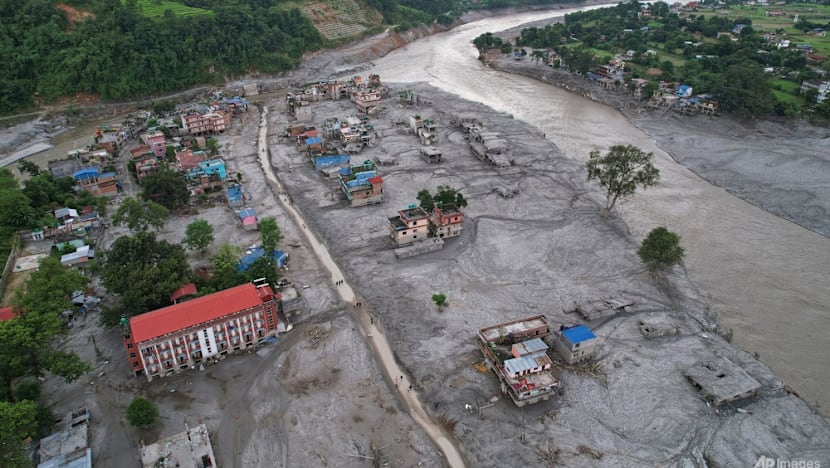
CLIMATE change is highly likely to have contributed to the catastrophic collapse of glaciers and rock in the Himalayas that triggered devastating floods across parts of Nepal and Tibet in late August, scientists said on Thursday. The disaster killed ...
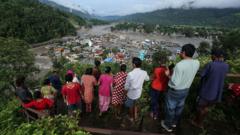
Scientists have concluded that climate change likely played a significant role in triggering the massive glacier collapse in Nepal that occurred in late August, resulting in widespread flooding and the tragic loss of around 1,400 lives. Rapidly rising temperatures in the region have caused glaciers to thin, leading to the melting of ice and permafrost buried deep within the Himalayas' bedrock, according to the World Weather Attribution (WWA) group of researchers.
While it is challenging to determine the exact extent to which climate change contributed to the collapse of approximately 2 square kilometers of rock wall and glacier ice on the Langtang Lirung mountain, soaring temperatures undoubtedly created the preconditions that made such an event more likely, researchers say. Climatologist Friederike Otto of Imperial College London emphasizes that there is no doubt that human-induced climate change played a role in preconditioning the disaster by causing permafrost thawing, thinning glaciers, and bringing about more rainfall rather than snow.
WWA utilizes peer-reviewed methods to evaluate the role of global warming in extreme weather events. The study reveals that mean temperatures were around 5 degrees Celsius (9 degrees Fahrenheit) higher than normal in the Himalayan region during August, with 1.5 degrees Celsius of the increase attributed to climate change. Unusually high levels of snowfall in October and November of the previous year also added to the volume of meltwater once temperatures started to rise, potentially contributing to the glacier collapse.
Glaciers in the region have been thinning by approximately half a meter per year (about 1.6 feet) since 2000, altering the stresses placed on the rock. The melting permafrost is further suspected to have weakened the rock wall, according to the study. A 7.8 magnitude earthquake that struck the same mountain in 2015 might have played a role in weakening the underlying bedrock as well, but its precise impact remains unclear.
Researchers conclude that the mountain slope was geologically vulnerable and that its destabilization was further exacerbated by glacier and permafrost retreat, along with the excessive meltwater and exceptional warmth in the final period leading up to the collapse, according to mountain hydrologist Walter Immerzeel from Utrecht University.
Written by urgent.news from Daily Maverick's reporting — not their text. Machine-written — may contain errors; check the original before relying on it.
This story
This is one outlet's version. Read the fullest account.
- Climate change made deadly Nepal glacier and rock collapse more likely, according to analysis winnipegfreepress.com
- Climate change likely to have helped trigger Nepal glacier collapse, scientists say channelnewsasia.com
- Climate change led to Nepal landslide, scientists find rte.ie
- Climate change likely to have helped trigger Nepal glacier collapse, scientists say dailymaverick.co.za
- Climate change likely contributed to Nepal-Tibet glacier collapse, scientists say thevibes.com
- Climate change was key factor in deadly Nepal-China flood, scientists say euronews.com