Climate change helped trigger Nepal-Tibet disaster, study finds
There was "no doubt that human-induced climate change played a role here", one of the study's authors said.
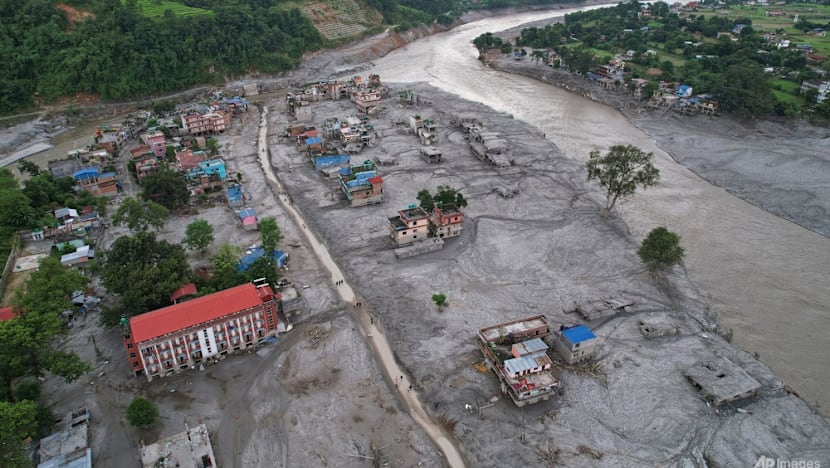
A recent study has determined that climate change played a role in the devastating glacier collapse near the Nepal-Tibet border, which resulted in catastrophic floods and the death of over 1,400 people. Friederike Otto, a climatologist at Imperial College London and co-author of the study, stated that human-induced climate change was indeed a contributing factor in the disaster.
The World Weather Attribution study, published on Thursday, found that the disaster was caused by a combination of rising temperatures, thinning glaciers, thawing permafrost, and pre-existing geological weaknesses. The collapse of a glacier slope near the peak of Langtang Lirung, a mountain in Nepal, triggered the floods, registering as a magnitude 5.2 earthquake.
Temperatures in the area were approximately 1.5°C warmer than usual due to human influence, while glaciers had been thinning by about half a meter per year, potentially weakening existing fractures and increasing instability. Additionally, a magnitude 7.8 earthquake in 2015 that triggered a rock-ice avalanche could have further weakened the underlying rock mass.
Nepali authorities have called for global efforts to address climate change, as the country is both a low emitter of greenhouse gases and highly vulnerable to its effects. Nepali Prime Minister Balendra Shah is set to travel to the United Nations General Assembly in New York next week to discuss the disaster and climate justice.
Written by urgent.news from BBC News's reporting — not their text. Machine-written — may contain errors; check the original before relying on it.