NASA's doomed Swift space telescope restarts science work after rescue mission fails
NASA's Swift space telescope has resumed science observations after a private mission failed to boost its decaying orbit, making the most of its remaining time in space.
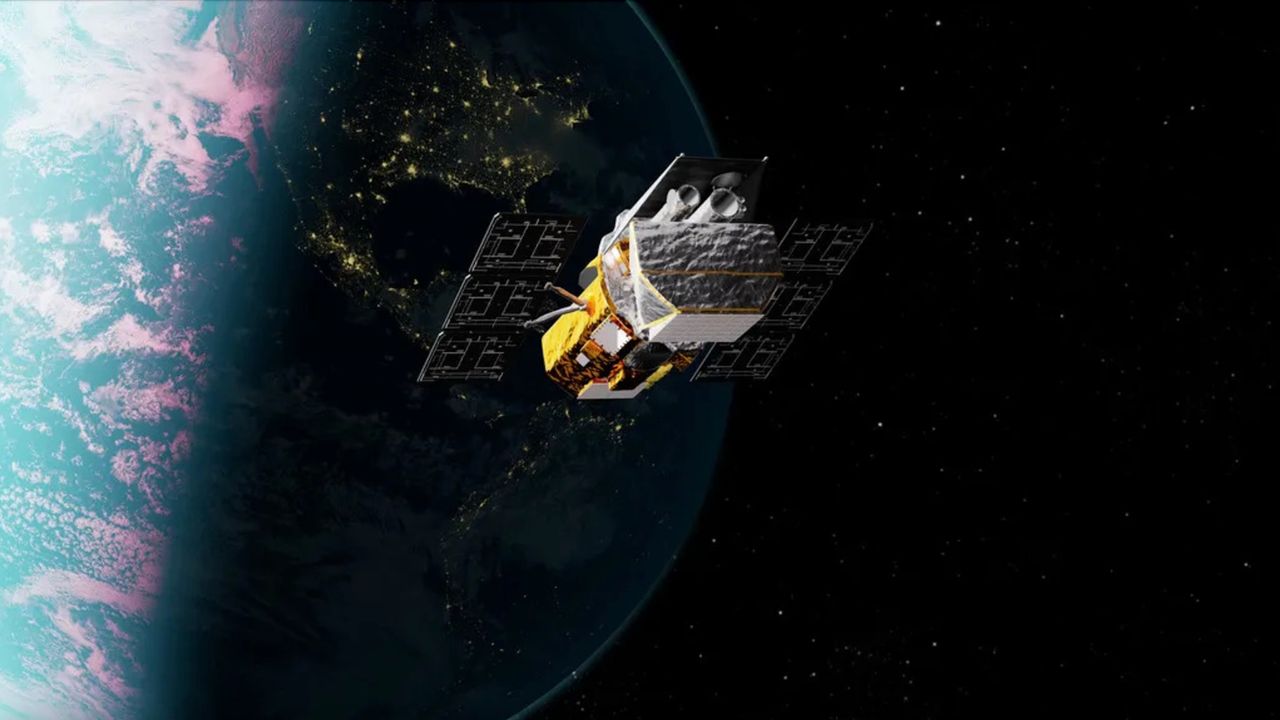
After a failed attempt to boost it back to a higher orbit, NASA's Swift space telescope has resumed its science work. The mission controllers have restarted two of Swift's three science instruments - the X-ray Telescope and Ultraviolet/Optical Telescope - on August 26 after they were shut down in February to minimize atmospheric drag. The third instrument, the Burst Alert Telescope, remains offline.
Swift's original mission was designed for a two-year duration to study gamma-ray bursts, but over the past 21 years, it has become a versatile tool for observing a wide range of light and rapidly responding to short-lived cosmic events. It also sends alerts to other space and ground-based facilities to coordinate follow-up observations.
NASA had planned to use a robotic servicing spacecraft called LINK to rendezvous with Swift and raise its orbit. However, LINK encountered issues with its attitude-control system and cold-gas thruster, causing it to spin out of control. Despite efforts to regain control, NASA and the mission's builder, Katalyst Space, decided not to attempt the capture and boost of Swift. Instead, LINK will rendezvous with the telescope to demonstrate technologies for future in-space satellite servicing missions.
Without the planned orbital boost, Swift is expected to reach a critical altitude within the next one to two months. If it falls below that threshold, operating the observatory will become increasingly difficult and its descent will accelerate. NASA anticipates that Swift will likely crash back to Earth later this year, mostly burning up during reentry.
Despite the uncertainty surrounding its future, Swift continues to scan the universe, making the best use of its remaining time and observing fleeting cosmic events across the gamma-ray, X-ray, ultraviolet, and visible light spectra.
Written by urgent.news from Space.com's reporting — not their text. Machine-written — may contain errors; check the original before relying on it.
This story
This is one outlet's version. Read the fullest account.