How NASA's new space telescope could help solve mysteries of dark energy and dark matter
NASA launched its newest space telescope, undertaking its biggest mission yet to study the universe on a much larger scale. A roughly $4 billion project, the Nancy Grace Roman Space Telescope will allow scientists to get panoramic views of space and better understand the nature of powerful forces known as dark energy and dark matter. Miles O'Brien joined Amna Nawaz to discuss more.
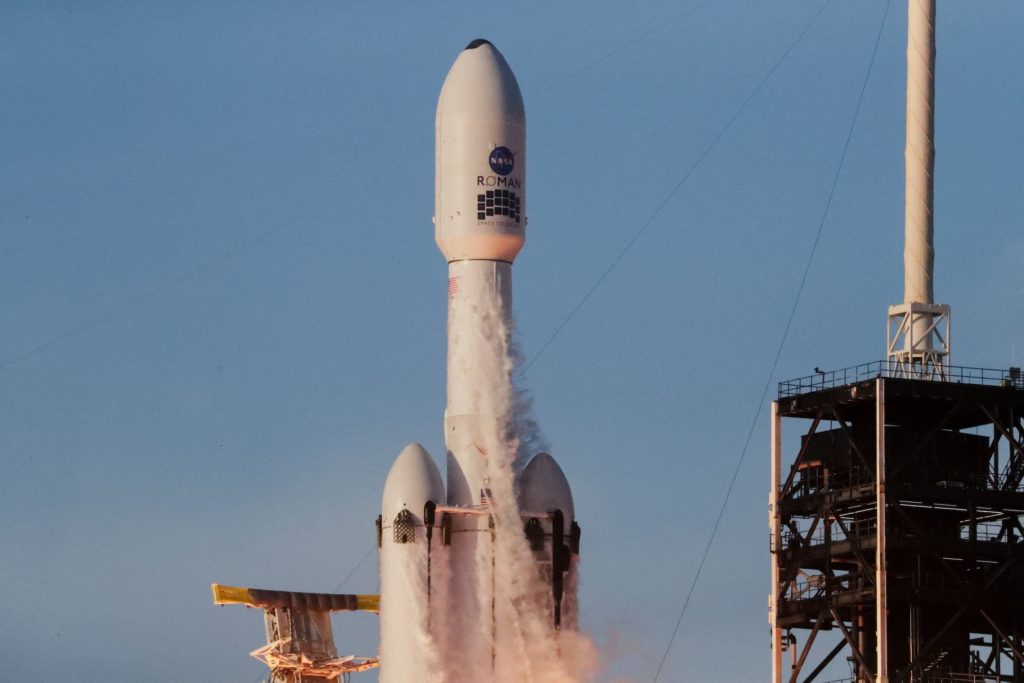
NASA recently launched its latest space telescope, the Nancy Grace Roman, marking its most ambitious mission yet. This $4 billion project aims to study the universe on an unprecedented scale. Its leader, NASA Administrator Jared Isaacman, explained how the Roman telescope differs from previous ones. Roman will change our perspective of the cosmos, potentially discovering tens of thousands, perhaps 100,000 new exoplanets.
In 1990, when Hubble was launched, no exoplanets were known; today, there are 6,000, and Roman could reveal 100,000 more.
The Roman telescope, costing about $4 billion, will provide panoramic views of space, helping scientists better understand dark energy and dark matter. Comparing it to a fleet, the Roman serves as the scout, offering a wide-angle lens with a mirror the same size as Hubble but 100 times more precise. Working 1,000 times faster than Hubble, it will gather vast amounts of data, transmitting about 1.5 terabytes daily. This data should shed light on the two primary targets of the Roman mission: dark energy and dark matter.
Dark matter acts as the invisible scaffolding that holds the universe together, while dark energy is a mysterious force causing the universe to expand and accelerate. Despite their invisibility, astronomers hope that data from Roman will bring them closer to understanding these enigmatic forces. Although invisible, astronomers can study the effects of dark matter and dark energy through phenomena like gravitational lensing.
The Roman telescope will observe how light bends due to gravity, offering insights into the gravitational pull's strength.
Despite the presence of other telescopes like Hubble and the James Webb Space Telescope, the Roman's unique capabilities make it invaluable. As the scout, it will survey the universe a thousand times faster than its predecessor, identifying celestial objects that have only been glimpsed previously. This data will be shared with other telescopes, such as Webb, Hubble, and Chandra, each operating in different wavelengths, allowing astronomers to gain a more comprehensive understanding of the cosmos.
Written by urgent.news from PBS NewsHour Science's reporting — not their text. Machine-written — may contain errors; check the original before relying on it.
This story
This is one outlet's version. Read the fullest account.
- Where is the Roman Telescope in space? scientificamerican.com
- How NASA's new space telescope could help solve mysteries of dark energy and dark matter pbs.org
- NASA launches Nancy Grace Roman Space Telescope to shed light on the dark universe physicsworld.com
- 'No guts, no glory': How I captured NASA's Roman Space Telescope cross the sun on a picture-perfect SpaceX Falcon Heavy launch space.com
- WATCH: NASA launches revolutionary new telescope abcnews.com
- Track NASAs Roman Space Telescope on its long cruise to deep space mashable.com
- Nasa launches ‘Mother of Hubble’-named telescope to map the cosmos malaymail.com
- Dark energy, exoplanets and black holes: What Nasa’s new Roman telescope will explore timesofindia.indiatimes.com