Track NASAs Roman Space Telescope on its long cruise to deep space
The Nancy Grace Roman Space Telescope now flies toward its frigid outpost. Follow its 100-day journey using NASA's online tracker.
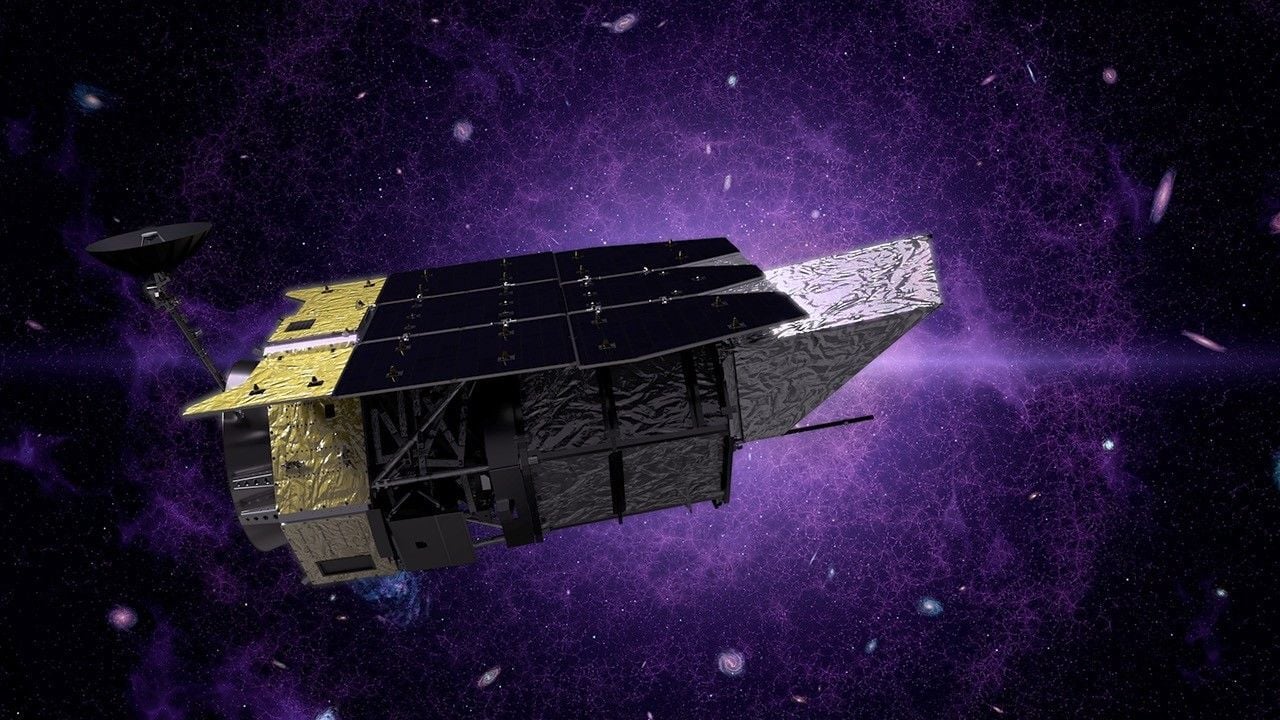
NASA's Nancy Grace Roman Space Telescope recently launched from Cape Canaveral, Florida aboard a SpaceX Falcon Heavy rocket on August 30th. The telescope is now cruising on its own toward its final destination, the second sun-Earth Lagrange Point (L2), located about 1 million miles from Earth. L2 is a gravitational parking spot beyond the Moon's orbit, providing Roman with an unobstructed, steady view of the sky without Earth's atmosphere interfering.
During its three-month journey to L2, Roman will undergo a commissioning phase called checkout. During this period, engineers and scientists turn on systems step by step, fine-tune settings, and calibrate instruments before the telescope begins its full science operations. The team has performed the first mid-course correction burn, a three-minute engine firing that adjusted Roman's trajectory.
Two more such burns are scheduled early in the trip to ensure the spacecraft uses as little fuel as possible, which translates directly into more years of science.
Once Roman settles into its looping orbit around L2, controllers will fire thrusters about every 28 days to maintain the spacecraft's position. After reaching L2, Roman will use a wide-field camera to capture an area of sky about 100 times larger than a typical Hubble image while maintaining Hubble's sharpness. This ability will allow Roman to map billions of galaxies, tens of thousands of planets, and thousands of supernova explosions.
With its planned five-year prime mission, Roman is expected to send down approximately 1.4 terabytes of data daily, with NASA committing to releasing these data sets without delay. The first detailed space images are anticipated around December, with surveys beginning in January 2027.
Written by urgent.news from Mashable's reporting — not their text. Machine-written — may contain errors; check the original before relying on it.
This story
This is one outlet's version. Read the fullest account.
- How NASA's new space telescope could help solve mysteries of dark energy and dark matter pbs.org
- NASA launches Nancy Grace Roman Space Telescope to shed light on the dark universe physicsworld.com
- 'No guts, no glory': How I captured NASA's Roman Space Telescope cross the sun on a picture-perfect SpaceX Falcon Heavy launch space.com
- WATCH: NASA launches revolutionary new telescope abcnews.com
- Where is the Roman Telescope in space? scientificamerican.com
- Watch NASA and SpaceX launch the Roman Space Telescope mashable.com
- Nasa launches ‘Mother of Hubble’-named telescope to map the cosmos malaymail.com
- Dark energy, exoplanets and black holes: What Nasa’s new Roman telescope will explore timesofindia.indiatimes.com