Nancy Grace Roman Space Telescope: What to know about NASA’s new space observatory
NASA's Nancy Grace Roman Space Telescope will study dark matter, dark energy and exoplanets after launching on SpaceX's Falcon Heavy rocket.

The Nancy Grace Roman Space Telescope is an ambitious new space observatory set to launch from NASA's Kennedy Space Center in Florida, embarking on a quest to unravel some of the universe's most profound mysteries. This telescope, named after NASA's first chief astronomer, Nancy Grace Roman, is about the size of a tour bus and boasts a field of view 100 times larger than its predecessor, the Hubble Space Telescope.
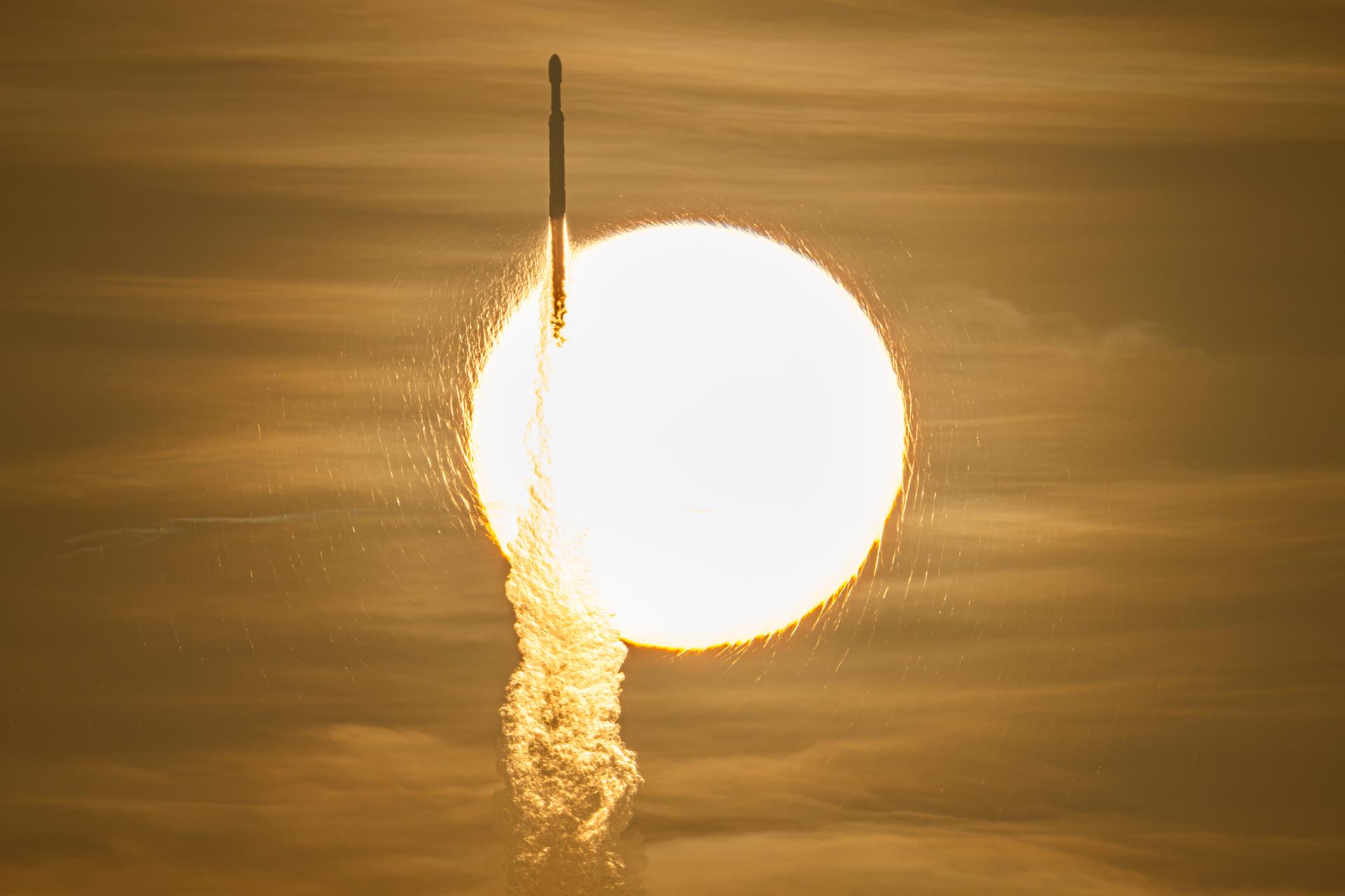
Scheduled for launch on August 30, the Roman Space Telescope will hitch a ride on a SpaceX Falcon Heavy rocket from Launch Complex 39A. However, weather conditions could affect the launch, with a 50% chance of favorable conditions for the initial attempt and a better, 70% chance for a backup launch on the following day.
Upon reaching its destination at the second Sun-Earth Lagrange point, or L2, the telescope will be approximately one million miles from Earth. This location allows the spacecraft to maintain a stable orbit with minimal fuel usage, thanks to the gravitational forces of the Sun and Earth working together.
Roman's mission is multifaceted. It aims to shed light on dark matter, an elusive substance that exerts gravity on galaxies and shapes the universe. By studying how dark matter subtly bends light, scientists can create maps of its distribution across the universe. This could lead to a deeper understanding of dark matter and its role in cosmic evolution.
The telescope will also tackle the enigma of dark energy, the mysterious force driving the universe's expansion. By observing a larger number of Type Ia supernovas—standard candles whose predictable brightness aids in distance calculations—Roman could unravel the nature of dark energy, potentially reshaping our understanding of the universe's past, present, and future.
Another key objective is the discovery of exoplanets, planets orbiting stars beyond our solar system. With the ability to detect exoplanets through both the transit method (by observing the dimming of a star as a planet passes) and microlensing (by detecting minute changes in distant starlight), Roman could uncover thousands of new exoplanets, including those previously undetectable with existing methods.
Data from the Roman Space Telescope will inundate scientists, with the telescope sending back an astonishing 1.4 terabytes of raw science data daily. This wealth of information will be accessible to researchers worldwide through NASA's Roman Nexus system, fostering a collaborative global effort to explore the cosmos.
Written by urgent.news from Hindustan Times - World News's reporting — not their text. Machine-written — may contain errors; check the original before relying on it.
This story
This is one outlet's version. Read the fullest account.
- The Nancy Grace Roman Space Telescope launches to study dark matter and dark energy theverge.com
- NASA launches astronomical wide-angle lens into space – what will the Nancy Grace Roman Telescope capture, and how does it differ from James Webb and Hubble? digitalcameraworld.com
- Who Was Nancy Grace Roman? Namesake of New NASA Telescope newsweek.com
- How Nancy Grace Roman, the ‘Mother of Hubble,’ Became the Namesake of NASA’s New Telescope discovermagazine.com