Glacier break or earthquake? What triggered the Nepal floods? | Explained
The evidence now points to a large collapse of ice and rock high in the Himalayas near Langtang Lirung, rather than heavy rainfall.
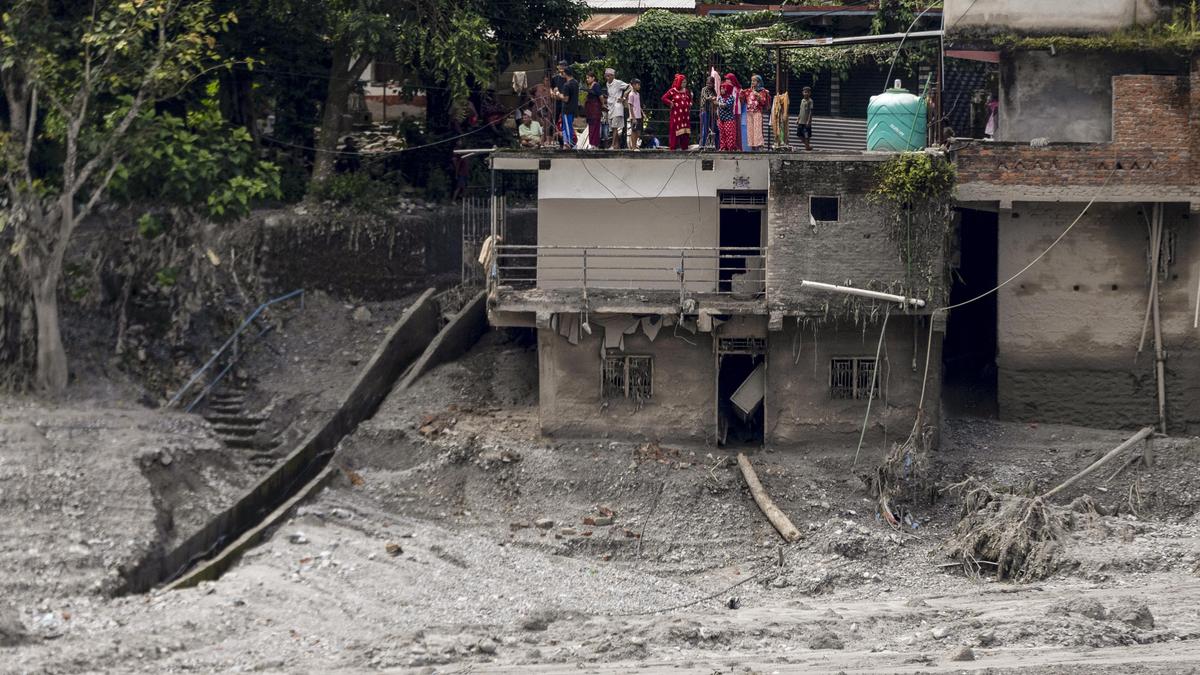
A catastrophic flash flood originating from the Bhote Koshi-Trishuli river system has claimed the lives of at least 389 individuals in Nepal and three in Tibet, leaving over 1,400 people missing. The disaster has displaced hundreds of people, forcing them to flee from affected regions including Rasuwa, Nuwakot, Dhading, Gorkha, and Chitwan.
In India, no fatalities have been reported, but 288 Indian nationals remain untraceable, with 84 successfully rescued. Authorities in Bihar and Uttar Pradesh are closely monitoring potential downstream flood risks.
Initial assessments suggest that the trigger for the disaster was not heavy rainfall, but rather the sudden and massive collapse of ice and rock high in the Himalayas near Langtang Lirung. This massive chunk of glacial ice, rock, and debris, which fell from an elevation of approximately 5,200 meters, plummeted about 1,200 meters down the Lhende Khola system, gathering additional rock, sediment, ice, and water along the way. This gathering force transformed the falling mass into a fast-moving debris flow.
The debris flow initially obstructed the river, subsequently releasing a surge that swiftly traveled downstream through the Bhote Koshi and Trishuli systems. This destructive force reached communities located nearly 100 kilometers away, causing widespread destruction to roads, bridges, homes, and hydropower infrastructure. Rescue, search, and relief operations are currently underway, as authorities try to contain the aftermath of this natural catastrophe.
Written by urgent.news from The Hindu - Sci-Tech's reporting — not their text. Machine-written — may contain errors; check the original before relying on it.
Also reported by 8 other outlets
- 'Glaciers in Himalayas retreating': Nepal floods triggered by 'glacier collapse & massive landslide' france24.com
- Nepal floods: Family pleads with govt to bring missing Malaysians home, whatever their condition nst.com.my
- Does the Nepal glacier collapse signal a new climate risk? phys.org
- Does The Nepal Glacier Collapse Signal A New Climate Risk? ndtv.com
- Months before Nepal floods, reports flagged livelihood threat from rapid glacier loss in Hindu Kush Himalaya hindustantimes.com
- WATCH | Six-year-old girl rescued after being trapped under rubble in Nepal floods iol.co.za
- Road collapses in Nepal landslide four days after floods aljazeera.com
- Nepal floods: The red flags in dam-building in the Himalayas indianexpress.com