Ask Ethan: Can someone possibly see the edge of spacetime?
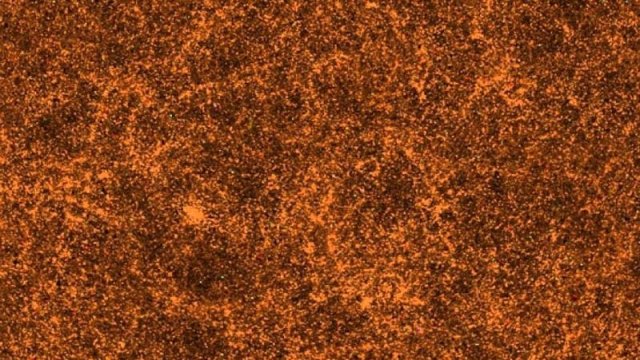
In our Universe, in all directions and in all locations, there’s simply more “stuff” that space is full of everywhere we look. On the largest scales of all, the richest galaxy clusters and the sparsest cosmic voids average away, leaving us with a Universe that’s isotropic, homogeneous, and almost perfectly uniform. The oldest light in the Universe, the cosmic microwave background radiation, is a…
Jason Moorhead, a curious individual, asks the question: could there be a galaxy near the edge of space-time, one that could possibly glimpse the boundary of the current spacetime "wall"? It is a fascinating query, but one that remains somewhat speculative. If someone were indeed to exist close to that hypothetical edge, their perception of the universe would be markedly different from what we observe today.
To understand why, we must first appreciate the fundamental nature of our Universe. Theoretical and observational evidence points towards a Universe that is governed by the principles of general relativity, is isotropic on the largest scales, and homogeneous on a cosmic average. This means that no matter which direction we look in, we find a Universe with consistent properties, such as density, temperature, and composition.
Yet, as the Universe expands, it cools, enabling the formation of ions, neutral atoms, and eventually, molecules, gas clouds, stars, and galaxies.
When we observe the Universe, we see it as it was in its primeval state, close to the Big Bang, where temperatures and densities are equivalent everywhere to the 99.997% level. However, there could be an edge to the observable Universe, beyond which lies the unobservable part. If such an edge exists, what might someone see who was living in a galaxy near it? The answer to this question is shrouded in mystery, as we simply don't have the answers yet.
Written by urgent.news from Big Think's reporting — not their text. Machine-written — may contain errors; check the original before relying on it.