Nepal floods: The red flags in dam-building in the Himalayas
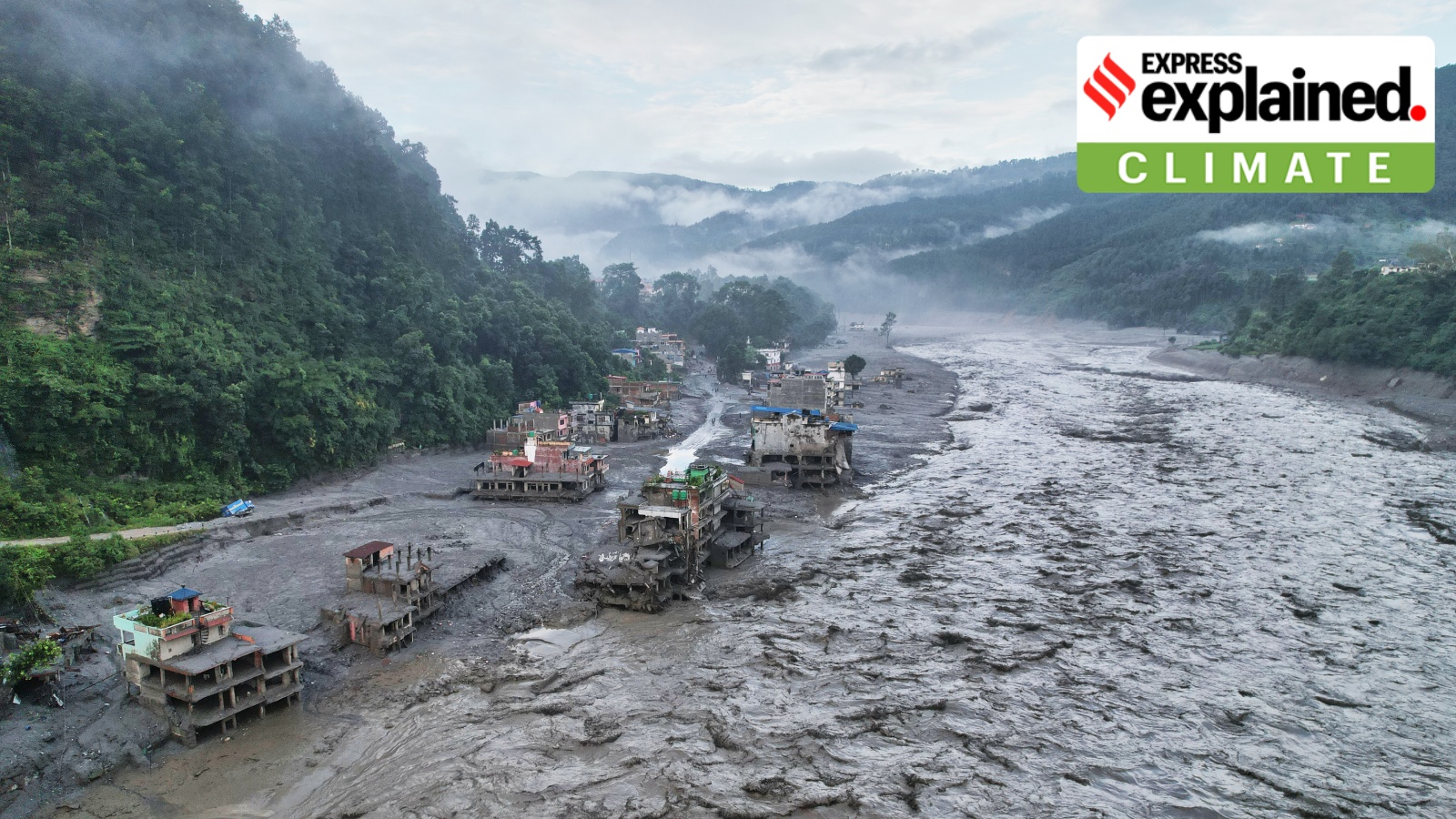
In the aftermath of a catastrophic glacier collapse near the China-Tibet border, at least 734 individuals have perished and over 3,000 remain unaccounted for, including around 320 Indians. This grim reality, however, does not signal a rare occurrence in the Himalayan region, which is all too familiar with similarly devastating events.
Y Nithiyanandam, a professor and head of the Geospatial Programme at The Takshashila Institution, Bengaluru, warned that the Himalayas' natural fragility and susceptibility to seismic activity, landslides, avalanches, and flash floods are exacerbated by the region's already vulnerable state. The Himalayan topography is characterized by lakes formed by melting glaciers, swift-flowing rivers, and steep inclines, all situated in a region disproportionately affected by climate change.
A 2022 study published in Nature revealed that the High Mountain Asia (HMA) region, encompassing the Tibetan Plateau and surrounding ranges including the Himalayas, is warming at a rate double the global average, at 0.32°C per decade compared to the global average of 0.16°C per decade. The warming climate leads to reduced snow cover in some areas, exposing darker glacier ice that absorbs more heat and melts faster.
This weakening of glacier fronts makes them more vulnerable to triggers such as earthquakes, heavy rainfall, or sudden ice movements. While the direct link between any specific disaster and climate change necessitates further scientific evaluation, the overall risk appears to be on the rise. Mirza Zulfiqur Rahman, a researcher focused on the Brahmaputra river basin, pointed out that the recent flood was compounded by infrastructure development and high tourist activity.
Dam construction and reservoirs enhance water regulation and service accessibility in remote regions; however, they also heighten vulnerability. In the recent floods, 13 hydropower plants, including several under-construction projects, were affected, diminishing power generation capacity and access. Rahman emphasized that dam construction also alters the geology of the area, making it more susceptible to earthquakes.
The pressure on the Himalayas from extensive hydropower development is mounting, with hundreds of projects in various stages of completion across the region. China, often viewed as a frontrunner in infrastructure projects, including a massive under-construction dam on the Yarlung Tsangpo river (upper course of the Brahmaputra) near Arunachal Pradesh, is not alone in its expansion efforts.
Other nations are also ramping up construction, such as India and Bhutan, which are actively building hydropower dams, creating a complex geopolitical landscape. In July, Chinese researchers identified an active fault line directly beneath the Yarlung Tsangpo mega-dam, noting that the terrain surrounding the project features a "loose structure and weak cohesion."
Despite the inherent risks, even without deliberate malice, the potential consequences of large-scale projects in the Himalayas are substantial. Communication gaps among Himalayan nations exacerbate the situation, hindering mitigation efforts and planning. Rahman lamented the insufficient cooperation between China and Nepal or China and India in managing the ecosystem.
While some disasters in the 2000s prompted a Memorandum of Understanding between India and China in 2002, with an expert-level mechanism on transboundary rivers established in 2005, expanding these mechanisms to encompass issues like glacial lake outburst floods (GLOFs) remains essential. Nithiyanandam underscored the importance of transparency, citing that Nepal publicly publishes detailed project and licensing information, whereas China's project-level data is dispersed across various official documents and announcements, lacking a consolidated public database.
This lack of information and data-sharing between countries can hinder early warning systems for hazards originating across borders, complicating disaster response and recovery efforts.
Written by urgent.news from The Indian Express's reporting — not their text. Machine-written — may contain errors; check the original before relying on it.
This story
This is one outlet's version. Read the fullest account.
- 'Glaciers in Himalayas retreating': Nepal floods triggered by 'glacier collapse & massive landslide' france24.com
- Nepal floods: Family pleads with govt to bring missing Malaysians home, whatever their condition nst.com.my
- Does the Nepal glacier collapse signal a new climate risk? phys.org
- Does The Nepal Glacier Collapse Signal A New Climate Risk? ndtv.com
- Months before Nepal floods, reports flagged livelihood threat from rapid glacier loss in Hindu Kush Himalaya hindustantimes.com
- Glacier break or earthquake? What triggered the Nepal floods? | Explained thehindu.com
- WATCH | Six-year-old girl rescued after being trapped under rubble in Nepal floods iol.co.za
- Road collapses in Nepal landslide four days after floods aljazeera.com