The return of Sirius in the morning signals seasonal change
A sign of the changing season is the return of Sirius before sunup. Want to make sure you've spotted Sirius? The 3 stars in Orion's Belt point to it. The post The return of Sirius in the morning signals seasonal change first appeared on EarthSky .
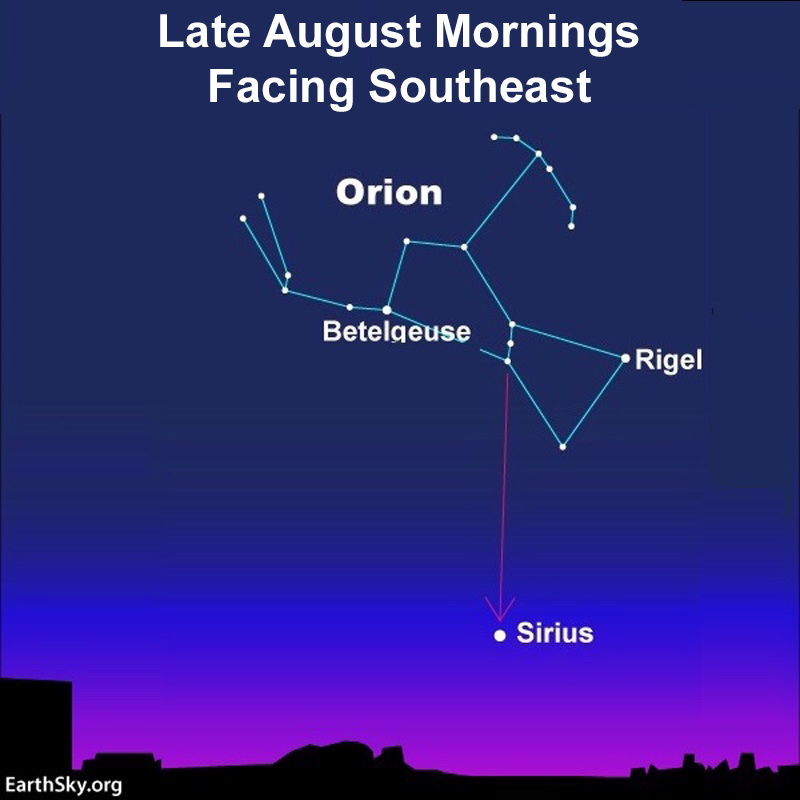
The return of Sirius and the winter constellations to the morning sky marks the change of season. As August and September arrive, two indicators of the changing season can be observed in the predawn sky: Orion the Hunter and Sirius, the brightest star, also known as the Dog Star in the constellation Canis Major. Orion is easily identifiable by the three bright stars that form his Belt, which rise before dawn at this time of year.
Following Orion into the morning sky is Sirius, which shines exceptionally bright due to the twinkling effect caused by Earth's thick atmosphere.
Orion and Sirius reign over the dawn sky until northern winter (or southern summer) arrives. However, presently, these constellations dominate the sky at dawn. Orion was once visible in the evening sky around March and April, but by June, it lies behind the sun as seen from Earth. It was only about a month ago that Orion became visible again in Earth's sky.
Once a constellation becomes visible after being behind the sun, it consistently appears in the east before sunrise. This is because Earth moves around the sun, causing all stars to rise two hours earlier with each passing month.
From the Northern Hemisphere, Orion precedes Sirius into the sky. After Orion first appears at dawn, Sirius follows a few weeks later. The heliacal rising of Sirius, the first date when you can spot the star with your unaided eye in the morning sky, varies depending on your latitude. For example, from latitudes 20 degrees south to 70 degrees north, Sirius will reappear in the morning sky around August 17.
Written by urgent.news from EarthSky's reporting — not their text. Machine-written — may contain errors; check the original before relying on it.