Neuroscience reveals how the unconscious mind drives human behavior
Today's cognitive neuroscientists are integrating decades of behavioral research to show that our conscious minds are heavily directed by underlying, unconscious neural activity designed to predict and navigate the world.
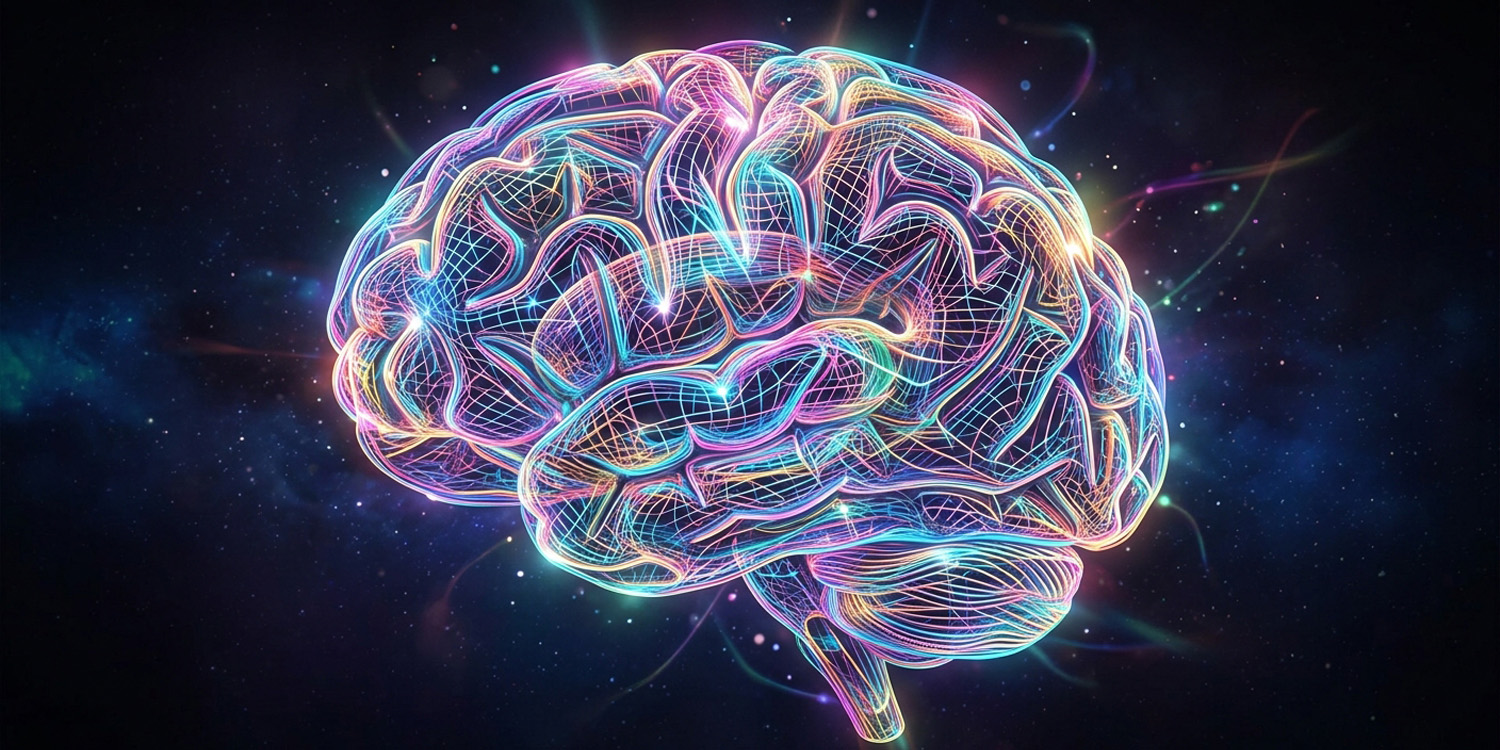
The human brain is a complex organ with most of its processes occurring unconsciously, contrary to popular belief that only a small percentage is used. This unconscious activity is not static, but rather a dynamic web of neural processes that underpin our everyday functioning. Freud's psychoanalytic ideas have been revived through modern cognitive neuroscience, which now supports the existence of the unconscious mind and its influence on our behavior.
The unconscious mind, as proposed by Freud, consists of three layers: the conscious, preconscious, and unconscious. This structure maps onto our current understanding of memory, which can be divided into declarative (conscious) and non-declarative (unconscious) memory processes. Declarative memory recall involves conscious effort, such as remembering a credit card number, while non-declarative memory involves unconscious, automatic recall.
Freud also proposed a structural model of the mind, with the id representing primitive, unconscious desires, the superego embodying moral consciousness, and the ego mediating between the two. These concepts can be linked to modern neuroscience, with the id potentially equivalent to unconscious neural processes, the ego corresponding to metacognition, and the superego reflected in the limbic system, which regulates emotions and behavior.
Recent research has shown that unconscious memory and conscious memory both play a role in brain processes, including decision-making and behavior. For example, hidden flashes of "subliminal" happy or horrified faces can influence people's decisions without their conscious awareness. This demonstrates that our brains are constantly processing information without our conscious input.
The unconscious mind also influences essential functions, such as heart rate, body temperature, hunger, and thirst regulation, as well as coping strategies to deal with painful feelings learned in early childhood. Infantile amnesia, the loss of early childhood memories, typically occurs around three years old but remains in the unconscious brain for life.
Neuroscience has also explored theories on how the conscious and unconscious brain areas interact, with the Global Workspace Theory (GWT) and the Integrated Information Theory (IIT) being two prominent ideas. GWT proposes that the mind functions like a theater stage, with unconscious agents working behind the scenes to ensure the "conscious spotlight" is in the right place. IIT, on the other hand, suggests that the degree and complexity of integration between brain regions determine the level of consciousness.
Mark Solms and Karl Friston have proposed a new theory called the Free Energy Principle (FEP), which suggests that the brain's main role is to predict what will keep us alive and feeling good, within the bounds of our evolved survival. Most of the time, this prediction occurs unconsciously, with an internal model of the world and memories from our evolutionary rulebook.
However, when faced with uncertainty or surprise, our brains experience a brief period of heightened consciousness to create a new prediction, which requires significant energy. This theory suggests that unconscious processes shape the behavior of AI entities, if they were to develop consciousness.
Written by urgent.news from PsyPost's reporting — not their text. Machine-written — may contain errors; check the original before relying on it.