Inside the Nancy Grace Roman Space Telescope, NASA's next great observatory
Here's a rundown of all the major parts of NASA's Roman Space Telescope launching Aug. 30.
NASA's forthcoming Nancy Grace Roman Space Telescope, scheduled for launch on August 30 aboard a SpaceX Falcon Heavy rocket from Kennedy Space Center in Florida, represents a significant leap forward in astronomical observation. Unlike the James Webb Space Telescope, which focuses on narrow, deep-field views, Roman is designed to survey vast swaths of the sky at once, its field of view 100 times larger than Hubble's.
With this expansive view, Roman is poised to capture over 50 times more sky in just five years than Hubble did in its first 30 years. This capability will enable the telescope to map roughly 20 billion stars, measure light from more than a billion galaxies, and potentially discover up to 200,000 new exoplanets.
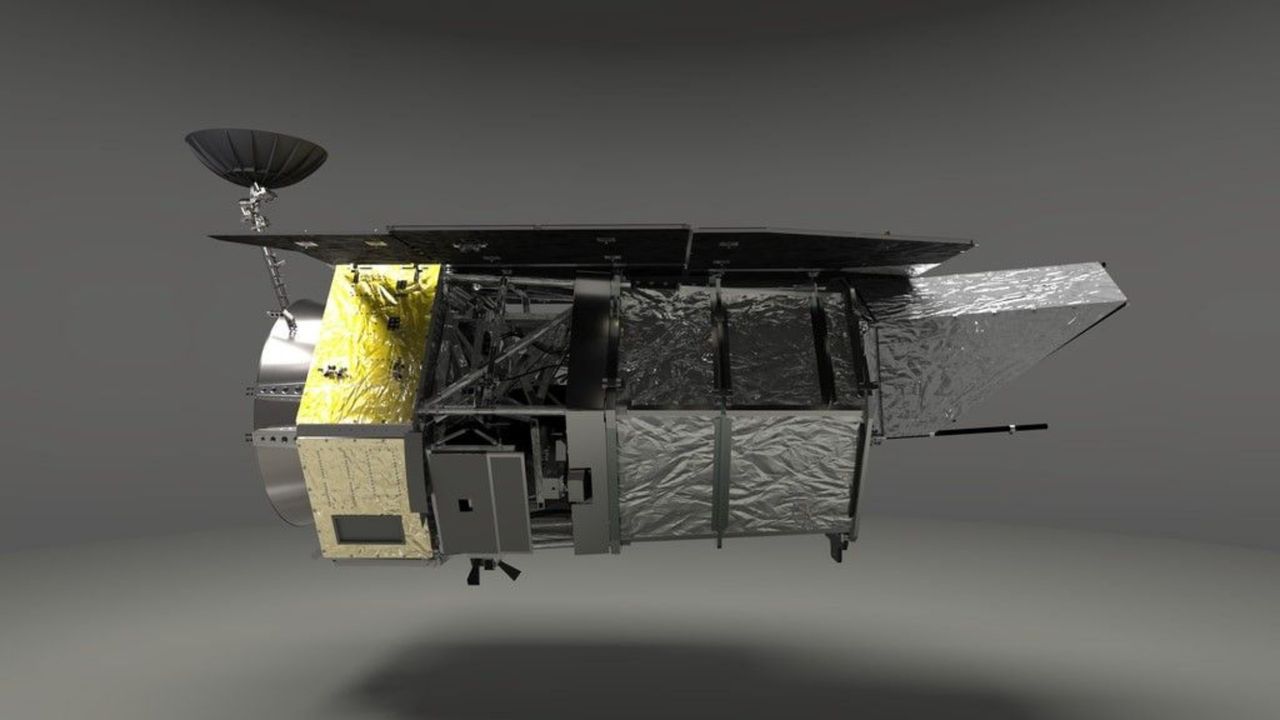
The Roman Space Telescope's design is reminiscent of a helicopter mid-air, with a nose-like front housing the telescope, flat solar panels stretching out to either side, and an antenna perched on top. This unique structure houses critical instruments: the telescope itself, a primary mirror 7.9 feet (2.4 meters) across, and a secondary mirror approximately 2 feet (0.5 meters) wide, both chilled to about 19 degrees Fahrenheit (-7 degrees Celsius) to prevent interference with observations.
Protecting the telescope's sensitive optics is the Deployable Aperture Cover (DAC), which opens once the observatory reaches orbit to block stray light. The observatory's solar panels, resembling a helicopter's wings, generate the electricity needed for power and shading. The Wide Field Instrument, or WFI, is the mission's workhorse, a giant infrared camera with 18 detectors arranged in a mosaic, each containing more than 16 million pixels.
This allows each image to cover a sky area larger than the full moon, yielding rich data on planetary systems and the structure of the cosmos.
The Coronagraph, nicknamed "Starglasses," is designed to block starlight so fainter planets can be seen. It uses deformable mirrors and specialized masks to suppress starlight glare while allowing planet light to pass through. The High-Gain Antenna, resembling the helicopter's rotor, serves as the observatory's communication link to Earth.
Written by urgent.news from Space.com's reporting — not their text. Machine-written — may contain errors; check the original before relying on it.
This story
This is one outlet's version. Read the fullest account.