Pahang coastline needs early action as erosion risks grow
KUANTAN: Pahang’s direct exposure to South China Sea makes its coastline increasingly vulnerable to stronger waves and extreme weather, highlighting the need for early action to tackle coastal erosion.
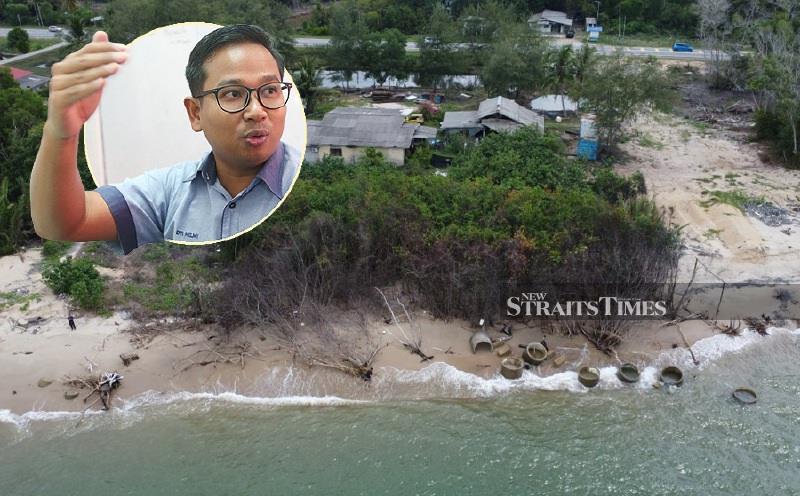
Pahang's coastline faces growing risks of erosion due to its direct exposure to the South China Sea, according to experts. Universiti Malaysia Terengganu Associate Professor Dr Effi Helmy Ariffin emphasized that unlike parts of Terengganu, Pahang's coastline lacks offshore islands for protection, making it more vulnerable to severe weather events like typhoons and cyclones.
Coastal erosion is a gradual process but has become increasingly visible, particularly along Pahang's southern part, affecting areas like Pekan, Nenasi, and Rompin. Early intervention is crucial to prevent more serious and costly damage, according to Dr. Ariffin. He suggested a hybrid approach combining breakwaters and artificial reefs, positioning the reefs between the breakwaters.
Short-term measures might include armour rock or other forms of coastal protection. Sediment movement plays a vital role in maintaining beaches; sand removed from river estuaries for flood mitigation and navigation could be used to replenish eroded beaches, provided a proper assessment of the sediment's suitability is carried out.
Environmentalist Dr Muhamad Rusdi Ahmad Rusmili stressed the importance of studying coastal and river-mouth hydrodynamics to understand and manage coastal erosion, as changes in water flow can affect sediment movement and accelerate shoreline loss. He highlighted that seemingly minor factors could have significant consequences for coastal areas, especially during the northeast monsoon when strong winds and waves can transport sand offshore and intensify coastal erosion.
Beserah is among the areas at risk. While concrete barriers and wave breakers could offer protection, they should be implemented after assessing their potential effects on surrounding areas. Proper development is essential; coastal development projects should consider a range of factors, including hydrodynamics, sediment movement, river discharge, wave patterns, and the potential impact on neighboring stretches of coastline.
MNS has been involved in mangrove restoration and coastal tree-planting programs where suitable, as mangroves can help stabilize the shoreline and reduce erosion, but conditions must be right for success.
Written by urgent.news from New Straits Times's reporting — not their text. Machine-written — may contain errors; check the original before relying on it.