How burial trends in an Ancient Egyptian tomb changed over hundreds of years
Archaeological investigations inside a tomb at the Theban Necropolis, opposite Luxor, have shown how burial rituals in Ancient Egypt altered due to changes in customs, and more practical reasons such as space. Spanish researchers studied one of the 400 tombs at the 4,000-year-old necropolis on the west bank of the Nile . The team from the University of La Laguna excavated the chamber,…
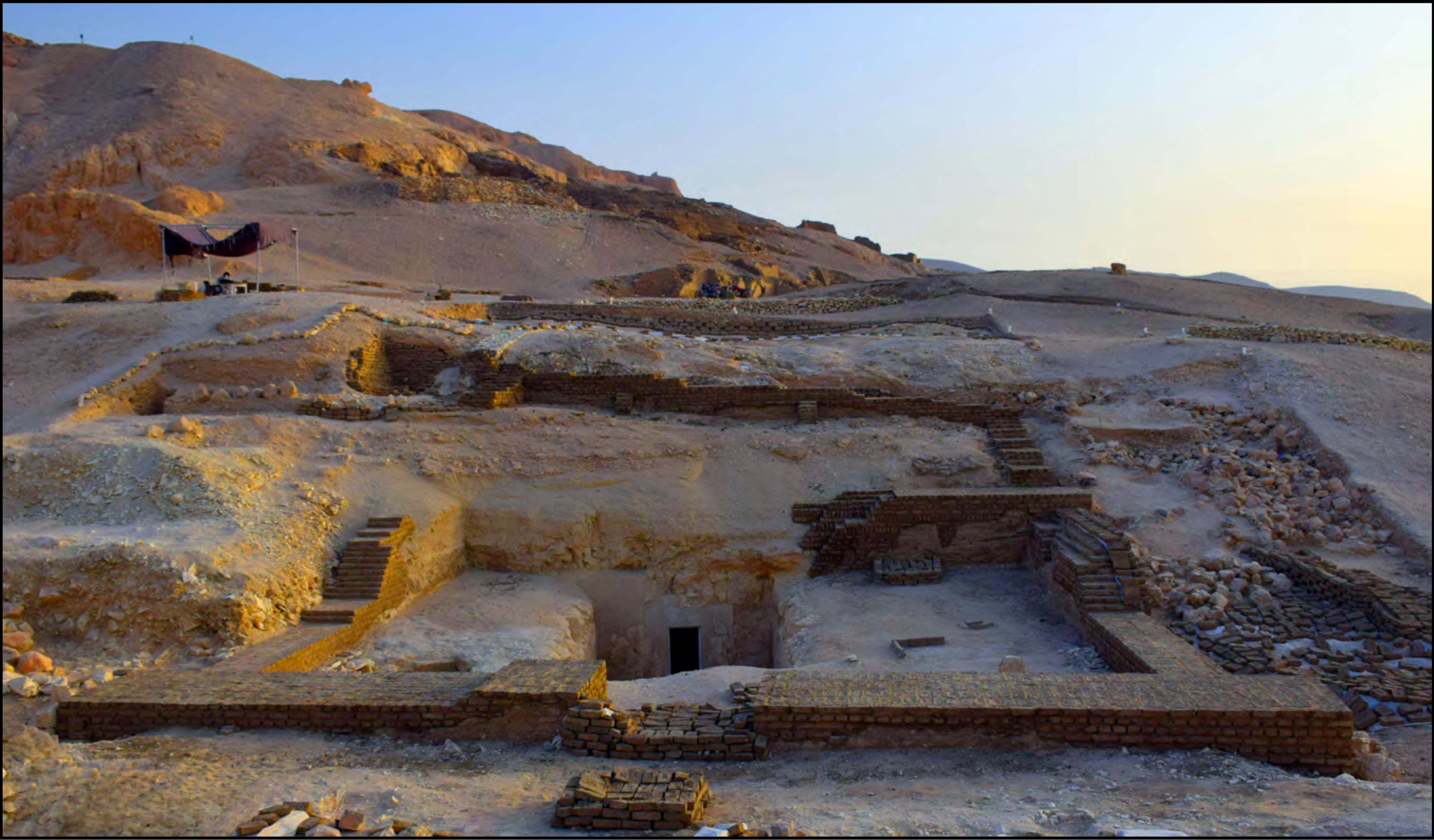
Archaeologists studying a 4,000-year-old tomb in Egypt have discovered how burial practices in ancient Egypt evolved over time due to both practical constraints and changing customs. The tomb, located in the Theban Necropolis near Luxor, was used intermittently from the 25th Dynasty (754-656 BC) through the Ptolemaic period (305-30 BC) before being abandoned.
Initial burials in the tomb involved coffins, funerary nets, amulets, and costly items placed in Phoenician amphorae, suggesting the deceased were of high social standing. However, as the tomb was reused over time, bodies were increasingly placed in close proximity, sometimes stacked vertically. By the Ptolemaic period, four mummies and one mummified dog were buried directly on top of one another.
Notably, these later burials lacked coffins but were carefully mummified, often accompanied by upright jars that indicated a unique ritual not seen earlier in the tomb's use.
Dr. Jared Carballo-Perez, the lead author of the study, noted the presence of a mummified dog on top of a human couple's mummies, suggesting a possible close relationship between the human individuals and the animal. This could indicate a development in ritual practice, with the animal taking on a symbolic role as a psychopomp or helper in the afterlife journey.
Dr. Carballo-Perez emphasized that the observed changes in burial practices were likely a result of both practical constraints due to limited space and shifts in funerary customs.
While the increasing density of burials might suggest a decline in social status, Dr. Carballo-Perez cautioned against such an assumption. The earliest burials involved significant investments in the form of coffins, funerary nets, amulets, and imported objects, while later individuals had different assemblages or no coffins but were still meticulously mummified. This shift might reflect a transformation in the way individuals invested in the afterlife rather than a decline in social status.
Re-entering the tomb to conduct further funerary rites was difficult to determine, as the archaeologists could reconstruct the activities within the chamber more accurately than the identities of the individuals involved. The tomb was likely used by relatives or specialized funeral practitioners, but their identities cannot be definitively established from the archaeological evidence.
Dr. Carballo-Perez and his team concluded that the tomb did not become chaotic or devoid of structure, nor did it lose its cultural significance. Instead, it remained a repeatedly activated space that underwent reconfiguration through new burials, which transformed the organization without erasing the past. The study, published in Frontiers in Environmental Archaeology, highlights the tomb as a dynamic and evolving site rather than a static relic of the past.
Written by urgent.news from The National Business's reporting — not their text. Machine-written — may contain errors; check the original before relying on it.
This story
This is one outlet's version. Read the fullest account.
- How burial trends in an Ancient Egyptian tomb changed over hundreds of years thenationalnews.com
- Theban tomb reveals how Egyptian burial trends evolved in time arstechnica.com