Theban tomb reveals how Egyptian burial trends evolved in time
Practices shifted from individuals buried in coffins to reusing sites for later mummy interments.
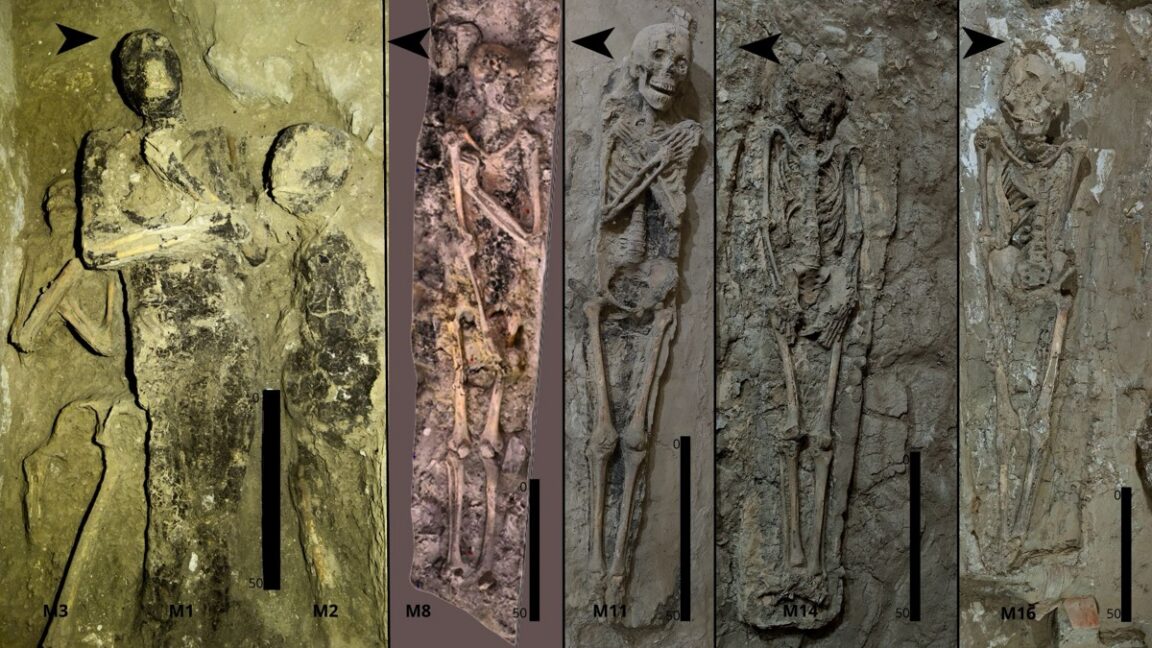
Theban necropolis, a treasure trove of over 400 ancient tombs, offers archaeologists invaluable insights into Egypt's historical burial practices. A recent study in Frontiers in Environmental Archaeology delves into how Egyptian burial trends evolved over time, shifting from individual burials in grand coffins to reusing older burial sites for later interments, leading to denser interments and occasional body superpositions.
Previous research has examined tomb reuse in Thebes, but this study zeroes in on a specific tomb, designated 209 in the western necropolis, which dates back to the early 25th Dynasty (754–656 BCE) and was eventually abandoned during the Ptolemaic period (305–30 BCE). The tomb's original occupant was likely a high-ranking Nubian official named Nisemro.
Situated within an active drainage channel of Wadi Hatasun, the tomb has long suffered from frequent flash flooding, creating a complex archaeological site. This complexity necessitated an "integrated archaeothanatological approach," combining data on body positioning, coffin usage, body superpositions, and stratigraphic relationships with osteological analysis to reconstruct the chronological sequence of burials.
The researchers focused on Side Chamber 3, a primary secondary area of the tomb that remained largely undisturbed, offering a rare glimpse into the evolution of Egyptian burial customs.
Written by urgent.news from Ars Technica Science's reporting — not their text. Machine-written — may contain errors; check the original before relying on it.
This story
This is one outlet's version. Read the fullest account.
- How burial trends in an Ancient Egyptian tomb changed over hundreds of years thenationalnews.com
- Theban tomb reveals how Egyptian burial trends evolved in time arstechnica.com