UK, Pakistani varsities join hands for bio-fuel project
LAHORE: In an innovative way to tackle Punjab’s seasonal smog while reducing reliance on imported coal, UK’s Northumbria University and the University of Kamalia have joined hands on a £1.25 million clean-energy project designed to transform crop waste into cheap industrial fuel. Farmers across Punjab usually burn vast quantities of cotton stalks, sugarcane residue, and other agricultural waste…
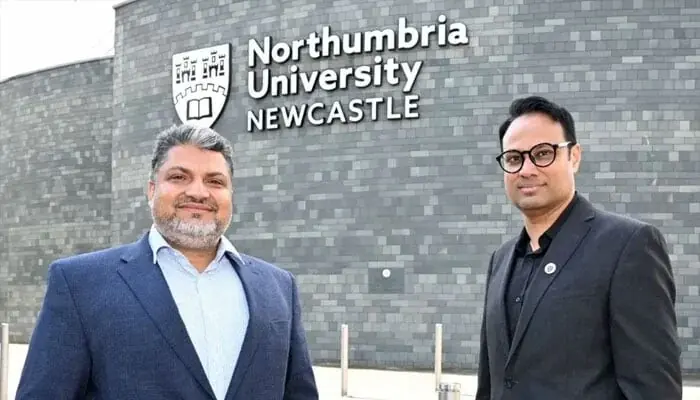
In an innovative bid to combat Punjab's seasonal smog and lessen dependence on imported coal, the UK's Northumbria University and the University of Kamalia have teamed up on a £1.25 million clean-energy project. The initiative aims to convert crop waste into affordable industrial fuel, addressing farmers' habit of burning agricultural residue, which drastically degrades air quality, especially during winter.
The collaboration, part of the UK's Innovate UK Energy Catalyst Round 11, is set to commence after years of research. Secured by the UK government's International Science Partnerships Programme, the project also involves UK-based Eco Research Limited and No Text Solutions.
Formally inaugurated in July and overseen by Northumbria University's School of Engineering, Physics, and Mathematics, the SAFER PLUS project is the brainchild of Dr Jibran Khaliq and Dr Shahid Rasool at the University of Kamalia. The project's demonstrator plant will have a capacity of 10 to 12 tonnes, employing a thermal conversion process akin to pyrolysis to produce bio-coal, wood vinegar, and gas. These outputs are expected to replace imported coal in brick kilns and textile boilers, cutting fuel costs by 40 to 50%.
Preliminary lab tests have shown the plant operates at 20 per cent higher efficiency than traditional biofuel plants. Crucially, the process emits no sulphur or methane, and the plant is projected to generate electricity at a cost 15 percent lower than the conventional grid power. Three Pakistani textile manufacturers have already committed to testing the bio-coal.
The University of Kamalia will hold a stake in the project's financial gains. More than 150 local jobs, with many reserved for university students during evening shifts, are anticipated from the venture. The plant is also set to power a new electric vehicle charging station on campus.
The project's design includes a community-driven biomass supply chain, managed by a women-led cooperative. Over 120 households are expected to earn regular income from the collection and transport of crop residue, with direct payments made into women's mobile wallets to promote economic independence. At least 60% of all training slots are earmarked for women.
Dr Yasir Nawab, the University of Kamalia's Vice-Chancellor, clarified that the initiative aims to build more than just a plant; it intends to empower the local community by ensuring the waste collectors hold the contracts and receive payments directly. To discourage open burning, the university will offer competitive prices for crop waste.
Large landholders will sign supply contracts, while tractor-trolley networks will collect residue from smallholders. The Faisalabad Waste Management Company and the Parks and Horticulture Authority are also exploring partnerships to source additional biomass.
Written by urgent.news from Dawn - Pakistan's reporting — not their text. Machine-written — may contain errors; check the original before relying on it.