Typhoon Dolphin batters Japan’s Okinawa before bearing down on China
Typhoon Dolphin has cut power to at least 44,000 buildings and injured at least five people after hitting Japan’s Okinawa island on Saturday. Flights to and from Okinawa’s main airport – Naha International Airport – were cancelled as it closed on Friday as the storm arrived. The storm had maximum wind speeds of 162km/h (101mph) […]
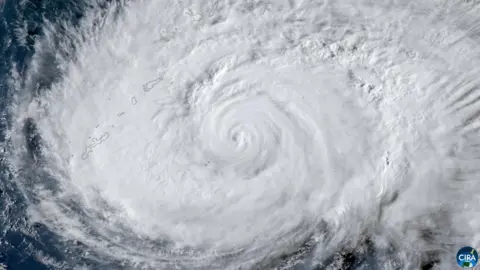
Typhoon Dolphin has struck Japan's Okinawa island, causing widespread damage and disruptions. At least 44,000 buildings lost power, leaving five elderly people injured. Flights to and from Naha International Airport were cancelled as the storm closed the airport on Friday. With maximum wind speeds of 162km/h (101mph), Dolphin was classified as a "very strong" typhoon by Japan's Meteorological Agency.
Authorities warned of high waves, storm surges, and lightning strikes. The storm is expected to make landfall on China's eastern coast late on Sunday or early on Monday. In China, several airports, ports, and schools have been shut down ahead of the typhoon's arrival. Five elderly people suffered non-life-threatening injuries in Japan, mostly due to falling under strong winds.
Trees were toppled, and a car was found overturned in Nago city, Okinawa. Satellite imagery showed the storm approaching Japan's Okinawa during the week. In China, Zhejiang's Ningbo Lishe International Airport halted operations and suspended all flights on Sunday. A coastal typhoon alert in Zhejiang was raised to its highest level, and port and ferry services were halted.
In Hong Kong, the weather observatory reported a record high temperature of 36.9C as the typhoon swept warm air over the city. Typhoon season in the western Pacific typically runs from May to October, with El Nino years often leading to more intense storms. This year is a strong El Nino year, increasing the likelihood of more severe typhoons.
In an average year, around three cyclones reach tropical storm strength in the region, with about three of them making landfall in Japan. Some of these can be powerful enough to be classified as typhoons. Typhoons form in the north-west Pacific, while hurricanes form in the Atlantic or eastern Pacific.
Written by urgent.news from The Island Sri Lanka's reporting — not their text. Machine-written — may contain errors; check the original before relying on it.
Also reported by 9 other outlets
- Typhoon Dolphin: more than a million people evacuated in China as record rainfall dumped on Shanghai theguardian.com
- With Japan, China faces a corrosive security dilemma scmp.com
- Typhoon Dolphin weakens but disrupts travel in east China hongkongfp.com
- Typhoon Dolphin hits China's east coast, over 1 million evacuated cbc.ca
- Typhoon Dolphin weakens but disrupts travel in east China channelnewsasia.com
- Flights cancelled, evacuations as Typhoon Dolphin hits China abc.net.au
- Typhoon Dolphin weakens but disrupts travel in east China freemalaysiatoday.com
- Typhoon Dolphin weakens but disrupts travel in east China hindustantimes.com
- and 1 more