The strengthening El Niño and what it could mean for Ghana
A major shift is underway in the global climate system, and Ghana should be paying attention.
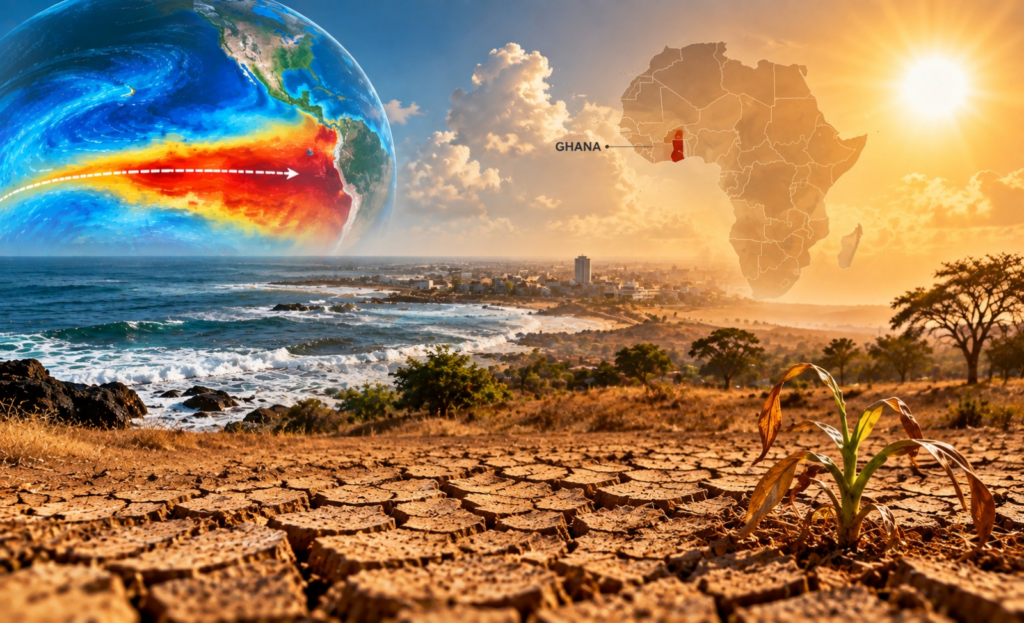
A powerful El Niño event is intensifying in the Pacific Ocean, with forecasters predicting it could persist well into 2027 1 . While this climate phenomenon typically originates thousands of miles away from Ghana, its effects can still be felt across the country. El Niño occurs when ocean temperatures in the equatorial Pacific rise above average, causing changes in atmospheric circulation patterns that can impact weather worldwide, including in West Africa.
Currently, the situation is especially concerning as the latest data from NOAA indicates an over 90% chance of an exceptionally strong El Niño during the autumn and winter of 2026-27 2 . However, it's crucial to note that the exact impact on Ghana will depend on how this global event interacts with other regional climate systems, such as the West African Monsoon, sea-surface temperatures in the Atlantic and Gulf of Guinea, and atmospheric conditions.
Historically, El Niño has been linked to varying rainfall patterns in parts of West Africa, but the relationship is complex and differs by location and season 3 . For Ghana, the key uncertainties revolve around rainfall variability, timing, and intensity. Some areas might face reduced rainfall, particularly during the major rainy season from May to June, while other regions could experience changes in the onset and duration of rains 3 .
This variability could have significant implications for agriculture, which is predominantly rain-fed in the country. Farmers could face challenges such as planting at the wrong time, crop damage due to prolonged dry spells, or altered precipitation patterns that affect yields 4 . While rainfall is a critical factor, temperature is also a major concern.
WMO forecasts suggest a higher likelihood of above-average temperatures across many land areas during the current El Niño period 4 . The combination of potential rainfall changes and higher temperatures could exacerbate challenges for farmers and other sectors sensitive to climate conditions. In summary, while the strengthening El Niño presents uncertainties for Ghana's climate, it is essential to view it as a shift in background climatic conditions rather than a guaranteed drought scenario.
Farmers and policymakers should focus on understanding how this event may alter crucial aspects of rainfall timing and amounts, as well as potential temperature increases, to better prepare for the coming months and seasons.
Written by urgent.news from MyJoyOnline Ghana's reporting — not their text. Machine-written — may contain errors; check the original before relying on it.