10,500-year-old wood found 20m deep in Germany's Lake Arendsee
Archaeologists have recovered remarkably preserved worked wood dating back 10,500 years from beneath Germany’s Lake Arendsee. The finds include a 1.6-metre post with felling marks and split boards up to 1.3 metres long. Researchers believe they may be remnants of Mesolithic huts or previously unknown structures, offering new insights into hunter-gatherer life.
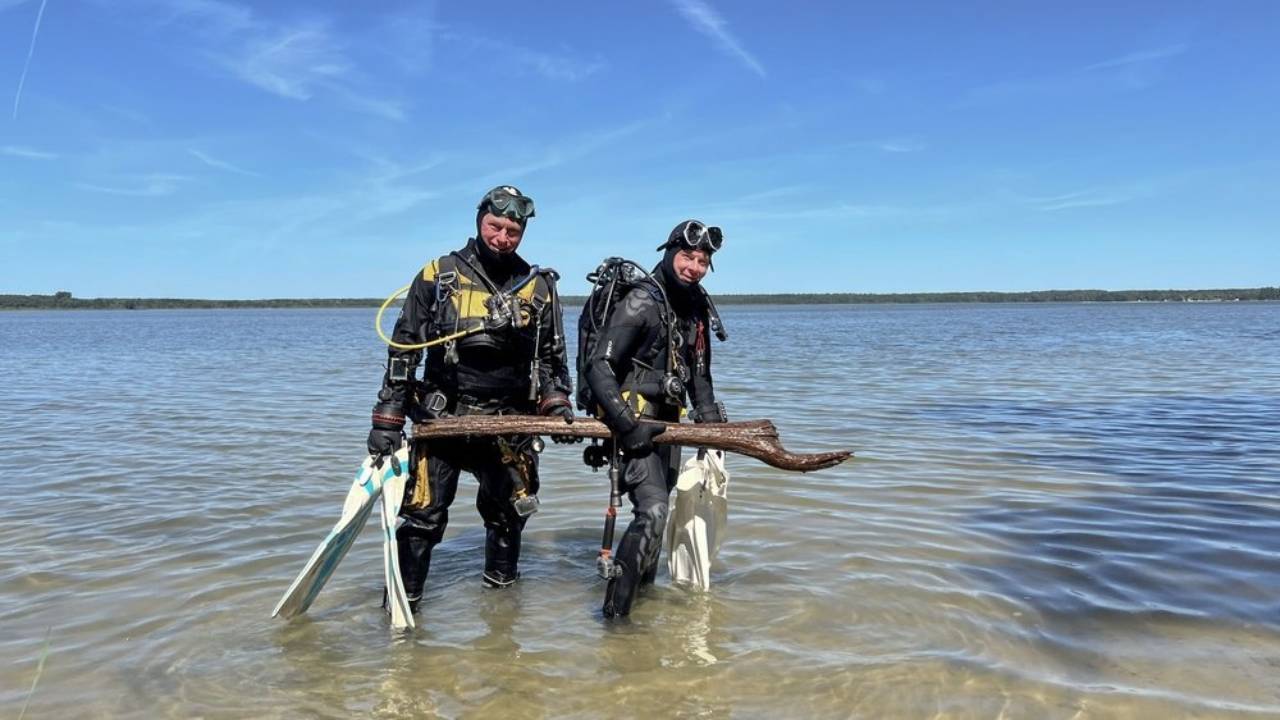
Archaeologists have uncovered remarkably well-preserved wooden artifacts that are approximately 10,500 years old at the bottom of Lake Arendsee in northern Germany. These findings, made during underwater archaeology work by the State Office for Heritage Management and Archaeology (LDA) Saxony-Anhalt, could offer new insights into wooden structures built by Mesolithic hunter-gatherers. The wood includes a 1.60-meter-high post with felling marks and split boards up to 1.30 meters long.
The discoveries were made 20 meters below the lake's surface, in an area where the lake's ancient shoreline has been remarkably well-preserved due to unique geological conditions. Unlike most lakes where sediment gradually builds up, the bottom of Lake Arendsee is slowly sinking due to geological processes involving a nearby salt dome. This sinking has submerged Mesolithic artifacts beneath a thin layer of sediment, leading to exceptional preservation.
State archaeologist Harald Meller emphasized the significance of these wooden finds, noting that organic material from the Mesolithic period rarely survives. The post and boards display evidence of deliberate human working, including felling marks, suggesting they may have been part of huts or other structures previously unknown in the region.
Researchers are still investigating whether the pieces belong to huts or other structures, which could alter existing interpretations of Mesolithic living conditions before the advent of farming.
LDA Saxony-Anhalt project head Marcel Weiß stated that the material could potentially represent huts or other unknown wooden structures, and further research will determine this. The use of advanced technology, such as high-resolution sonar scans conducted by the Fraunhofer IOSB-AST in Ilmenau, has aided in mapping the ancient landscape and locating potential archaeological sites.
This discovery, along with previous findings like Neolithic fish weirs and medieval artifacts, provides researchers with the opportunity to explore an even earlier chapter of Lake Arendsee's history, shedding light on how Mesolithic communities interacted with their environment thousands of years prior to the arrival of farming in Central Europe.
Rewritten by urgent.news; may contain errors — check the original.
Source: timesofindia.indiatimes.com