Pandora opens world’s largest jewellery factory in Vietnam
AgenciesDanish jewelry company Pandora has opened the world’s largest fine-jewelry crafting facility in Vietnam, a $150 million factory powered entirely by renewable electricity an...
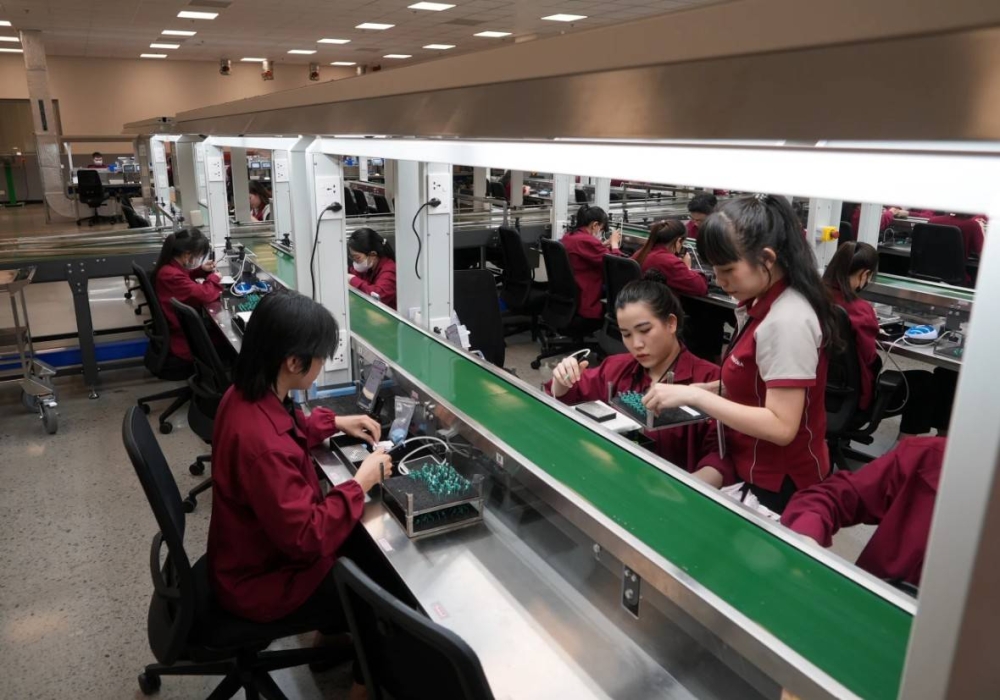
Danish jewelry company Pandora has inaugurated the world's largest fine-jewelry manufacturing plant in Vietnam, a $150 million facility that runs exclusively on renewable energy and employs 100% recycled gold and silver. This expansion underscores a critical issue within the jewelry industry: balancing the need to reduce the environmental impact of precious metals while satisfying rising demand.
Utilizing recycled materials can mitigate the need for newly mined metals, yet achieving this transition demands dependable supply chains and heightened transparency.
Pandora's new Ho Chi Minh City facility, situated in southern Vietnam, is poised to produce up to 60 million pieces of jewelry annually, representing a 50% increase in the company's manufacturing capacity. Simultaneously, the plant is expected to cut its carbon emissions by 17%. CEO Berta de Pablos-Barbier disclosed to The Associated Press that the company is "leading the way" and hopes others will follow.
After 37 years in Thailand, Pandora sought to expand its manufacturing base in Vietnam to enhance flexibility and bolster supply-chain resilience. The choice of Vietnam was influenced by the country's skilled artisans capable of meeting Pandora's craftsmanship standards, its favorable business environment, and robust infrastructure.
Moreover, access to renewable energy infrastructure is becoming a significant consideration for Pandora and other Danish enterprises, noted Denmark's Ambassador to Vietnam, Lina Gandløse Hansen.
The 7,000-worker facility in Vietnam will harness renewable energy derived from solar and wind sources. Solar panels will be installed on the plant's rooftops, and the company plans to collaborate with local solar farms. The new site is adjacent to Lego’s $1 billion factory, which commenced production in 2025 and manufactures toys without emitting greenhouse gases.
Vietnam has rapidly developed its renewable energy sector and held the largest installed solar and wind capacity in Southeast Asia as of 2024. However, the nation still leans heavily on coal to fuel its burgeoning economy, highlighting the importance for manufacturers to transition towards cleaner electricity as Vietnam strives for net-zero emissions by 2050.
Manufacturing constitutes a fifth of Vietnam's GDP and consumes half of its energy. Efforts are underway to phase out coal power plants by 2040.
Pandora's dedication to utilizing recycled gold and silver is deemed significant by Saleem H. Ali, who directs the program on critical minerals and inclusive energy transitions at the United Nations University. He emphasized that gold is notably recyclable, unlike metals like copper, which degrade or corrode. Silver can also be recycled, though it may tarnish and necessitate cleaning.
"That is why it is so valuable. We still have gold from the ancient Egyptians, in pretty good shape," Ali remarked. Pandora shifted to using 100% recycled silver and gold for new jewelry in August 2024. The company obtains small grains of refined metal from recyclers in Europe and Asia, sourced from items ranging from medical equipment to used cutlery, according to Pandora's Chief Sustainability Officer, Mads Twomey-Madsen.
This necessitates sourcing suppliers, smelters, or refiners that exclusively use recycled materials, which involves extensive auditing. Pandora initiated broader supply chain changes five years ago by adopting standards from the Responsible Jewellery Council, a trade organization promoting responsible practices concerning human rights, workers' rights, and environmental impacts, Twomey-Madsen explained.
The company employs independent auditors to verify compliance. Twomey-Madsen stated that the ultimate objective is for the entire supply chain, including the energy-intensive process of heating and separating metals from impurities, to be powered by clean energy. Recovering valuable metals from discarded products and waste poses challenges.
Globally, e-waste has surged—62 million metric tons in 2022, projected to reach 82 million metric tons by 2030, according to a United Nations' International Telecommunications Union and research arm UNITAR report. Much of this e-waste is processed informally, exposing workers to hazardous substances while recovering metals like gold and silver.
Over 1,000 harmful chemicals have been detected in e-waste or generated during improper recycling, including lead, mercury, cadmium, and other toxic agents, as per the World Health Organization. Ali, the critical minerals expert, emphasized that artisanal gold mining, involving individuals or small groups using rudimentary tools, is now the primary source of mercury pollution globally.
Miners in impoverished nations often employ mercury to isolate gold from other materials, endangering people and the environment. He noted that efforts to enhance gold sourcing have been made, but tracing gold remains challenging. South Asia, in particular, experiences high demand for gold and jewelry, with sellers often unaware of the origin of the gold they purchase. Once melted, tracking the gold's origins becomes nearly impossible.
Twomey-Madsen expressed hope that Pandora's commitment to purchasing recycled metals will signal to suppliers the growing market for such materials. The company absorbed the higher initial cost of recycled gold and silver, investing in suppliers to develop a more reliable supply chain. While manufacturing is less emissions-intensive compared to sectors such as aviation or cement, a full industry shift to recycled gold and silver could prevent approximately 58 million metric tons of carbon dioxide from entering the atmosphere annually.
Written by urgent.news from Qatar Tribune Business's reporting — not their text. Machine-written — may contain errors; check the original before relying on it.