Trump rejects Iranian proposal to open Hormuz and end fighting
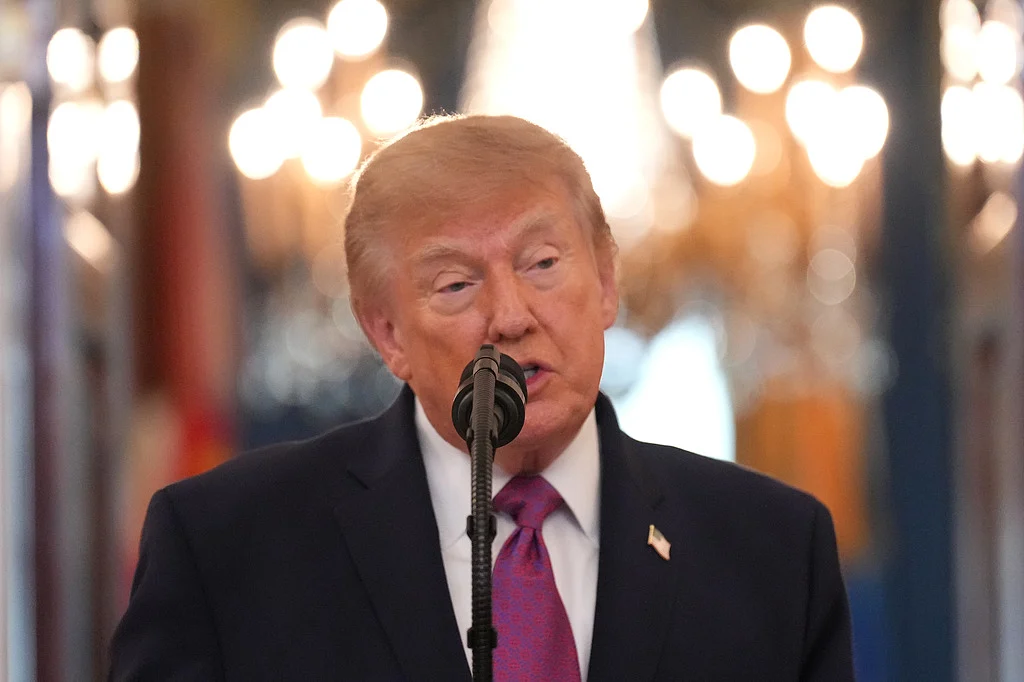
By Trevor Hunnicutt, Parisa Hafezi and Menna AlaaElDin WASHINGTON/UNITED NATIONS/CAIRO, Sept 26 (Reuters) - US President Donald Trump said on Saturday he had rejected an Iranian proposal to reopen the Strait of Hormuz and end fighting in the Middle East. Iran raised the initiative at the UN General Assembly in New York, saying it had been transmitted to the Americans via Qatari mediators and that…
President Trump asserted on Saturday that he declined a recent Iranian offer presented to the U.S. during discreet talks in New York this week. The significance lies in the fact that, despite Qatar and other regional intermediaries attempting to rekindle discussions between the U.S. and Iran, significant disparities persist on crucial matters.
Iran advocates concentrating the dialogue on the Strait of Hormuz and the U.S. naval blockade, whereas the Trump administration insists on Iranian concessions regarding nuclear issues.
In Trump's words, "They have made a proposal and I rejected it." However, a U.S. official stated that "positive and constructive discussions are still ongoing" between the U.S. and Iran via intermediaries, including talks on nuclear matters.
The unfolding narrative reveals that U.S. representatives Steve Witkoff and Jared Kushner engaged in an additional round of indirect negotiations with Iranian Foreign Minister Abbas Araghchi off the sidelines of the UN General Assembly in New York this week. Qatari officials facilitated these discussions, conveying messages between the two parties, according to sources privy to the information.
Araghchi presented Witkoff and Kushner with Iran's prerequisites for reopening the Strait of Hormuz and resuming nuclear negotiations. Iran proposed the Strait's reopening and the resumption of nuclear talks within a week, contingent upon the U.S. lifting its naval blockade, lifting sanctions on oil sales, and reinstating a ceasefire across the region.
The U.S. negotiators conveyed to the Iranians during the proceedings on Tuesday that Iran lacks control over the strait and thus cannot make demands concerning it, as reported by Axios. Currently, dozens of oil tankers navigate the strait daily under U.S. protection, transporting millions of barrels of oil to global markets—still considerably below pre-war volumes but sufficient to alleviate some pressure.
U.S. officials assert that in the past 72 hours, approximately 60 million barrels of oil transited through the Strait of Hormuz.
Written by urgent.news from Axios's reporting — not their text. Machine-written — may contain errors; check the original before relying on it.
This story
This is one outlet's version. Read the fullest account.
- Trump rejects Iranian proposal to open Hormuz and end fighting channelnewsasia.com
- Trump rejects Iran proposal for deal to reopen Hormuz scmp.com
- Trump rejects Iranian proposal to open Hormuz and end fighting brecorder.com
- Trump says he rejected the latest Iranian proposal axios.com
- Trump says he rejected Iranian proposal to reopen Strait of Hormuz and end hostilities dw.com
- Trump rejects Iran’s ceasefire proposal to reopen Strait of Hormuz ft.com