In Southeast Asia, residents grapple with life under Indonesia’s wildfire haze
KUALA LUMPUR — Video editor Mohamad Haazim has lost count of how many times he refreshes Malaysia’s Air Pollutant Index (API) website every day to check air quality in the city where he lives. It’s been hovering between “unhealthy” and “hazardous” in recent weeks. Haazim, who asked to be identified only by his given names for […]
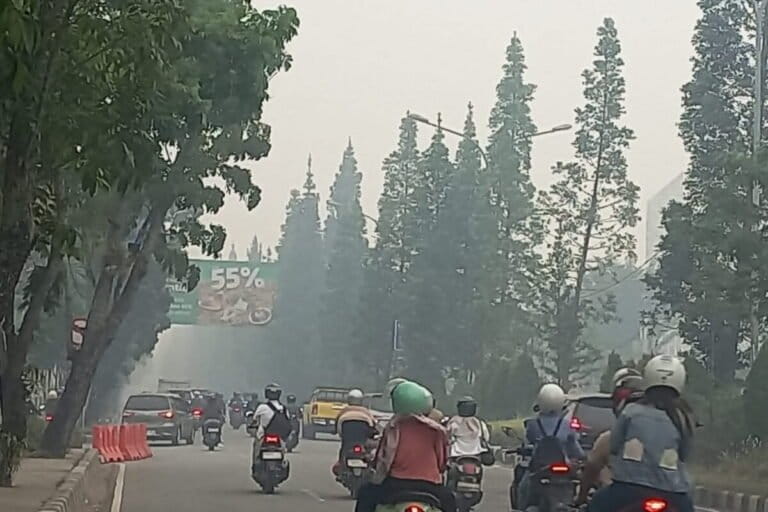
KUALA LUMPUR — Video editor Mohamad Haazim has been constantly refreshing Malaysia’s Air Pollutant Index (API) website to monitor the air quality in his city. The index has been fluctuating between "unhealthy" and "hazardous" levels in recent weeks. Haazim, who prefers to be identified only by his given names for privacy reasons, resides in Kuching, the capital of Malaysia's Sarawak state, which is renowned for its relatively clean air.
However, since the start of the month, Kuching has gained a rather unfavorable reputation as the world’s "most polluted major city," as reported by IQAir, a Swiss-based air quality technology company. The primary source of this smog is attributed to wildfires in Indonesia. Haazim describes the haze as having severely disrupted his daily routine, stating that he no longer engages in his outdoor activities, such as morning and evening walks, and his marathon running frequency has dropped from five times a week to just two indoor runs.
At home and in his workplace, he ensures that windows are kept closed and air purifiers are set to maximum capacity. The thick haze can be seen obscuring the Kuching riverside in the city center on September 4, 2026.
Written by urgent.news from Mongabay's reporting — not their text. Machine-written — may contain errors; check the original before relying on it.
This story
This is one outlet's version. Read the fullest account.