What two districts can teach India about dealing with rural waste
Worldwide, around 2.7 billion people do not have their waste collected, and of them 2 billion live in rural areas, an analysis by the UN Environment Programme has found. Where people cannot manage waste, they dump it on land or in rivers, streams, and seas, or they burn it — a major concern in India
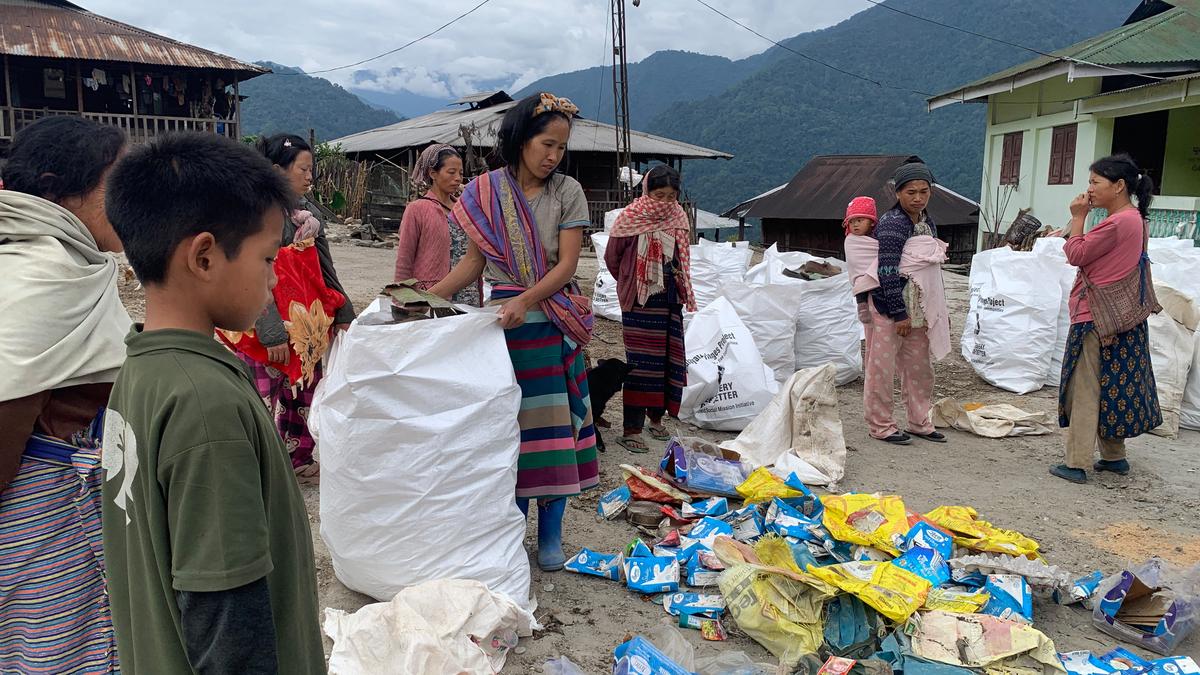
Two Indian districts, Majuli and Tawang, are offering valuable insights to the nation on managing rural waste. In April 2025, Majuli became the first river island to send waste downstream instead of dumping it into the river. Similarly, in August 2024, villagers in Zemithang Circle, Arunachal Pradesh, successfully transported their segregated waste to Tezpur, a journey of 390 km and over 12 hours.
This shift towards proper waste management comes at a time when India generates 1.7 lakh tonnes of waste daily, with 22% ending up in landfills and 17% unaccounted for.
Experts argue that rural waste data remains undocumented, with Siddharth Singh, a programme manager, stating that such data simply doesn't exist. Urban and rural local bodies, responsible for solid waste management and data collection, often fail to perform their duties effectively. In India, around 2.7 billion people lack waste collection services, with 2 billion of them residing in rural areas, according to a UN Environment Programme analysis.
In Majuli, residents used to dispose of waste in fields or rivers, causing annual flooding. Organic waste was once used as livestock feed or manure, but non-biodegradable materials have complicated decomposition. Alakesh Gogoi, a district official, noted that despite building Central Material Collection Facilities, these facilities were not utilized, highlighting the need for proper waste management systems.
Community participation, funding, staffing, training, vehicle allocation, facility operation, and finding recyclers are crucial components of successful waste management.
In Tawang, a community-led model of waste management was piloted in 2023, where households segregate waste and hold monthly 'cleanliness days' for sorting. This model has since been adopted by a third of Tawang district, with over 150 clean-up events and 30 tonnes of waste collected. In Zemithang, similar community efforts resulted in over 20 tonnes of waste being sold to recyclers, generating revenue.
These examples demonstrate the potential of rural districts to tackle waste management challenges and serve as a blueprint for India's rural areas.
Written by urgent.news from The Hindu - Sci-Tech's reporting — not their text. Machine-written — may contain errors; check the original before relying on it.