What two districts can teach India about dealing with rural waste
Worldwide, around 2.7 billion people do not have their waste collected, and of them 2 billion live in rural areas, an analysis by the UN Environment Programme has found. Where people cannot manage waste, they dump it on land or in rivers, streams, and seas, or they burn it — a major concern in India
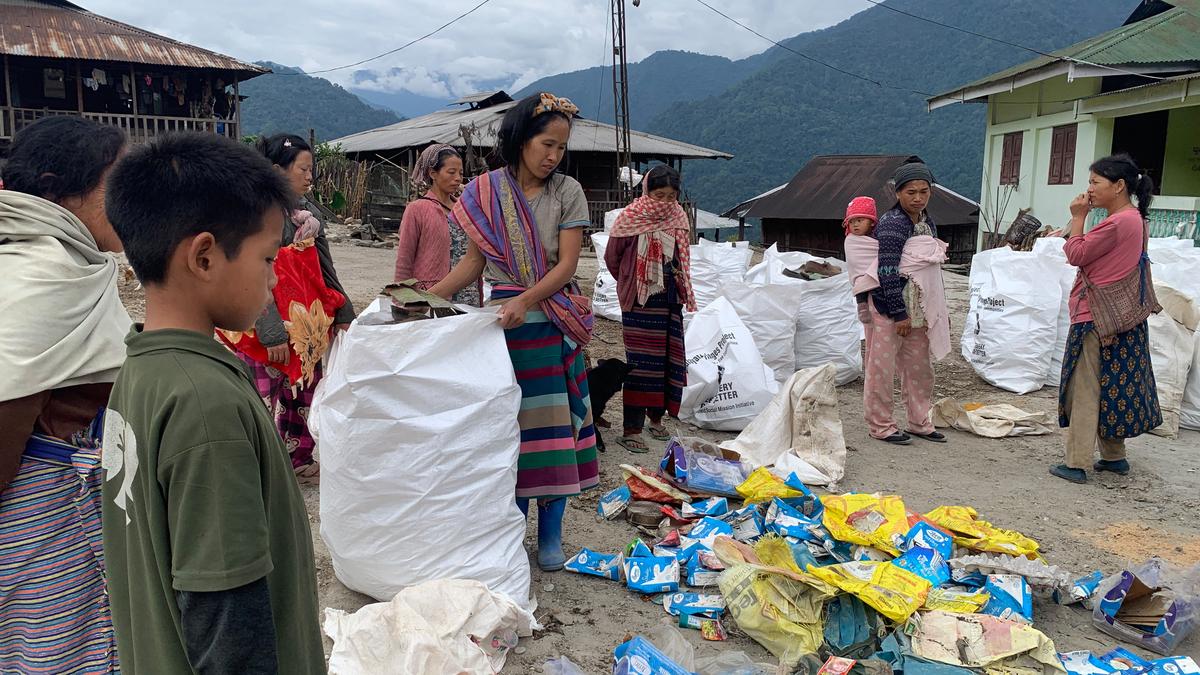
Two Indian districts, Majuli in Assam and Tawang in Arunachal Pradesh, are offering insights into managing rural waste effectively. On April 30, 2025, a tonne of waste from Majuli crossed the Brahmaputra River for the first time in history, marking a significant waste management milestone. In Tawang District, villagers in Zemithang Circle successfully segregated 4.4 tonnes of garbage for the first time on their Independence Day, 2024.
This journey involved a 390-kilometer trip to Tezpur, Assam, to reach scrap dealers. These initiatives come as India produces 1.7 lakh tonnes of waste daily, with 22% ending up in landfills and 17% unaccounted for. Despite urban and rural local bodies being responsible for waste management, they often fail to adequately collect, store, and dispose of waste.
Activists and experts argue that rural waste data is not systematically recorded, making it difficult to track progress. In Majuli, waste was previously dumped in fields or rivers, leading to flooding and environmental pollution. Alakesh Gogoi, a district official, noted that despite building Central Material Collection Facilities (CMCFs) in most villages, these facilities were not used or maintained.
In Tawang, a community-led waste management model was introduced in Chullyu, where households segregate waste and collect it monthly at designated collection points. This model has since been adopted by a third of Tawang district and parts of neighboring districts. The waste is processed at Material Recovery Facilities (MRFs), generating revenue for local communities.
Globally, around 2.7 billion people lack proper waste collection, with 2 billion living in rural areas. The most expensive aspect of waste management is sorting and processing, but community participation and proper infrastructure can significantly improve rural waste management in India.
Written by urgent.news from The Hindu's reporting — not their text. Machine-written — may contain errors; check the original before relying on it.
This story
This is one outlet's version. Read the fullest account.