What's next for NASA's just-launched Roman Space Telescope?
NASA's Nancy Grace Roman Space Telescope has left Earth, but it'll be a while before it starts its highly anticipated science mission. Here are the next steps for the observatory.
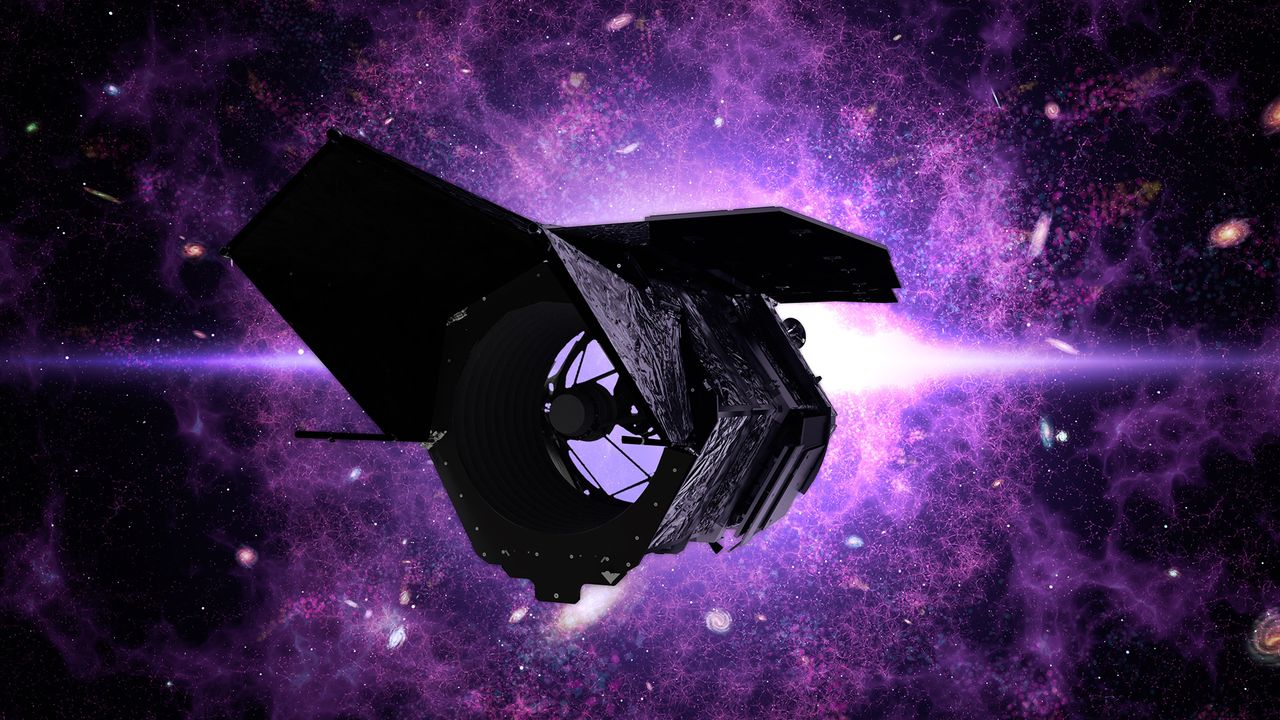
NASA's recently launched Roman Space Telescope, named after astronomer Nancy Grace Roman, is en route to its destination at the sun-Earth Lagrange Point 2 (L2). The telescope is expected to discover thousands of new exoplanets and provide insights into dark energy and dark matter. However, before it can begin its scientific observations, the Roman team must first ensure that all systems and instruments are functioning properly.
This process, known as commissioning, involves testing the telescope's two main components: the Wide Field Instrument (WFI), an infrared camera with a resolution 10 times greater than that of the Hubble Space Telescope, and the Coronagraph Instrument (CGI), a starlight-blocking technology designed to detect previously unknown exoplanets.
Commissioning is expected to take about 30 days, after which Roman will begin its five-year mission to study the early universe and improve our understanding of its expansion.
Written by urgent.news from Space.com's reporting — not their text. Machine-written — may contain errors; check the original before relying on it.
This story
This is one outlet's version. Read the fullest account.
- Where is the Roman Telescope in space? scientificamerican.com
- How NASA's new space telescope could help solve mysteries of dark energy and dark matter pbs.org
- NASA launches Nancy Grace Roman Space Telescope to shed light on the dark universe physicsworld.com
- 'No guts, no glory': How I captured NASA's Roman Space Telescope cross the sun on a picture-perfect SpaceX Falcon Heavy launch space.com
- WATCH: NASA launches revolutionary new telescope abcnews.com
- Track NASAs Roman Space Telescope on its long cruise to deep space mashable.com
- Nasa launches ‘Mother of Hubble’-named telescope to map the cosmos malaymail.com
- Dark energy, exoplanets and black holes: What Nasa’s new Roman telescope will explore timesofindia.indiatimes.com