NASA’s Roman Space Telescope: Launch Updates
NASA's live online coverage of the launch of the agency's Nancy Grace Roman Space Telescope is underway. NASA and SpaceX are targeting 7:26 a.m. EDT Sunday for liftoff aboard a SpaceX Falcon Heavy rocket from Launch Complex 39A at NASA's Kennedy Space Center in Florida. The post NASA’s Roman Space Telescope: Launch Updates appeared first on NASA Science .
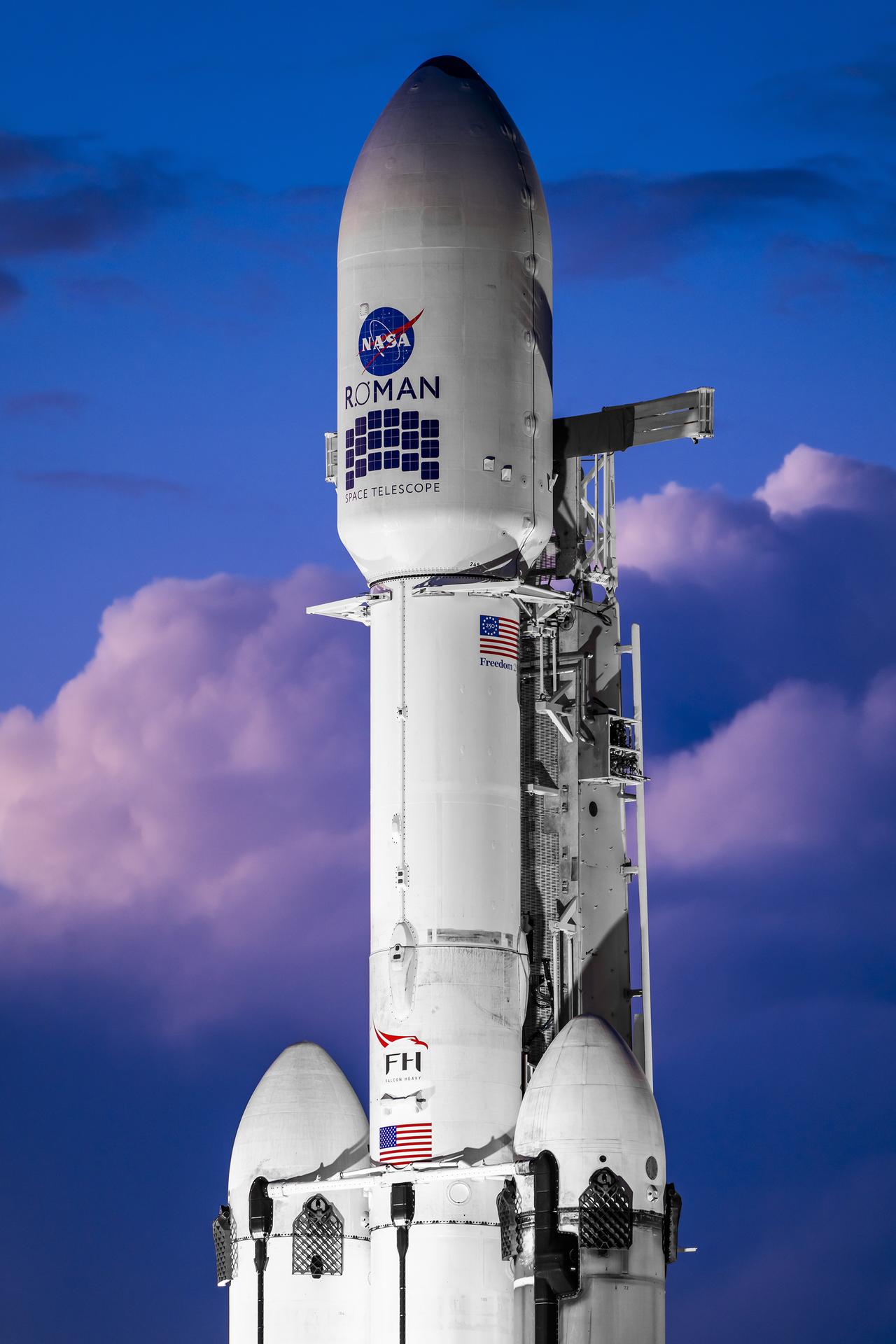
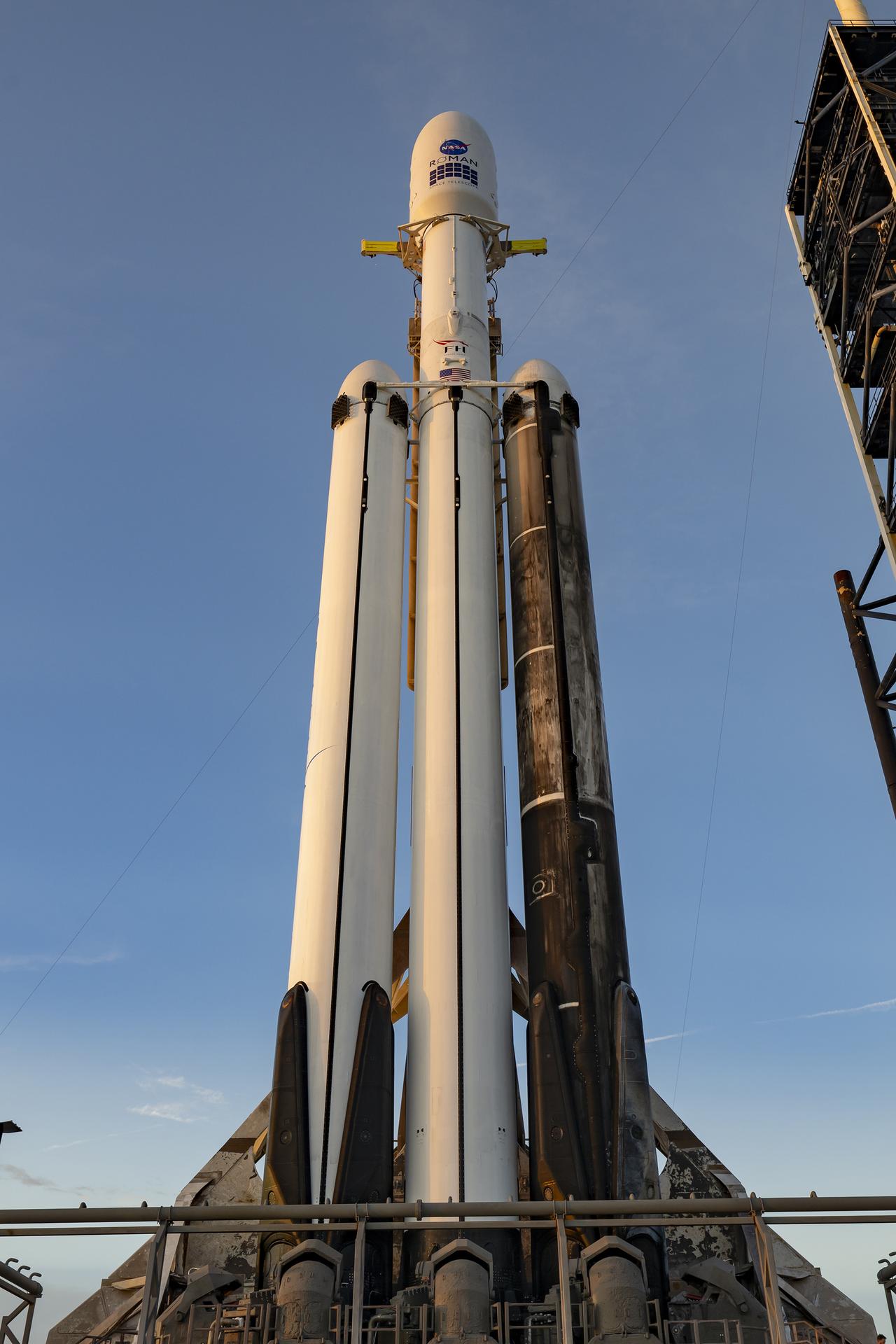
NASA's Nancy Grace Roman Space Telescope, nestled within a SpaceX Falcon Heavy rocket's protective shell, is perched vertically on the launchpad at Kennedy Space Center's Launch Complex 39A on August 29, 2026. This telescope is set to unravel the mysteries of dark energy and dark matter, catalog planetary systems, and open new avenues for astrophysical research. Liftoff from NASA's Kennedy Space Center is slated for 7:26 a.m. EDT on Sunday, August 30, 2026.
SpaceX and NASA are eyeing a 7:26 a.m. EDT Sunday launch time for the Roman Space Telescope aboard a SpaceX Falcon Heavy rocket from Launch Complex 39A in Florida. The U.S. Space Force's 45th Weather Squadron forecasts a 50% probability of favorable weather conditions for the launch. Cumulus cloud and surface electric fields are the primary weather concerns.
The Roman Space Telescope, launched ahead of schedule by nine months, will journey around 1 million miles from Earth to the second Sun-Earth Lagrange point, or L2. In this orbit, Roman's extensive infrared surveys will map billions of galaxies, investigate the enigmatic dark energy and dark matter, and reveal exoplanets beyond our solar system.
Roman's surveys are anticipated to discover around 100,000 new exoplanets and provide a vast public archive supporting a wide spectrum of research, from celestial bodies to the universe's structure and evolution.
Coverage of the launch will be available on NASA's blog alongside a live broadcast starting at 6:20 a.m. EDT on NASA+, accessible through a myriad of platforms. For more information on how to watch, visit www.nasa.gov/live.
Written by urgent.news from NASA Science's reporting — not their text. Machine-written — may contain errors; check the original before relying on it.
This story
This is one outlet's version. Read the fullest account.
- NASA set to launch Roman telescope to map the universe france24.com
- NASA's Roman Space Telescope is ready for launch aboard SpaceX Falcon Heavy rocket space.com
- NASA’s Roman Space Telescope Flying on Its Own science.nasa.gov
- Nasa to launch $4.3bn space telescope to scan universe ft.com
- Watch SpaceX Launch NASA’s Roman Telescope to Chart the Stars nytimes.com