NASA set to launch Roman telescope to map the universe
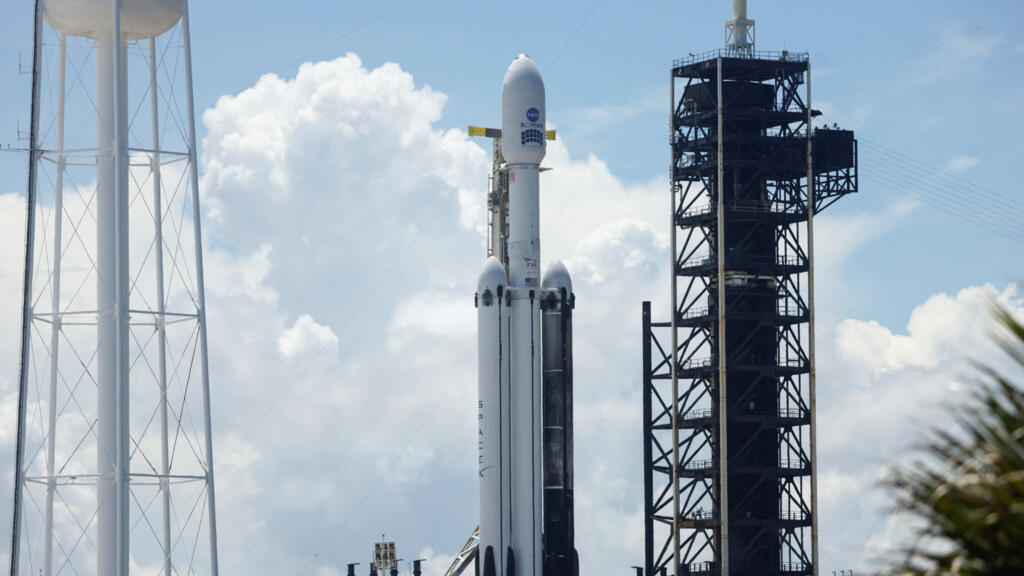
NASA is preparing to launch its Roman Space Telescope on a SpaceX Falcon Heavy rocket. The launch is scheduled for Sunday at 7:26 a.m. EDT from Launch Complex-39A at NASA's Kennedy Space Center in Florida, with a 50% chance of favorable launch conditions. According to Space.com, the telescope will be bound for a gravitationally stable spot in space called Lagrange Point 2, or L2, nearly 1 million miles from Earth.
The Roman Space Telescope, also known as the Nancy Roman Grace Space Telescope, will begin a multi-year mission to create a vast new map of the cosmos. With a field of view far wider than Hubble's, it will search for exoplanets and supernovae while probing the nature of dark matter and dark energy, as reported by France 24. The telescope will take thousands of images every day and collect data 1,000 times faster than Hubble, according to CBS News.
The telescope will spend more than a quarter of its time staring at the Milky Way's bulge, a star-packed central region of our galaxy that may swarm with small, rocky exoplanets, Scientific American reports. The flood of data is expected to shed new light on the nature of dark matter, dark energy, and the structure of the universe itself, and accelerate the discovery of potentially habitable planets outside our solar system.
Brief written by urgent.news from France 24, Space.com, CBS News, Scientific American, CBC News — 5 reports on this story. Machine-written — may contain errors; check the original before relying on it.
This story
This is one outlet's version. Read the fullest account.