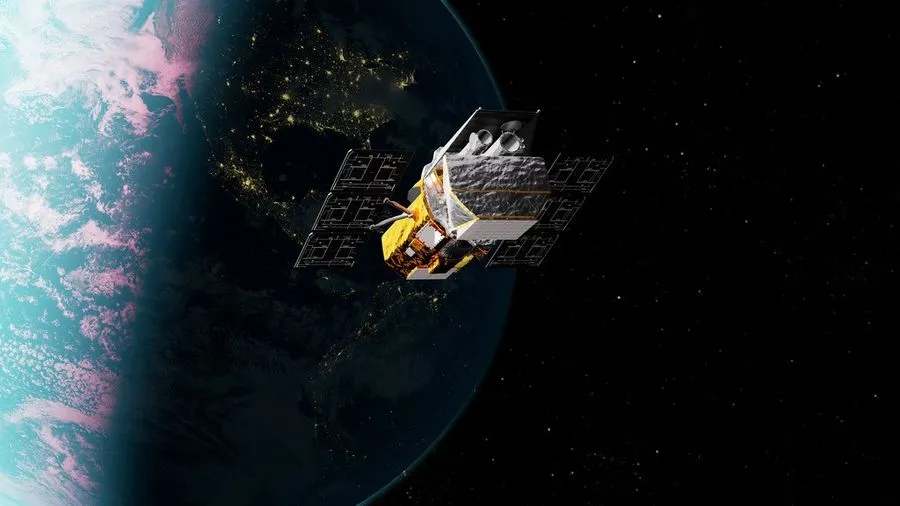
NASA's Roman Space Telescope is ready for launch aboard SpaceX Falcon Heavy rocket
A SpaceX Falcon Heavy rocket is poised to lift off with the Nancy Grace Roman Space Telescope on Aug. 30. This observatory is on a mission to usher in a new wave of astronomical discovery.
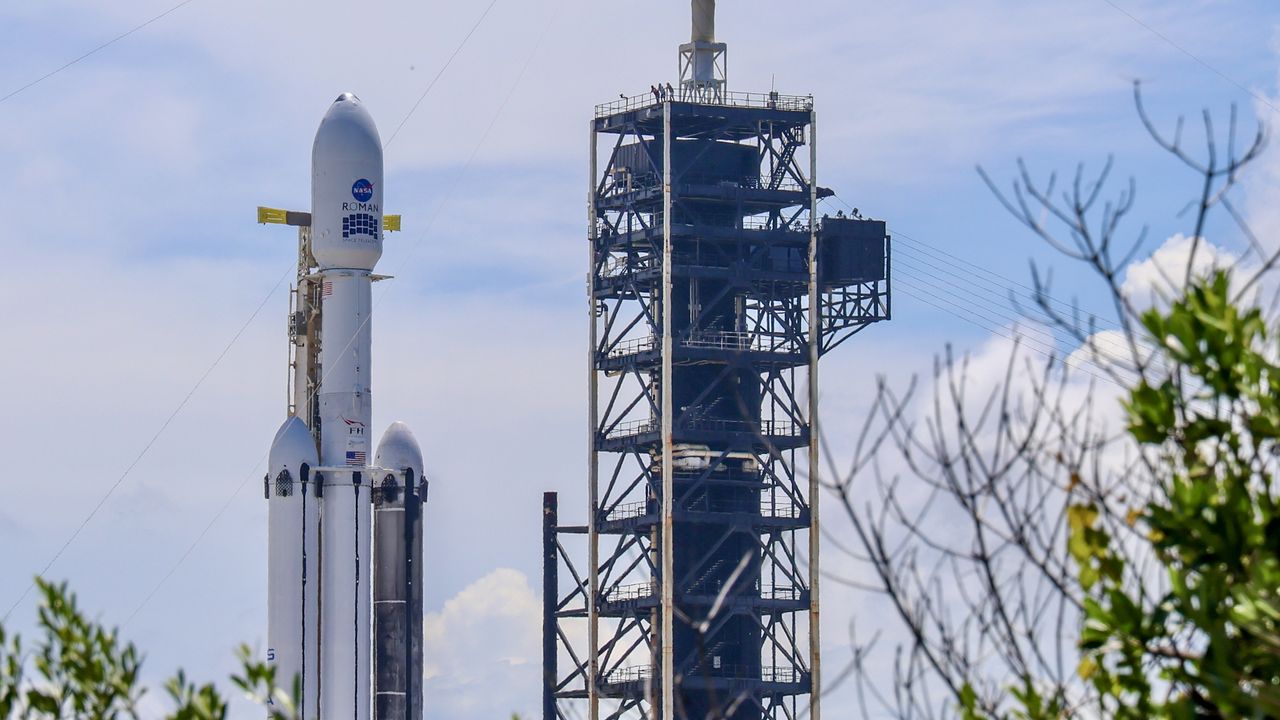
NASA's new flagship observatory, the Nancy Grace Roman Space Telescope, is primed for launch aboard a SpaceX Falcon Heavy rocket. Scheduled to depart from Kennedy Space Center in Florida, the telescope will journey to a gravitationally stable spot known as Lagrange Point 2, or L2, approximately 1 million miles away from Earth. The launch window opens tomorrow, August 30, at 7:26 a.m. EDT.
Weather conditions for tomorrow's launch are listed at a 50% chance of favorable circumstances by launch weather officer Justin McReynolds. Once in its L2 position, the spacecraft will have an unobstructed view of the universe, surpassing the capabilities of Hubble. Nancy Grace Roman will conduct wide-ranging surveys of the cosmos, uncovering insights into dark matter, dark energy, and potentially imaging exoplanets around distant stars.
With a size comparable to a bus and a weight matching that of a T-Rex, Roman's scientific potential is immense. Its vast datasets could help researchers address some of the most profound questions in astronomy, including the existence of other Earth-like solar systems and whether humanity is alone in the universe.
Before embarking on its scientific mission, Roman must first be launched into space. Weather remains the major uncertainty for Sunday's launch, with offshore cumulus clouds posing a potential threat. Conditions might improve for backup opportunities on Monday and Tuesday, however. The tropical disturbance impacting Sunday's forecast is expected to move west, lowering the probability of weather interfering with launch to about 30%, resulting in a 70% chance of suitable conditions.
Following its launch, Roman will spend roughly three months deploying instruments, calibrating systems, and completing checkout activities before unveiling its first science images in early 2027.
Written by urgent.news from Space.com's reporting — not their text. Machine-written — may contain errors; check the original before relying on it.
This story
This is one outlet's version. Read the fullest account.