Violence breaks out in Ceuta as migrant crisis continues
A group of migrants is accused of throwing stones at a military vehicle, while some locals set fire to their camps on the beach.
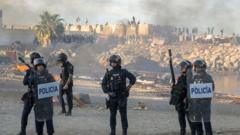
A month after a massive influx of migrants arrived in Ceuta, a Spanish city in North Africa, tensions are escalating between locals and the foreign arrivals, leading to a surge in violence. Spanish authorities have come under fire for their inability to manage the crisis effectively. Ceuta residents have expressed concerns about their safety and the strain on public services, with at least 72,000 migrants crossing from Morocco into the city on July 30th and 31st.
Many of the migrants, who often arrived by swimming around a border fence, returned to Morocco shortly after arriving, but roughly 2,000 remain in Ceuta, predominantly sleeping on beaches or in makeshift camps.
Recent anti-migrant demonstrations have taken a violent turn, with local residents preventing Red Cross aid workers from distributing food and water. Some migrants have even clashed with the police, and vigilante groups have been reported to have pursued the migrants through the city. The mayor of Ceuta, conservative Juan Jesús Vivas, emphasized the city's right to normalcy and warned that the dignity of Spain is at stake.
The socialist-led government of Pedro Sánchez has condemned Vivas' People's Party (PP) and the far-right Vox party for fueling the tensions, while a member of Congress for Vox, José María Figaredo, was investigated for a possible hate crime after suggesting the migrants should be "hunted down, one by one."
Interior Minister Fernando Grande-Marlaska criticized the rhetoric and comments that stigmatize immigrants, fueling social division. The local assembly of Ceuta signed a declaration condemning violence, and the central government took over the management of the situation, prompting controversy over its slow response to the crisis.
Defense Minister Margarita Robles apologized for the migrants feeling abandoned or under-cared for, unveiling plans to overhaul Spain's immigration laws. The government's decision to move migrants into existing public buildings has sparked outrage among locals, who fear the move will move the migrants closer to residential areas.
The crisis has raised questions about the involvement of Morocco in the mass migrant crossing, with politicians on both the right and far left accusing the North African country. However, the Socialist Party blames people traffickers and argues that Morocco is a reliable partner that ensured most arrivals returned to the country. Regardless of the underlying causes, the crisis has placed Ceuta's and Melilla's sovereignty under scrutiny, as Morocco continues to assert its claim over the territories.
Written by urgent.news from BBC News's reporting — not their text. Machine-written — may contain errors; check the original before relying on it.
This story
This is one outlet's version. Read the fullest account.