Reimagining Mexico’s brain bank
Since Alzheimer’s disease researcher José Luna-Muñoz assumed leadership of the facility—Latin America’s oldest—in 2011, he has been acquiring additional tissue types and is working to expand donor recruitment to rural areas.
Mexico’s National Dementia BioBank, established in 2011 by Alzheimer’s disease researcher José Luna-Muñoz, has transformed from a collection of fragmented brain samples to a repository featuring whole brains from individuals with Alzheimer’s and other neurodegenerative conditions. The biobank now houses 17 complete brains, along with various organs and tissues, and plans to expand further to include blood, saliva, urine, and cerebrospinal fluid samples collected from living donors.
Luna-Muñoz highlighted the importance of Mexico developing its own brain bank, as each country should have one to identify its unique risk factors for diseases like Alzheimer’s. For instance, the brain bank in Colombia’s Neuroscience Group of Antioquia has become a global reference center for early-onset genetic Alzheimer’s disease.
A national biobank enables local researchers and young neuroscientists to access human tissue without needing to travel abroad, fostering appreciation and passion for the field. Without generating these data ourselves, researchers would rely on animal models or results from other populations, which cannot replace studying human brain tissue from their own communities.
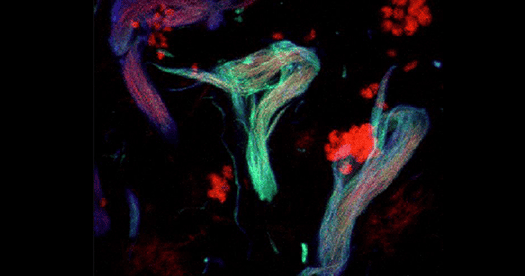
The biobank has contributed significantly to neuroscience research. In one study, Luna-Muñoz compared two dyes for staining beta-sheet structures in tau protein and beta-amyloid in fixed and fresh brain tissue, finding that thiazin red also binds to these lesions in fresh tissue. This is crucial, as some religious or cultural beliefs in certain regions prevent whole-brain donation, but a small biopsy obtained via a tiny opening in the skull could suffice for staining.
Additionally, Luna-Muñoz’s research suggests that a specific truncated form of tau is the primary toxic species that initiates tau aggregation in Alzheimer’s disease, emphasizing that tau phosphorylation serves as a protective cellular response that delays neuronal apoptosis and preserves neuronal function.
Written by urgent.news from The Transmitter's reporting — not their text. Machine-written — may contain errors; check the original before relying on it.
Also reported by 1 other outlet
- Reimagining Mexico’s brain bank thetransmitter.org