It was a spy satellite, now NASA's new telescope is set to head into space
NASA is due to launch its latest space telescope, a repurposed spy satellite which will accompany the James Webb Space Telescope. So what is it, and why is it being used?
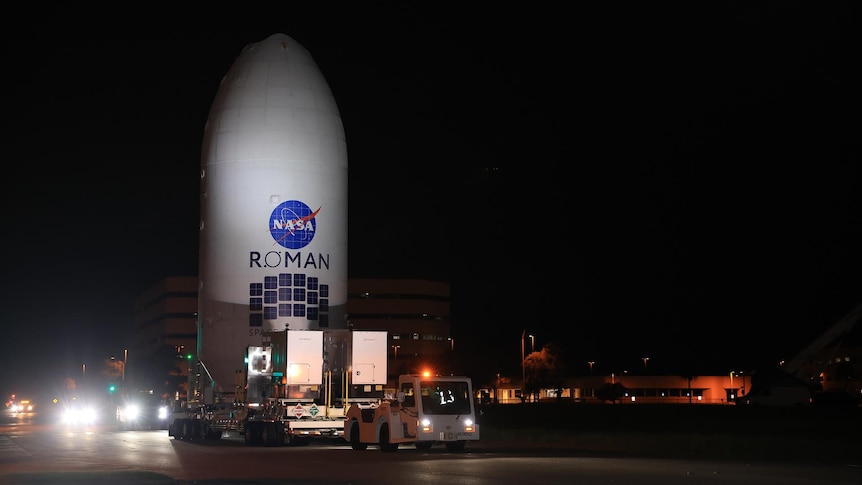
NASA is preparing to launch its most ambitious space telescope to date, the Nancy Grace Roman Space Telescope. Originally developed as a spy satellite, the Roman telescope has been repurposed with new instruments to make groundbreaking discoveries about the universe. NASA's Goddard Space Flight Center astrophysicist Ami Choi says the telescope will help uncover secrets of dark energy and dark matter, two of the biggest mysteries in modern physics.
The telescope's 2.4-meter mirror is the same size as Hubble but smaller than the James Webb Space Telescope, yet it boasts a wider field of view, allowing it to capture a larger portion of the sky in each image. This unique feature will enable researchers to study cosmic phenomena like supernovas, which can provide valuable insights into the expansion of the universe.
Moreover, Roman's unique position and design will allow it to detect large exoplanets with unprecedented detail, including information about their atmospheres. Once launched from NASA's Kennedy Space Center, the Roman telescope will join the James Webb Space Telescope at the same Lagrange Point 2 location, 1.5 million kilometers from Earth.
The Roman telescope is expected to beam back 1.4 terabytes of data daily, with one of the receiving sites being a new European Space Agency antenna in Western Australia. Despite facing funding and development challenges in recent years, the Roman telescope is now launching nine months ahead of schedule, thanks to the support of astronomers and politicians who worked tirelessly to ensure its success.
Written by urgent.news from ABC News AU's reporting — not their text. Machine-written — may contain errors; check the original before relying on it.
Also reported by 9 other outlets
- Unlocking cosmic secrets with NASA's new Nancy Grace Roman telescope cbsnews.com
- NASA is launching the Nancy Grace Roman Space Telescope. Here are just a few of the wonders it will reveal cbc.ca
- NASA telescope honors Nancy Grace Roman, architect of space-based astronomy phys.org
- NASA’s Roman Space Telescope could find alien Earths—but not like you think scientificamerican.com
- Who was Nancy Grace Roman? NASA's next big space telescope is named after the 'Mother of Hubble' space.com
- NASA’s new telescope will transform our view of the universe. This is the story of its namesake theconversation.com
- NASA’s new space telescope will reveal the universe like never before sciencenews.org
- NASA is about to launch a space telescope that could change how we see the universe npr.org
- and 1 more