Autism-linked variants rewire protein networks
The myriad proteins tied to autism cluster in previously unrecognized ways that can be disrupted by specific variants in the proteins.
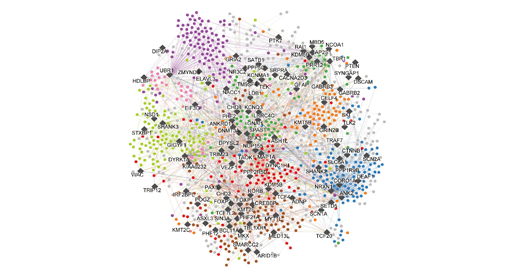
A new study published in Science reveals that protein networks in autism are reorganized by specific variants in 100 genes linked to the condition. Despite autism's genetic heterogeneity, investigating proteins and their interactions uncovers a converging biology.
Led by Belinda Wang from UCSF, the researchers built a comprehensive map of protein-protein interactions involving the 100 autism-linked proteins. This yielded over 1,800 interactions, many of which were previously unknown. The study found that multiple autism-related proteins converge on interconnect complexes, including one hub centered around DCAF7. Knocking out DCAF7 led to disruptions in neural progenitor proliferation and neurogenesis in both frog embryos and human cells.
The researchers also analyzed 54 autism-linked variants, discovering that similar biological pathways and complexes are affected by different variants. For instance, FOXP1 variants weaken its interaction with FOXP4 while gaining a new function as a transcription factor. This altered binding leads to aberrant gene regulation and aberrant differentiation of cortical neurons in organoids carrying FOXP1 variants.
The study's findings shed light on the intricate mechanisms behind autism's biological underpinnings, moving beyond the traditional gene-centric approach. However, using human kidney cells as a model may not fully capture the unique protein-protein interaction networks present in neuronal tissues. The team is now investigating in-vitro neuronal systems to better understand these interactions.
Ultimately, their goal is to observe protein networks in vivo within complex brain tissues to gain a more complete picture of autism's underlying biology.
Written by urgent.news from The Transmitter's reporting — not their text. Machine-written — may contain errors; check the original before relying on it.