NASA telescope honors Nancy Grace Roman, architect of space-based astronomy
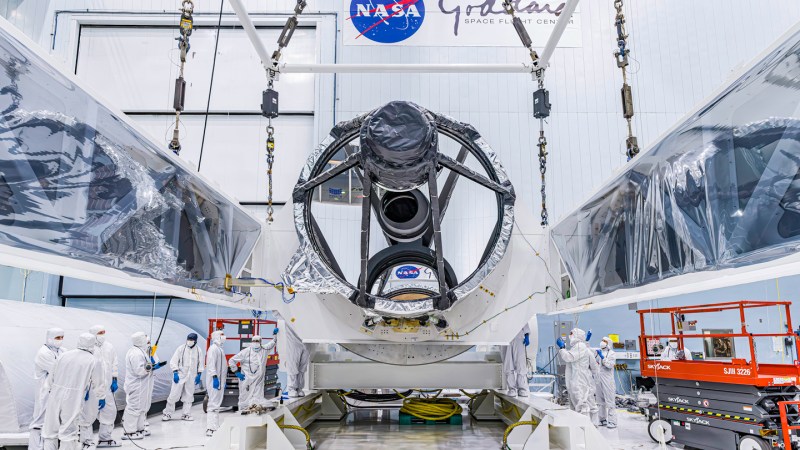
The Nancy Grace Roman Space Telescope is set to launch this weekend aboard a SpaceX rocket from Kennedy Space Center in Florida. When it becomes operational early next year, it will transform our view of the universe.

NASA is set to launch the Nancy Grace Roman Space Telescope this weekend from Kennedy Space Center in Florida. This new observatory, named after the pioneering astronomer Nancy Grace Roman, will revolutionize our understanding of the cosmos. With a mirror the same size as Hubble's but a 100-fold larger field of view, the Roman Space Telescope is designed for rapid sky surveys.
Its primary goals are to detect dark energy signatures and identify approximately 100,000 exoplanets. In 2018, before her passing at age 93, Roman shared her remarkable journey with a reporter, revealing how her passion for the night sky began at age 11 in Reno, Nevada. Despite facing significant sexism in academia, Roman pursued her dream of becoming a professional astronomer.
She earned her Ph.D. from the University of Chicago and conducted groundbreaking research on stellar dynamics. Recognizing the barriers faced by women in academia, she transitioned to a career in space science administration. At NASA, Roman was pivotal in conceptualizing the Hubble Space Telescope, earning her the title "Mother of Hubble."
Her visionary work extended beyond Hubble, as she helped launch several other key NASA astronomy missions. Today, the Nancy Grace Roman Space Telescope carries forward her legacy, providing unprecedented insights into the universe's dark energy and exoplanet populations.
Written by urgent.news from Phys.org's reporting — not their text. Machine-written — may contain errors; check the original before relying on it.
This story
This is one outlet's version. Read the fullest account.
- Unlocking cosmic secrets with NASA's new Nancy Grace Roman telescope cbsnews.com
- NASA is launching the Nancy Grace Roman Space Telescope. Here are just a few of the wonders it will reveal cbc.ca
- NASA’s Roman Space Telescope could find alien Earths—but not like you think scientificamerican.com
- Who was Nancy Grace Roman? NASA's next big space telescope is named after the 'Mother of Hubble' space.com
- It was a spy satellite, now NASA's new telescope is set to head into space abc.net.au
- NASA’s new telescope will transform our view of the universe. This is the story of its namesake theconversation.com
- NASA’s new space telescope will reveal the universe like never before sciencenews.org
- NASA is about to launch a space telescope that could change how we see the universe npr.org