All you need to know about: angioplasty
Angioplasty is a minimally invasive, non-surgical procedure performed primarily in arteries supplying oxygenated blood to the heart, neck, legs or kidneys
Angioplasty, a minimally invasive procedure commonly performed in hospitals, has gained popularity among medical professionals and the general public alike. Data from Indian hospitals between 2020 and 2023 shows that 50% of heart attack patients are under the age of 40, with the share of male and female cardiovascular disease fatalities increasing from 21.5% in 2004-06 to 32% and 27.7% respectively in 2019-21.
Angioplasty, derived from Greek words meaning vessel or container and moulding or grafting, involves opening blocked arteries to restore blood flow. Atherosclerosis, a condition where fat and cholesterol deposits narrow blood vessels, often leads to the need for angioplasty in arteries supplying oxygenated blood to the heart, neck, legs, or kidneys. Occasionally, it's used to remove blockages in veins.
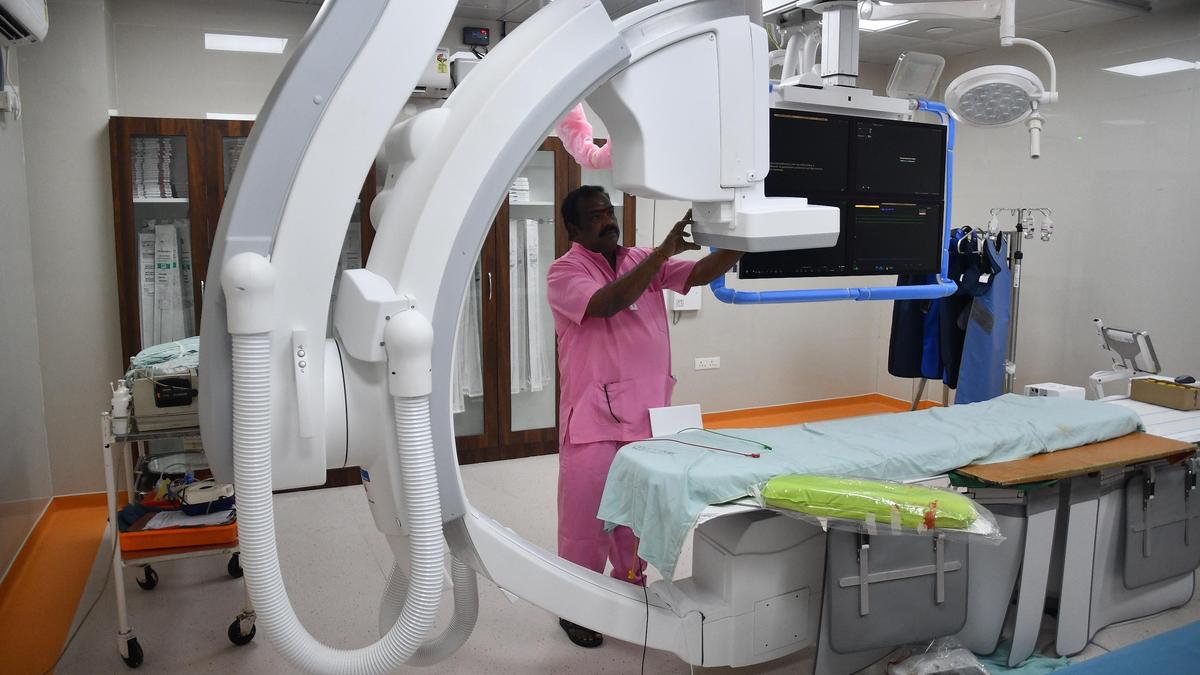
The procedure, which can be done under local anesthesia with the patient awake, involves inserting a catheter equipped with a deflated balloon through an incision in an artery in the arm, wrist, or groin. Live X-ray guidance directs the catheter to the blocked area, where the balloon is inflated to push the plaque against the artery walls.
A stent, a wire mesh, may be placed at the blocked portion to keep the artery open and allow for smooth blood flow. The stent might be medicated to release medication that prevents future blood clots.
Post-procedure, patients are often observed for several hours before being discharged. Recommended for preventing heart attacks or further attacks in individuals who have had a heart attack, angioplasty also benefits those with carotid artery disease, chronic kidney disease, and peripheral artery disease. Lifestyle changes, medication, and cardiac rehabilitation may be recommended as part of the treatment plan.
Written by urgent.news from The Hindu Health's reporting — not their text. Machine-written — may contain errors; check the original before relying on it.
This story
This is one outlet's version. Read the fullest account.
- All you need to know about: angioplasty thehindu.com