Eadweard Muybridge invented a device that led to both cinema and burst photography – all to settle a question about horses – and the way it worked was utter genius
The 19th-century photographer's homemade 12-camera rig solved the problem of human reaction times being too slow
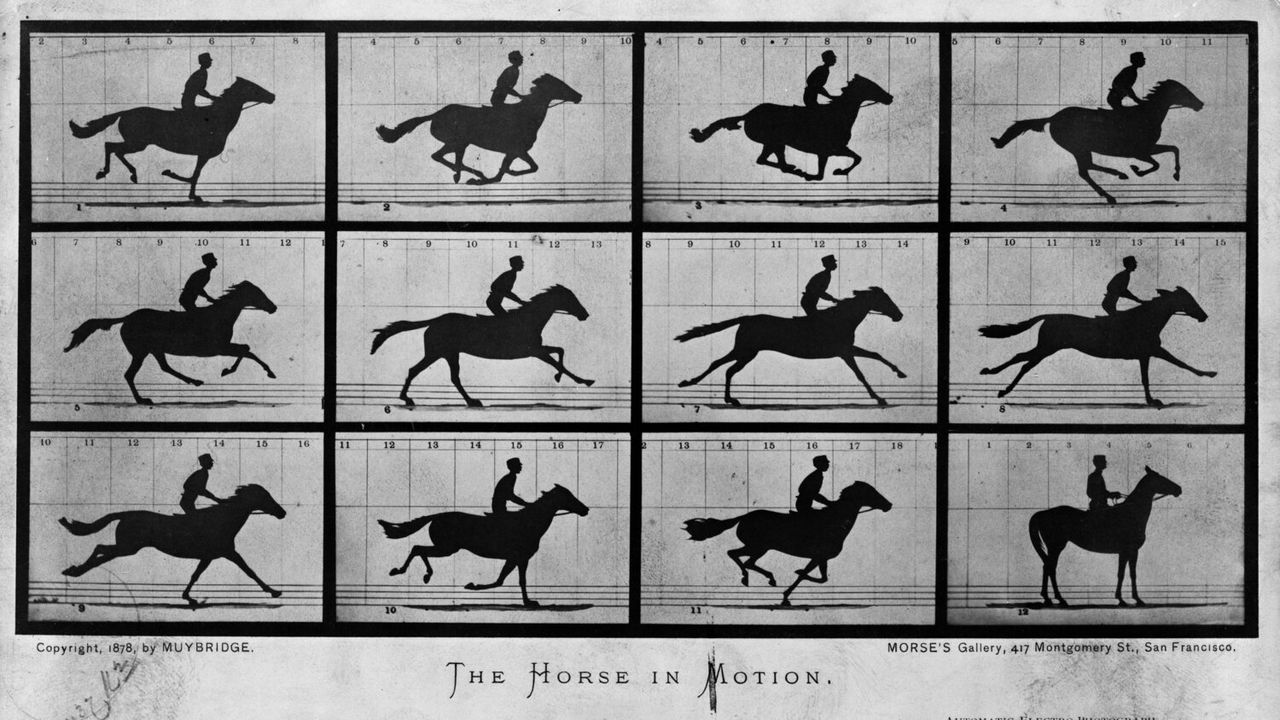
In 1878, Eadweard Muybridge faced a question that no one could answer: did a galloping horse ever have all four hooves off the ground simultaneously? This seemingly simple inquiry had become a contentious issue, leading industrialist Leland Stanford, a racehorse owner, to hire Muybridge in 1872 to prove it. Undeterred by the challenge, Muybridge set out to build his own device capable of answering the question definitively.
Muybridge lined up 12 cameras along a racetrack in Palo Alto, California, each focused on a whitewashed backdrop with measurement lines. He stretched threads across the track at chest height, each wired to a shutter release. As the horse ran, its body snapped the threads one by one, triggering each camera at precisely the moment she reached it.
Muybridge's ingenuity lay in his solution to the problem of timing: he removed the human reaction time from the equation, trusting the subject's movements to trigger the camera instead.
The resulting images revealed a groundbreaking truth: a galloping horse does indeed lift all four hooves off the ground at once, a moment previously unknown despite centuries of observation. Muybridge's photos demonstrated that the horse's airborne position occurs when the legs are gathered tightly beneath the body during mid-stride.
Not content with merely proving this fact, Muybridge built the zoopraxiscope, a device that flashed his sequence of images in rapid succession, creating the illusion of a galloping horse projected on a wall. Thomas Edison later witnessed this invention, recognizing its potential to evolve into cinema. While cinema would require further innovations, Muybridge's homemade rig laid the foundation for the technology that would revolutionize visual storytelling.
Muybridge's approach to problem-solving serves as a valuable lesson for modern photographers. Instead of immediately seeking an upgrade when equipment falls short, consider innovative ways to work around the limitations. This lateral thinking not only makes the process more enjoyable but may also lead to groundbreaking advancements in photography and beyond.
Written by urgent.news from Digital Camera World's reporting — not their text. Machine-written — may contain errors; check the original before relying on it.