NASA Glenn’s Legacy Forged Through Decades of Flight Research
Many of NASA’s most important aerospace breakthroughs that began in the laboratory were ultimately proven in the sky. For decades, experts at NASA’s Glenn Research Center in Cleveland conducted flight tests — piloting aircraft into targeted environments such as icing clouds and carefully defined atmospheric routes. This approach allowed them to collect measurements directly in flight, providing…
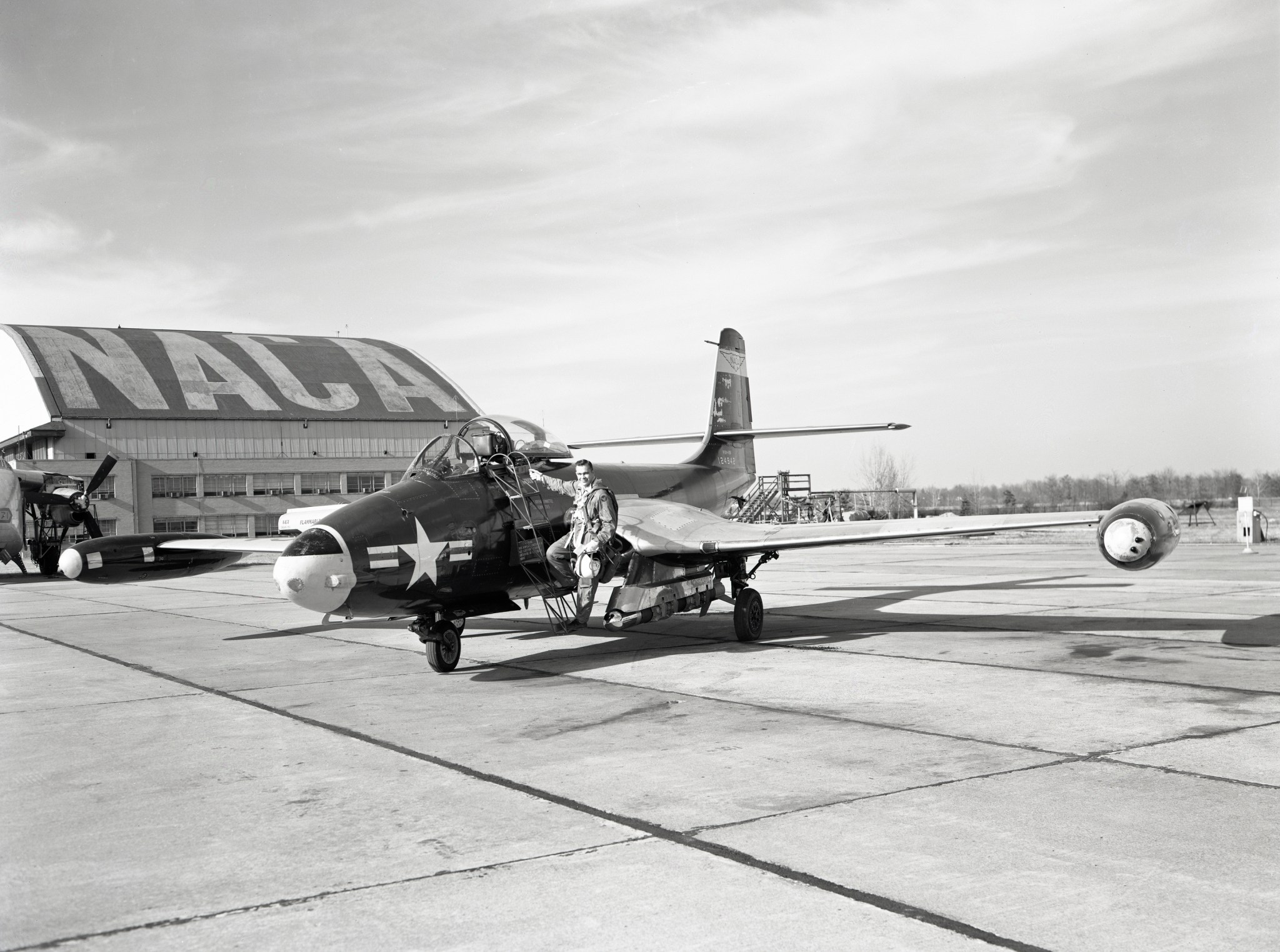
NASA Glenn Research Center, formerly the Aircraft Engine Research Laboratory of the National Advisory Committee for Aeronautics, has a storied legacy in flight research spanning decades. The center's origins date back to the 1940s, when engineers and pilots worked tirelessly to enhance aircraft performance and high-altitude reliability during World War II.
This led to advancements in early jet and ramjet engines, which were made possible through the pioneering efforts of a group of dedicated pilots, including Howard Lilly, Joseph Walker, William Swann, and William "Ed" Gough. These trailblazers set the stage for over twenty other pilots, including future astronauts Neil Armstrong and Fred Haise, who contributed to the center's airborne research capabilities.
The center's researchers and engineers, supported by their pilot workforce, conducted flight tests that bridged the gap between laboratory research and real-world performance. These missions transformed aircraft into flying laboratories, validating theories and paving the way for practical applications. One of the center's most significant contributions was in the realm of aviation safety.
For nearly four decades, NASA Glenn's De Havilland DHC-6 Twin Otter served as the workhorse for icing research, collecting data that led to the development of modern aviation safety standards. The Twin Otter's role in this field cannot be overstated, as it helped define the precise atmospheric physics of supercooled clouds and validated critical technologies used to predict, detect, and prevent in-flight icing hazards.
Beyond improving aviation safety, NASA Glenn's flight research has also ventured into uncharted territories. The center explored hydrogen as an aviation fuel, demonstrating its potential viability decades before it became a mainstream aviation technology. In fact, a hydrogen fuel system was tested on a Martin B-57B Canberra aircraft between February and April 1957, showcasing its reliable operation and advanced efficiency. This groundbreaking work laid the foundation for future advancements in propulsion technologies.
NASA Glenn's flight testing also played a pivotal role in evaluating technologies destined for use beyond Earth. Beginning in 1963, the center initiated a program to test and measure the performance of solar cells under conditions akin to those in space. Using specially modified aircraft, including Learjets, researchers conducted high-altitude flights to recreate the sunlight and atmospheric conditions that solar cells would experience outside Earth's atmosphere.
This program, which lasted for decades, supported space technology calibration through numerous flights and adapted to newer aircraft over time.
The impact of NASA Glenn's flight research extends beyond aviation and space technology. The center's research aircraft, such as the Twin Otter and S-3B Viking, have been instrumental in tracking harmful algal blooms on Lake Erie by measuring changes in water color and composition. This data has significantly improved satellite systems used to monitor water quality and ecosystem health.
Furthermore, NASA Glenn's microgravity research, conducted using specially modified aircraft like its DC-9, has advanced our understanding of how fluids, combustion, materials, and experimental equipment behave in near-zero gravity. These findings have proven invaluable in preparing technologies and experiments for spaceflight before they are conducted onboard orbiting laboratories.
Written by urgent.news from NASA's reporting — not their text. Machine-written — may contain errors; check the original before relying on it.