Archaeologists may have found Egypt’s lost city of Masn
Archaeologists may have identified the site of Masn, an ancient Egyptian city mentioned in texts written more than 3,000 years ago. Its location has long been unknown. An Egyptian archaeological team found an inscription naming the city at Tell Abu Seify in Qantara East, near the Suez Canal in Egypt’s Ismailia governorate. It is carved on a large fragment of a sandstone lintel – a beam that once…
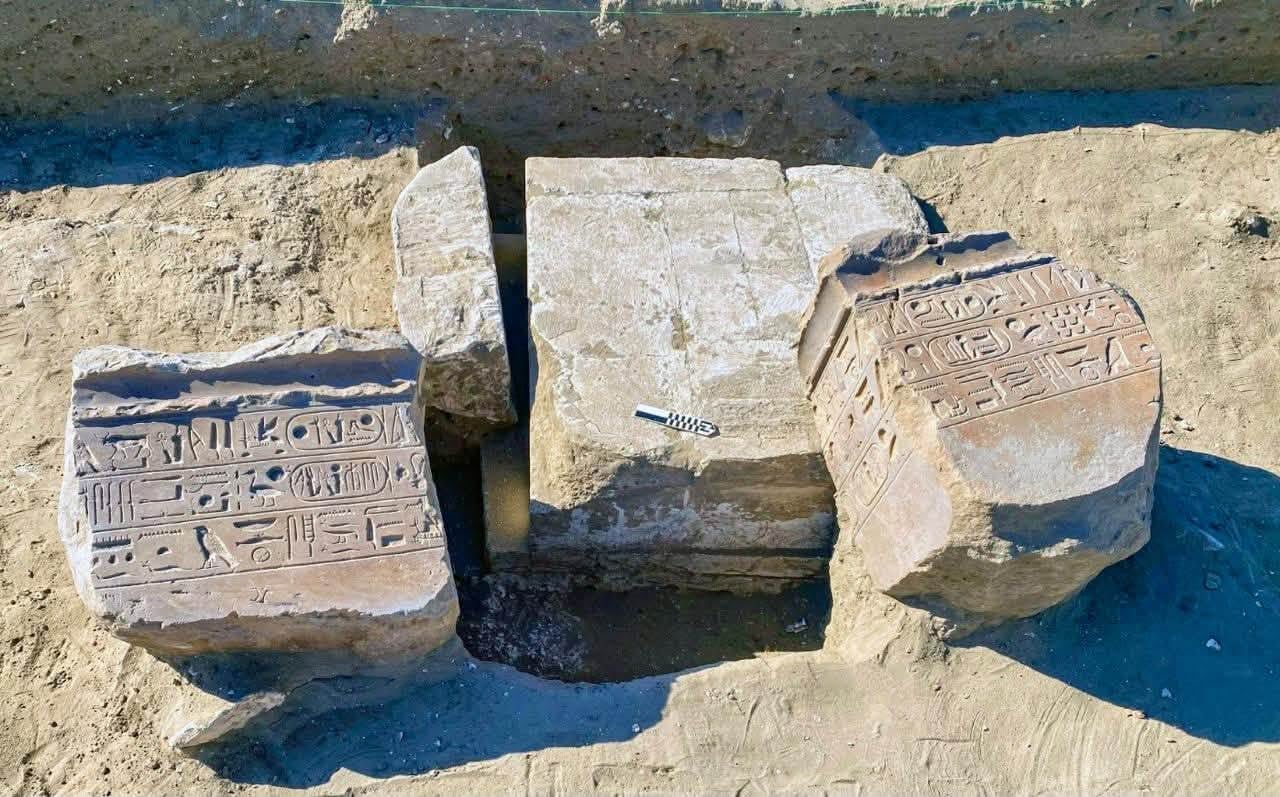
Archaeologists may have discovered the ruins of Masn, a long-forgotten Egyptian city referenced in texts dating back over three millennia. An Egyptian team unearthed an inscription honoring the city at Tell Abu Seify, situated in Qantara East, near the Suez Canal in Egypt's Ismailia governorate. The stone bears the titles of Ramses II, who ruled Egypt for more than six decades during the 13th century BC, and depicts the restoration of a Horus statue.
Egypt's Ministry of Tourism and Antiquities confirmed the finding on Saturday. While the identification still requires more excavation and study, the inscription bolsters the historical link between Tell Abu Seify and Masn, an ancient city closely tied to Horus worship. The name Masn, also spelled Mesen, has been debated among scholars, with some arguing it was a distinct town near Tjaru, the main Egyptian fortress at the beginning of the Sinai route, while others believed it referred to Tjaru or its Horus temple.
Scholars have known about the connection since 1887, when stones with Ramses II's name and Horus references were found at Tell Abu Seify. A 2013 study suggested the stones were likely moved from nearby Tell Hebua, now believed to be Tjaru. If confirmed, the discovery would place Masn on the Horus Military Road, a crucial trade and military route from Egypt into Sinai and ancient Canaan, shedding light on the country's eastern border defenses and administration.
The site's layout has also been reevaluated, with a mud-brick wall originally thought to be a temple structure now believed to have surrounded the entire complex, modified over time. Archaeologists found two stone roads leading from the fortified area to the temple, built during Greek and Roman rule. Inside the complex, they uncovered storage rooms, service rooms, and the remains of the sanctuary, which was damaged when stone was removed for other uses.
Objects recovered include statues dating back over 2,500 years and fragments of basalt and limestone statues. The temple peaked during the Ptolemaic era, and during the third century AD, it was converted into Roman military barracks before being repurposed for lime production. Excavations will continue in upcoming seasons to gather more evidence and confirm whether Tell Abu Seify is indeed Masn.
Written by urgent.news from The National UAE's reporting — not their text. Machine-written — may contain errors; check the original before relying on it.
Also reported by 1 other outlet
- Archaeologists may have found Egypt’s lost city of Masn thenationalnews.com