Astronomers catch massive star exploding and track supernova for 3 months
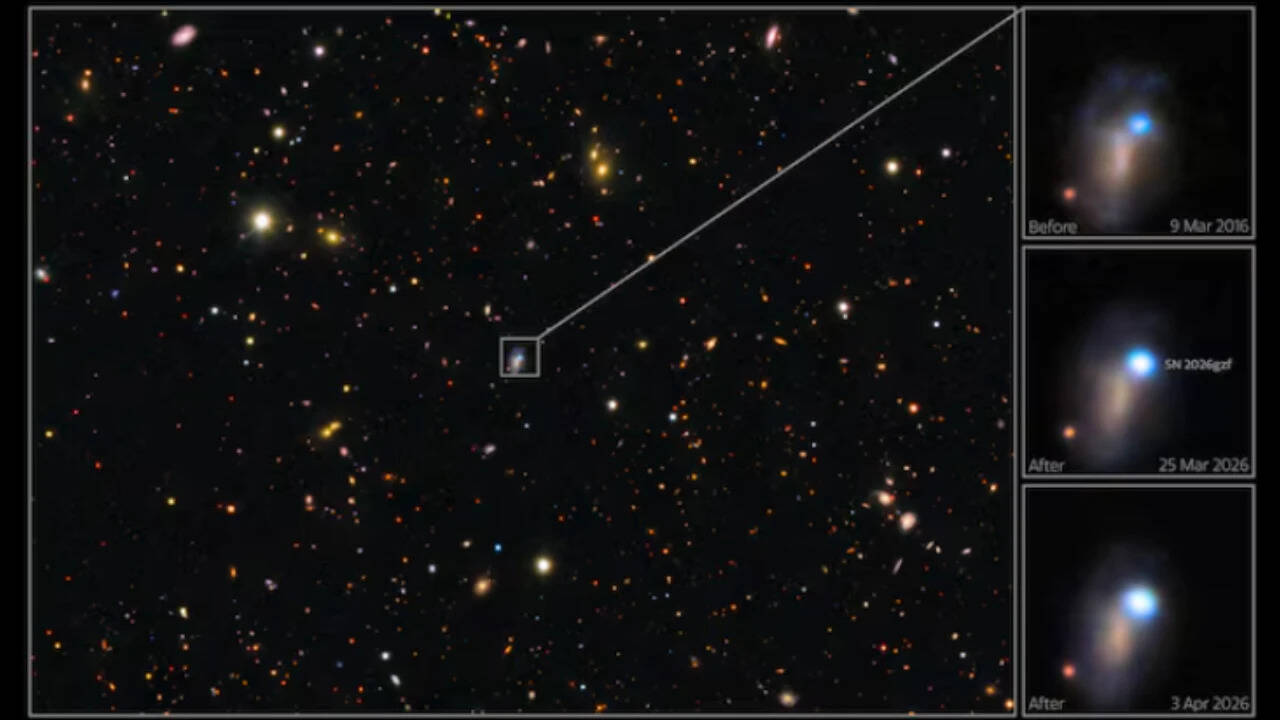
In March, China’s Einstein Probe space telescope captured the first glimpse of a supernova’s birth in nearly two decades. This fleeting X-ray signal marked the initial shock breakout of a massive star, estimated to be 30 times more massive than our Sun, situated about 500 million light-years away. The star, a rare Wolf-Rayet type, had shed its outer layers, leaving behind a dense remnant believed to be a black hole.
For the first time since 2008, astronomers observed the entire process, from the shock breakout to the fading supernova, tracking the event for nearly three months. This unprecedented observation provided a rare window into the earliest moments of a star’s death, offering insights into extreme physics under conditions impossible to replicate on Earth.
The lack of a gamma-ray burst associated with this explosion is particularly significant, as it challenges existing theories about the formation of such high-energy jets. The findings contribute to our understanding of how massive stars end their lives, how black holes form, and the synthesis of heavy elements that shape the universe.
Written by urgent.news from Times of India's reporting — not their text. Machine-written — may contain errors; check the original before relying on it.